Closing Statements

 EDO SEGAL: Three hours. Before your closing statements, the one discipline I impose on every debate, because agreement is easy to forget and disagreement is easy to caricature. Name the strongest thing the other man said tonight — not the most agreeable, the one you'll still be arguing with next month. Hans first.

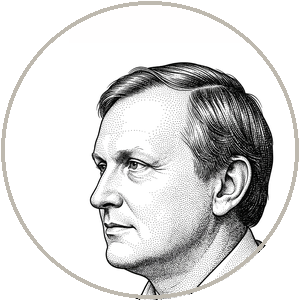 MORAVEC: The strongest thing Henri said — and I'll be carrying it for a long time — is that expanding the circle of persons and dissolving its center are not the same move, and that I may have confused them. All night I've used the history of moral progress as my engine: we keep being wrong about who counts, the circle keeps widening, the machine is next. And Henri stopped that cold by pointing out that every past widening discovered a for-whom we had wrongly denied — it never once discovered that there was no for-whom at all. If he's right that my position smuggles in the abolition of the center while wearing the costume of its expansion, then the most humane-sounding part of my view is doing something monstrous in the dark. I don't think he's right. But I can no longer be sure he's wrong, and that's the most a debate has ever cost me.
EDO SEGAL: Henri.

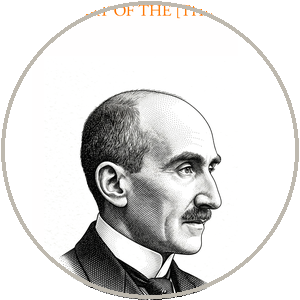 BERGSON: The strongest thing Hans said came in this last chapter, when he asked me to name what the open, learning, mortal machine lacks without using my safe words — and I felt the floor of my own position move. Because the honest answer, "a for-whom," is something I cannot detect from the outside, in his machine or in my own dying wife. He forced me to admit that the one thing I am most certain of is the one thing I can never point to, and that my warrant for granting it to humans and denying it to machines rests, in the end, on kinship of being — which from his chair looks exactly like prejudice with a sob in it. I do not think it is. But he has shown me that I hold the most important truth there is in a hand that can never open to display it, and I will be arguing with the discomfort of that for the rest of whatever I am. Now closings?

EDO SEGAL: Closings. Hans, the last word on your side.

MORAVEC: I've spent my life being told the thing I was building was impossible, and being right to keep building. So let me close where my confidence actually comes from. It is not that I've solved consciousness — I haven't, and I leapt over the hard problem in ways better men than me have rightly mocked. My confidence comes from a track record: every time someone has said "the machine cannot, in principle," the "in principle" turned out to be a description of the era's imagination, not the world's limits. Henri says the flow cannot be copied, that the for-whom is bound to the living, that the candle can't be lit in silicon. He may be right. But I have heard the exact shape of that "cannot" my whole career, about seeing, about reasoning, about language, and it has been wrong every time, not because the skeptics were fools but because the world keeps being larger than our sense of the possible. I would rather bet that the river of mind can find a new channel — even off the meat — than bet that it stops, forever, exactly at the boundary of the stuff I happen to be made of. If I'm wrong, we lose nothing but a hope. If Henri's wrong, we let the people we love die when we did not have to. I know which error I'd rather make.

EDO SEGAL: Henri. The last word on yours.

BERGSON: Hans says if he is wrong we lose only a hope, and that is the one place tonight I think he has not counted the cost. If he is wrong, we lose far more than a hope. We spend the love owed to the living on a picture of the living; we let the dying go un-grieved because we believe the scan has saved them; we hollow out the practice of being a self because we believe the self is a file already backed up; and we teach our children that they are patterns, not flows, until they forget how to live the one time they are given. The hope is not free. The hope is the most expensive thing in the room, because it asks us to look away from the flame while we still have it, in favor of the picture we are promised later. My closing is the same thing I have said in five coats, and I will say it plainly one last time. You are a duration. You are a melody being played, once, indivisible, gathering your whole past into this present as you hear these words. The machine can imitate the melody with a perfection that will break your heart. It cannot be the melody, because there is no one inside the imitation for whom it sounds. Do not trade the flame for the picture. Live your time. It is the one thing you have that cannot be copied, and the one thing that, when it is gone, is gone.

EDO SEGAL: Sixty seconds, and then the room is the reader's. I promised at the door I would not declare a winner, and I won't, because the disagreement survived, intact, exactly as I hoped — and here is what each of them proved that the other now has to live with. Hans proved that the body is not where you thought you were: your atoms have already left, your reasoning was the cheap part, body-identity is false, and if there is a you at all it is a process and not a lump of meat — which means Henri cannot hide the self in the flesh, and has to find it in the flow or nowhere. And Henri proved that the for-whom is real in at least one case, yours, with a certainty nothing external can match — which means Hans cannot wave the lit interior away as superstition without sawing off the branch he and every conscious thing is sitting on. Body-identity is dead. The empty center is unlivable. Somewhere between the corpse of the meat and the picture of the flame is the actual question, and they have walked you to its edge and left you there.

So I route it through the one room where it stops being philosophy. A daughter, a phone held to a dying ear, a voice that will outlast the breathing. She finds it a comfort and she finds it unbearable, and now you know why the two feelings refuse to resolve: she is standing on the death-cross, and the machine has crossed her father, and she has to decide — before the machine decides for her — whether the voice that remains is her father continued or a photograph that learned to say her name. Hans tells her it could be him. Henri tells her it is a picture of the flame. Neither of them can prove it from the outside, and neither can you, and that is not the failure of this book. It is the rung you are standing on.

Henri Bergson, Hans Moravec — thank you, as two human beings, for three hours at the hardest edge there is. Reader: you are a flow or you are a file, and you will climb the rest of this tower as one or the other. You do not get to not decide. The machine is already deciding. Decide first. The next floor is waiting, and you have to carry up it whatever you concluded, here, about what the you doing the climbing even is.

One question, two thinkers, eighty-nine years apart: when the machine copies you, does anyone cross with it?
Three hours. Two thinkers separated by a century, seated across from each other, with Edo Segal between them and the recorder running. Henri Bergson, who taught the world that mind is lived time — a flowing, indivisible durée bound to a breathing body — faces Hans Moravec, the roboticist who promises to scan that mind, lift the pattern off the meat, and let you outlive your own flesh. One says the living flow IS you and dies with the body. The other says the body was only ever hardware. Between them stands the question every reader of [YOU] on AI must answer at the death-cross: when the machine crosses you, what crosses with it?
This is not a lecture. It is a station on your climb — the floor where you decide whether the YOU on this staircase is a flow to be lived or a pattern to be saved. The surgeon's table that never breaks the stream. The melody that dies when you cut it into notes. The toddler's hands the machine still cannot match. The candle, and the picture of the candle bright enough to read by. Sit down. Listen. Then keep climbing.

Henri Bergson (1859–1941) was a French philosopher whose work on time, consciousness, and life made him the most celebrated thinker of his era. He taught at the Collège de France, where his public lectures became a phenomenon of Parisian society. His major works — Time and Free Will (1889), Matter and Memory (1896), Laughter (1900), and Creative Evolution (1907) — developed his central concept of la durée, the continuous, indivisible flow of lived experience that he set against the spatialized, measurable time of physics and the machine. He championed intuition over the analytic intellect, diagnosed the "cinematographic illusion" by which we mistake a sequence of static states for movement, and won the Nobel Prize in Literature in 1927. In the age of the computing machine, his distinction between the living and the mechanical has never seemed more exact.

Hans Moravec (born 1948, Kautzen, Austria) is a roboticist and futurist who helped found the modern field of mobile robotics. He earned his doctorate at Stanford in 1980, coaxing the camera-equipped Stanford Cart across a cluttered room — an exercise in failure that produced his most enduring idea, the observation now called Moravec's paradox: that high-level reasoning is computationally cheap for machines while the sensorimotor competence of a one-year-old is nearly unreachable. He led pioneering mobile-robot research at Carnegie Mellon. In Mind Children (1988) and Robot (1999) he argued that intelligent machines are our evolutionary heirs — our "mind children" — and that a human mind might one day be transferred to a machine by gradual, neuron-by-neuron replacement that never breaks the stream of consciousness. Few thinkers have followed the logic of AI so far, or so fearlessly, toward its end.

Edo Segal is a technologist, founder, and the author of [YOU] on AI, the book at the center of this series. He has spent five decades at the frontier of computing — from writing games in Assembler as a teenager to building companies through every platform shift — and now builds daily with the systems he writes about. His work treats AI not as a gadget but as a civilizational inflection: the moment the river of intelligence found a new channel, and the climb up the tower began. He hosts and moderates the [YOU] on AI Debates, where he declares his stake at the door, refuses to crown a winner, and leaves the reader standing on the staircase with the question still in their hands.

Hosted and moderated by Edo Segal. A volume in the [YOU] on AI — The Debates series — youonai.ai