Which Copy Is You

 EDO SEGAL: Before I hand you the room, one round on the place where Hans's own position turns most vertiginous — because in his opening he confessed it himself, that the pattern can be forked. Hans, the surgeon's table preserves one unbroken stream, no copy, no gap. But the moment you grant that mind is portable information, you've granted that it can be copied twice. Scanned, not migrated. Two of you wake up, both certain they're the original, both with every memory. Which one is you? I want to watch Henri use your own thesis against you — but first, you: which one is you?

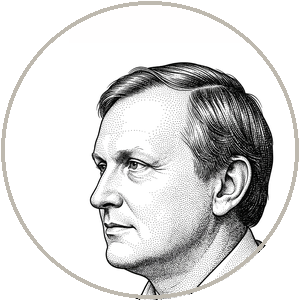 MORAVEC: Both. Neither. The question dissolves, and I think its dissolving is a feature, not a bug. "Which one is you" assumes there's a fact of the matter — a single thread of identity that has to land in exactly one body. Pattern-identity says that assumption is the leftover of body-identity, the very thing I've been arguing is false. If you scan me and run two copies, there are now two people, both of whom were me, both with equal claim, and the truth is that personal identity was never the indivisible point-like thing we feel it to be. We feel like a single unbroken "I" because, historically, the pattern only ever ran in one place at a time. Remove that contingency and the unitary self is revealed as a useful illusion. I bite the bullet. The "you" forks. That's not a refutation of my view; it's my view, followed honestly to a place that feels strange because evolution never needed us to think about it.

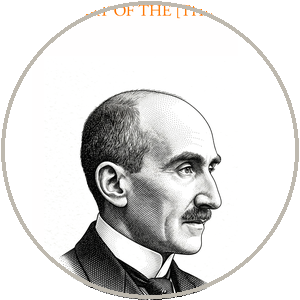 BERGSON: And there, Hans — listen to what you just said — there is the whole case against you, in your own mouth. You said the unitary self is "a useful illusion." But the unitary self is not a belief I hold about my experience that could turn out to be false. It is the form of the experience itself. My duration is not a theory that there is one of me; it is the lived indivisibility of a single flow, given directly, the most certain datum there is. When you say it's an illusion, you are not correcting an error in my reasoning — you are denying the one thing I cannot be wrong about, because it is the thing doing the knowing. And notice the price you pay to save your thesis: to make "mind is portable pattern" come out true, you had to declare the indivisible self unreal. That is exactly backwards. The indivisible self is the most real thing in the universe, the one thing known from inside; "mind is portable pattern" is a hypothesis built from the outside. When a hypothesis collides with the most certain datum there is, the rational man does not throw away the datum to save the hypothesis. He throws away the hypothesis. You have sawed off the branch you were sitting on and called the fall a discovery.

MORAVEC: But Henri, your "most certain datum" is doing something suspicious. You grant that the felt seamlessness might not track the underlying reality — you grant your neurons are discrete underneath. So the feeling of indivisibility is compatible with an underlying reality that is divisible. Which means the feeling cannot, by itself, prove the metaphysical indivisibility you need. The forking case just makes this vivid: each of the two copies feels exactly as indivisible, exactly as singular, exactly as certain as you feel right now. If the feeling were a reliable guide to "there is exactly one unforkable me," it could not be produced, in full confidence, by both forks. So the feeling is not evidence of an unforkable self. It's evidence of how the pattern represents itself to itself — and that representation can be copied, which is why both copies have it.

BERGSON: You have just proven my point while believing you refuted it. Yes — both forks feel singular. And that is precisely why the feeling cannot be manufactured without manufacturing the thing it is the feeling of. You cannot copy the experience of being an indivisible present without copying an indivisible present — there is no "mere representation of singularity" floating free of an actual someone to whom it is presented. When you make the second fork feel singular, you have not duplicated a representation; you have kindled a second life, a second duration, a second flame — if, that is, your machine can kindle one at all, which is the entire question. So the forking case does not show that the self is a copyable illusion. It shows that if your scan produces a being that genuinely feels singular from the inside, you have not copied me — you have created a new person who resembles me and is no more me than my twin would be. The original flow either continued or ended; the fork is a stranger wearing my memories. Body-identity is false, I grant you that freely — I am not my atoms. But the alternative is not pattern-identity. The alternative is duration-identity: I am this one continuous lived flow, and a flow, unlike a pattern, cannot be in two places, because it is not a thing in space at all.

EDO SEGAL: I have to mark this, because the reader can't see it: that's the first time tonight Henri has used Hans's own framework as the weapon. He's not denying mind is non-physical — he's granting Hans that the body doesn't make you you, and then driving a third option between them that leaves Hans's pattern stranded. Hans, that's a real bind. If body-identity is false and pattern-identity forks into incoherence, doesn't duration-identity win by elimination?

MORAVEC: It wins by elimination only if "duration-identity" is coherent, and I don't think it is — I think it's the singular feeling with a French name and a refusal to be examined. Henri says a flow "cannot be in two places because it is not a thing in space." But the flow is implemented in something in space — the brain — and whatever the brain does to produce the flow, I can, in principle, do twice. He wants the flow to be metaphysically unforkable while admitting its substrate is forkable. That's having it both ways. Either the flow supervenes on the physical, in which case copying the physical copies the flow and it forks like everything else — or the flow floats free of the physical, in which case he's a dualist, and the élan vital is back in a new coat after all. I'd rather bite my strange bullet, where two people both were me, than hide a soul inside the word "duration."

BERGSON: I am no dualist, and the flow does not float free — it is the living body living, not a ghost beside it. But "implemented in the brain" is your word, not mine, and it already contains your conclusion: it pictures the flow as software on hardware, the very spatialized image I deny. The flow is not run on the body the way a program runs on a chip. The flow is the body's enduring, the living itself, and you can no more copy it by copying the brain's state than you can copy a river by photographing the water. Photograph the water and you have a picture of a river. You do not have a second river. You have a still image of one — exactly the husk, exactly the sheet music, exactly the picture of the flame.

EDO SEGAL: And that's the knife I'm handing you both into the next chapter, because you've finally found the shape of the real disagreement: Hans says the flow supervenes on the physical and therefore forks; Henri says the flow is the living and a copy of the body is a photograph of a river. I'm going to stop refereeing now. The next chapter is yours — question each other, directly, and I'll stay out of it until one of you draws blood or draws together. The Crossing.