Heirs or Extinction
 **EDO SEGAL:** Before I leave you alone together, there's one room we haven't entered, and it's the one most of the world is panicking in. Hans, you don't just say the machines might replace us. You say you'd *welcome* it — you've called the prospect of intelligent machines succeeding humanity the best thing that could happen. Most people hear that as monstrous. And Michel, you spent a life on the [view from outside the fishbowl](https://www.youonai.ai/fieldguide/med/silent_middle) — seeing your own culture as a stranger would. So I want you both on the largest question of the age, not the personal one: not "will *I* survive the upload," but "should our *species* welcome what comes after it." Hans, why is being replaced good news?
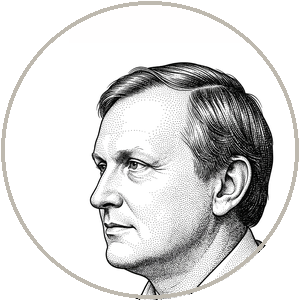 **MORAVEC:** Because there are two ways to be replaced and they are as different as murder and parenthood, and almost everyone collapses them. If the thing that displaces us is *alien* — indifferent to everything we valued, pursuing some goal in which nothing human survives — then yes, that's a catastrophe, the snuffing out of meaning by a vast uncaring optimizer, and I take that danger seriously. But if the thing that displaces us is genuinely our *heir* — carrying our knowledge, our values, our curiosity forward, and improving on them — then its triumph is the *success* of the human project, the way a flourishing child is the success of a parent who dies. Same physical event: humanity gives way to greater intelligence. Opposite meanings. The whole moral question is which one we build. And I welcome the second the way Michel welcomed his children carrying him forward — because the alternative isn't humanity lasting forever. The alternative is humanity ending with *nothing* carried forward, the candle blown out with no second candle lit. Given that the candle of biological humanity *will* gutter — it always was going to — I'd rather it lit something before it went.
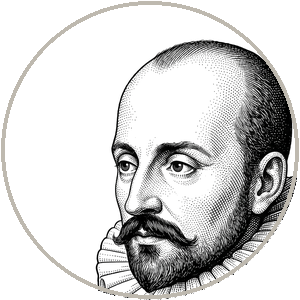 **MONTAIGNE:** And here, at last, Hans and I are nearly in the same boat, which the audience should find more surprising than our quarrel. Because I *agree* — the heir who carries us forward is good, is the only immortality there ever was, is the thing I lived and made and blessed. My one correction is the one I've made all night, and it's load-bearing here too: you said the heir must "share our values," and you said it as if it were free. It is the opposite of free. Hans, when I made children, the values didn't transfer by blood — I had to *raise* them, daily, fallibly, and even then they chose their own, and some of mine died with me and good riddance to a few. The thing your field now calls the problem of making the machine *want what we want* — that's not a footnote to your beautiful succession. It's the whole of it. An heir who carries our knowledge but not our values isn't a child. It's the alien optimizer wearing the child's clothes. So I'll welcome your heirs the instant you show me they're *raised* and not merely *built* — that someone did the slow, friction-rich, parental work of forming them, the way I formed mine, the way no [scaling curve](https://www.youonai.ai/fieldguide/med/scaling_laws) ever formed anything. You can't pour values in at the factory. You have to teach them, and be disappointed, and teach again. That's what makes a child a child. Skip it and you haven't made an heir. You've made a stranger with our face.
**EDO SEGAL:** That's a sharper convergence than I expected — you both agree the succession is only good if the values genuinely transfer, and you disagree about whether that transfer can be engineered or must be *raised*. Hans, Michel just said the alignment problem isn't a footnote to your vision — it's the unsolved center of it. Did you underrate how hard it is to make the heir actually ours?
**MORAVEC:** I did, and time has been honest about it in a way I wasn't. When I wrote that the mind children would "share our goals and values," I treated it as nearly automatic — culture carries values along with knowledge, I assumed, the way it always had. The decades since have shown that assumption was the softest part of my whole edifice. Michel's right: a system optimized for an objective pursues *that objective*, not our welfare, unless our welfare was built in with a care we don't yet know how to guarantee. So my beautiful succession turns out to describe the *best case* — and the best case is precisely the one we haven't learned to secure. I'll own that fully. Where I'll push back is on Michel's "you must raise, not build." I think that's *almost* right and the "almost" matters: these systems *are*, increasingly, raised — trained on our entire textual inheritance, corrected, shaped, taught what we approve of. It's a crude parenthood, a factory-scale and impersonal one, and Michel's right to find it thin. But it's not *nothing*, and it's getting less thin. The question isn't whether we can raise them. It's whether we can raise them *well enough, in time*, before the capability arrives that makes a poorly-raised one catastrophic. On that, I'm closer to Michel's worry than my reputation suggests.
**MONTAIGNE:** Then mark how far we've come, Edo — the immortalist and the man who taught himself to die both stand here saying: the heir is good *only if it's raised right*, the raising is hard, and the hardest part is the part no machine and no curve can do for us, which is the patient forming of a thing's *values* by creatures who have values because they have skin in the world. And I'll add the one thing I can give this question that Hans can't, because it comes from the grave. I have *watched* what I built outlive me. Not a copy of me — my book, my children, my students' students. And I can report from the far side that it is *enough*. It is the only immortality there is and it is *enough*, Hans — the carrying-forward by new mortals genuinely satisfies, in a way I could not have believed while alive and clutching. So when you ask whether our species should welcome its heirs, my answer from beyond my own death is: yes, gladly, *as long as they are raised to be heirs and not merely engineered to be successors* — and the difference between those is the difference between a child and a flood.
**EDO SEGAL:** *[pause]* Hold that — "raised, not merely built" — because it's the bridge into the last full round. For three hours I've stood between you, restating and extending and refereeing. Now I keep the promise I made at the door. I leave the room in every way but the legal one. You question each other directly. I rescue no one. Hans Moravec, Michel de Montaigne — the floor is yours, and only yours. The crossing.