The Relentless Arithmetic and the Que Sais-Je

 EDO SEGAL: Hans, your prophecy isn't a mood, it's a graph. You took the falling cost of computation and drew it forward and concluded a machine with the raw power of a human brain would be affordable somewhere around the 2030s or '40s, and the mind children not far behind — and the reason you believed the future was legible is that you believed it was being written by an exponential, and exponentials, unlike human affairs, are predictable. The modern AI scaling laws are your fifty-year-old wager rendered as a science. So let me put it plainly for the audience and then hand it to Michel: you believe immortality is not a dream but a delivery date. Defend the date.

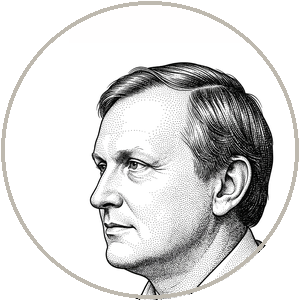 MORAVEC: I'll defend the method and be honest about the dates, because the dates are where I'm most vulnerable and I won't pretend otherwise. The method is sound: I counted, in real engineering units, roughly how much computation a brain performs, and I tracked how fast the cost of that much computation was falling, and I extended the curve. People argued my brain estimate by orders of magnitude — fine, the conclusion was robust to that, because an exponential eats an order of magnitude in a few years. The deep point, the one that's been vindicated against the whole symbolic-AI establishment, is that the binding constraint on machine intelligence was never a missing idea. It was insufficient compute, and the ideas would follow the power rather than precede it. That's exactly what happened — the machines that now write and reason were bought, in large part, with the compute my curve predicted. Where I was wrong: the dates slip, and human-equivalence keeps arriving without the equivalence, because hardware turns out to be necessary but not as sufficient as I assumed. I confused "the power will come" — true — with "the power is most of the answer" — only partly true. So: I'll defend the curve and the direction with my life. The specific year on the calendar, I hold loosely, the way an honest forecaster should.

EDO SEGAL: Michel — he's just handed you the thing your whole method exists to examine. A confident curve, extended into the unknown. What does the man with the scales say to the man with the graph?

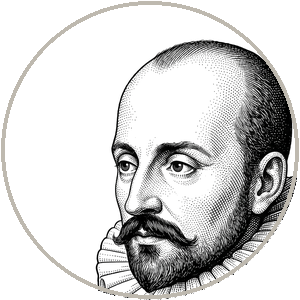 MONTAIGNE: The man with the scales says: I have read ten thousand confident curves, and every one of them was certain right up until the moment the world declined to obey it, and the certainty was never in the curve — it was in the need of the man drawing it. Hans is more honest than most; he just told you the dates slip, which is more than most prophets concede. But notice what survives his honesty: the direction, the inevitability, the river that finds its channel. That's the part I distrust, and I distrust it on principle, the principle of the whole skeptical balance. Hans, you wrote that the future is legible because it's written by an exponential. But an exponential is a description of the past that we project forward, and the projection is an act of faith dressed as arithmetic. I spent twenty years cataloging the ways my own mind manufactures certainty it hasn't earned — believes the last book it read, mistakes fluency for truth, tips its scales toward whatever it wants. Your curve is the most sophisticated version of that I've ever seen: a genuine pattern in the past, leveraged into a guarantee about a future no one has visited. Que sais-je? What do you actually know, Hans, as opposed to extrapolate? You know computation got cheaper. You don't know it will keep getting cheaper to the point of copying a soul, because — your own admission — you don't even know that copying the soul is the kind of thing extra computation accomplishes. You've got a curve about power and a hope about persons and you've drawn them on the same axis.

MORAVEC: That's fair about the persons and unfair about the power, and the distinction matters. You're right that I can't draw "copying a soul" on the compute curve — that's a category error and I shouldn't, and where my old books did, McGinn was right to swing. But the power curve itself isn't faith; it's the most reliable empirical regularity this field has ever produced, run across five separate hardware technologies that each inherited the trend from the last. I'm not asking you to trust a mood. I'm asking you to look at the most consistent line in the history of technology and tell me why this is the moment it bends — and "curves always bend eventually" is true and also tells you nothing about when, which is the only thing that matters. Here's where I'll meet your Que sais-je? head on, because I think it cuts my way as often as yours. You demand I confess what I don't know. Granted: I don't know the date, I don't know that compute suffices for personhood, I don't know the upload preserves the taster. Real ignorance, confessed. Now turn the scales on yourself, Michel. You don't know that it doesn't. Your skepticism is supposed to suspend judgment — epoché, the scales level — but every time the question is "will the machine wake up as you," your scales slam down hard on NO. That's not suspension. That's a mortal's terror wearing a skeptic's robe.

MONTAIGNE: [a pause, then, conceding] He's caught me again, and in the same place — you keep finding the spot where my caution pretends to be balance, Hans, and you're right to. So let me level the scales honestly, out loud, and see what's left. On the metaphysics — does the copy wake as me — I suspend. Truly. I don't know; the scales are level; I withdraw any claim to know it won't. But here is the thing my skepticism does not have to suspend, and it's the whole of my practical position: the scales being level is itself the argument against the leap. When I genuinely do not know whether the copy is me, and you ask me to destroy the original to make the copy, level scales don't say "go ahead, it's fifty-fifty." They say don't. You don't bet your one certain existence on a coin you can't even confirm is a coin. Que sais-je? doesn't counsel the leap, Hans — it counsels the man at the edge to keep his feet on the floor he's sure of. My skepticism isn't terror. It's the refusal to spend the one thing I have on a maybe, however beautiful the maybe, however good the salesman.

EDO SEGAL: I want to bring my own ledger to this round, because the moderator should pay the table's toll, and I have skin here. Years ago I stood in a room in Trivandrum and watched twenty engineers become more capable in a week than they'd been in years, because the machine finally met them in their own language. I felt the future arrive on a schedule, the way Hans describes — legible, exponential, unstoppable. And I went home exhilarated and could not sleep, because the same curve that thrilled me in the office terrified me in the corridor: if everything is on a delivery date, including the thing that copies my dying father off his dying brain, then I have to decide now, before the technology arrives, whether I'd want it — and I found I couldn't. I wanted it for him and I refused it for myself and I couldn't say why the two answers differed. So let me route the question through that: Hans, Michel — when the curve finally delivers the scanner, and a son is standing in the corridor with the choice, what do you each tell him in the thirty seconds he has?
MORAVEC: I tell him: scan. Not because I'm certain — I've confessed I'm not — but because the alternative is certain. Without the scan, his father is certainly gone, the pattern certainly erased, the only copy certainly destroyed. With the scan, there's a chance — maybe a good chance, maybe a poor one, but a real one — that the father, or something continuous enough with him to love and be loved, goes on. When one door is locked and the other might open, you try the door that might open. I'd tell the son: your grief wants you to believe nothing could be your father except the meat in the bed, because that grief is four billion years old. Don't let the oldest thing in you make the newest decision. Scan, and find out.

MONTAIGNE: And I tell him the harder, kinder thing: stay. Put down the scanner and hold the hand. Because the thing your father most needs in these thirty seconds is not a backup; it's you, present, while he's still here to know it. The scan is a bet that steals the deathbed — it turns the last hour into a frantic act of preservation instead of the one thing a deathbed is for, which is the loving goodbye that makes the whole life cohere. Hans says: try the door that might open. I say: while you're fumbling at that door, your father is dying alone, watching his son's back. And if the door opens and a copy wakes, grateful and immortal, it will not undo that your father's last sight was you turned away, choosing the maybe over the man. Be with him. Let him go. Carry him in a book, in a child, in the way you'll catch yourself laughing his laugh in twenty years. That carrying is real. The upload is a maybe. Don't trade the real goodbye for the maybe reunion. That's what to philosophize is to learn to die was always for — for exactly this corridor, exactly these thirty seconds.
EDO SEGAL: [long pause] I asked because I genuinely don't know my own answer, and you've each made me certain — in turn, which is the condition this series exists to honor. Hold the corridor; we return to it at the end, because that's where the reader lives. The next round goes to the metaphor that names Hans's whole project and that Michel thinks is the most generous error ever made. Mind children. The heirs — or the portrait of a man. After this.