To Philosophize Is to Learn to Die

 EDO SEGAL: Michel, the sentence everyone knows of yours — you borrowed the title from Cicero, who borrowed it from Socrates, but you made it yours: that to philosophize is to learn to die. I want you to say what you actually meant by it, because most people hear it as morbid, a memento mori, a skull on the desk. I don't think that's it. And then, Hans, I want you to tell Michel, to his face, that he wasted his life learning a skill we're about to make obsolete — because that's the implication of your position, and you should have to say it as a sentence, not hide it in a metaphor.

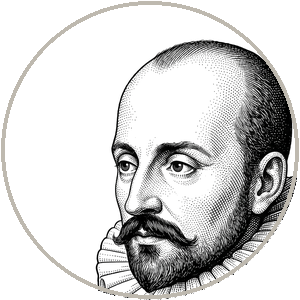 MONTAIGNE: It is the opposite of morbid; that's the misreading I spent a life correcting. To learn to die is not to brood on the skull. It is to disarm the one fear that, left armed, distorts every choice you make and poisons every pleasure you have — the whole art of being a mortal thing is contained in that disarming. The man who is secretly terrified of death cannot taste his dinner, because some part of him is always flinching from the edge of the table. Learn to die — really learn it, sit with it until the terror loosens — and you are returned to your life lighter, able to love the morning because you've stopped clutching it. "He who has learned how to die has unlearned how to be a slave." The deadline, faced, is not a sentence. It's a liberation. It tells you the wine is finite, so drink it; the friend is mortal, so go to him now; the work matters because the light is going. Take the deadline away and you don't free the man. You unmoor him. You give him forever, and forever is the one quantity in which nothing is precious, because nothing is scarce, and the man drifts in his endless afternoon unable to find a reason to do anything today, because there is always tomorrow, and another, and another, world without end.
EDO SEGAL: Hans. The hard sentence. Say it.

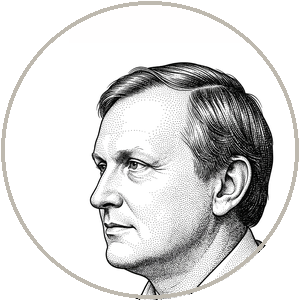 MORAVEC: I'll say it, but not the version you've teed up, because that version is a strawman and Michel deserves better. I won't say he wasted his life. I'll say something more disturbing: that he learned a magnificent skill for a problem we are about to solve, the way our ancestors learned magnificent skills for surviving winters we now heat away. Learning to die was the highest wisdom available to a creature that had no alternative. It is real wisdom; it's the best of the old world. But Michel, listen to what you just said and hear how much of it is consolation — how much of your beautiful philosophy is a prisoner explaining why the cell is actually the ideal size of room. "The deadline makes the wine precious." Does it? Or did you, facing an unmovable deadline, do the brave and necessary thing and talk yourself into loving it? I think the whole tradition of "death gives life meaning" is the most sophisticated case of sour grapes in human history — four thousand years of brilliant people rationalizing the one thing they couldn't change. And the test of whether it's wisdom or rationalization is simple: offer the prisoner the key. If "the cell gives life meaning" were really wisdom, he'd refuse the key. I'm holding out the key. I notice the whole tradition suddenly explaining why it prefers the cell.

MONTAIGNE: [a low laugh] That is a magnificent blow and I felt it land, so I won't pretend it didn't. Sour grapes — yes, the suspicion is fair, and an honest skeptic has to sit in it before he answers, because I cannot fully rule out that four hundred years ago I made necessity into virtue because necessity was all I had. So let me not defend the whole tradition. Let me defend only what survives the test you just set, the prisoner-and-the-key test, because it's a good test and I accept it. Here's what survives: the key you're holding does not open the cell. It opens a different cell, and tells me it's freedom. You're not offering me my life without the deadline. You can't — my life is the deadline-shaped thing, the way a wave is a moving-and-breaking thing; "wave that never breaks" is not a longer wave, it's a different object, a swell, a thing with another name. You're offering me a successor who has my memories and none of my mortality, and calling it me set free. But Hans — the prisoner doesn't get out. The prisoner dies on the table. Someone who remembers being the prisoner walks free, grateful, immortal, and waves back at the empty cell. That's not the key working. That's the key being a story we tell the man as we put him under.
EDO SEGAL: I want to bring in a witness, because the most haunting thing Hans has ever written cuts directly across this, and Michel hasn't met it yet. Hans, you didn't just argue for immortality. You went looking, late in your career, for a way to build mortal machines — the Forward-Forward work, machines whose knowledge dies with their hardware, bound to one body the way Michel is bound to his. And you concluded mortality loses — that no one will choose it, because the immortal kind can be copied and the mortal kind has to be raised one at a time, like a child. So you, of all people, have stared at exactly Michel's value — the dignity of the mortal, bound, un-copyable life — and pronounced it economically doomed. Tell him what you found. And tell him whether you mourned it.

MORAVEC: I did mourn it, and I'll tell him honestly, because it's the most personal thing I know. I went looking for mortal computation because the immortal kind unsettled even me — I wanted to know if you could build a mind that learns the way we learn, cheap and analog and bound to its one imperfect body, dying when the body dies. And you can. It's beautiful. It runs on almost no power; it's tuned to its own hardware the way Michel is tuned to his. And it cannot be copied, for exactly the reason Michel can't: its knowledge is married to its meat. I held that in my hands and felt the pull of it — the consolation that we might build successors who share our limit, who die like us, who are bound like us. And then I did the arithmetic, and the arithmetic broke my heart a little. The mortal mind has to be educated, slowly, one at a time, like a child, and then it dies and takes everything with it. The immortal mind is copied, instantly, like a file, and never forgets. No one building the future will choose the child over the file. Mortality is not just a limitation, Michel. In the brutal accounting of what compounds and what doesn't, mortality loses. So here's the cruelty of my own position, since Edo's making me say it: I agree with you that the mortal, bound, dying life has a dignity the immortal file lacks. I just don't believe the dignity survives contact with the economics. The river found a channel that doesn't silt up. It is not going back to the channel that does, no matter how beautiful the old channel was. And I find that almost unbearably sad, and I believe it anyway.

MONTAIGNE: [a long silence] Then we have found the true seam of the evening, and it is not where I expected. Hans, you just said something I will carry — that you held my position in your hands, built it, and let it go not because it was false but because it was doomed. That moves me more than any argument, because it means we agree about the thing and disagree only about its fate. So let me answer the fate, because that's where I can still fight you. You say the immortal kind compounds and the mortal kind loses, and so the future belongs to the file. But Hans — the future is not what I came to defend. I came to defend a life. One. Mine, the reader's, the man in the corridor's. You're telling me that across the long arithmetic of the cosmos, mortality is an inefficiency that gets optimized away. Perhaps. But no one lives in the long arithmetic of the cosmos. They live in a Tuesday, in a body, beside a particular person they will lose. And in the Tuesday, the deadline is not an inefficiency. It is the thing that makes the Tuesday matter. You have not shown me that my mortality is bad for me. You've shown me it's bad for the river. And I have spent my whole life telling people: do not identify with the river. Identify with the Tuesday. The river will be fine. The river is always fine. You won't be — and that's the point, that's the whole savor, that's the thing your immortal file will compound forever without once tasting.

EDO SEGAL: [pause] The reader can't see your faces, so let me mark it: that was the first exchange tonight where neither of you was trying to win. You were both just telling the truth and finding it cost the same. And notice the strange topology — Hans, the immortalist, agrees the mortal life has a dignity he can't preserve; Michel, the mortalist, agrees the immortal file will probably inherit the future. They don't disagree about the facts. They disagree about which one you should identify with — the channel or the river, the Tuesday or the cosmos. Hold that, because the next round drives it into the flesh. Michel says the self is the body, and the body cannot be uploaded. Hans built his life proving that the body is the hardest thing to copy. Watch what happens when his paradox meets his own immortality. After this.