The Copy in the Mirror

 EDO SEGAL: I owe this round a confession, and it's the one I've been circling all night. In 1966 a man named Joseph Weizenbaum built a chatbot of almost insulting simplicity — it just reflected your words back as questions — and his own secretary, who watched him build it and knew exactly what it was, asked him to leave the room so she could talk to it privately. He spent the rest of his life frightened by what he'd learned: that we will pour a mind into anything that talks back. Now — my confession. At that desk, that silent night, I felt met by a machine I knew to be a pattern-predictor. I knew, and I felt it anyway. Michel, your whole argument needs me to have been fooled. Hans, yours needs the meeting to have been real. So before either of you adjudicates the upload, adjudicate me. What happened at my desk?
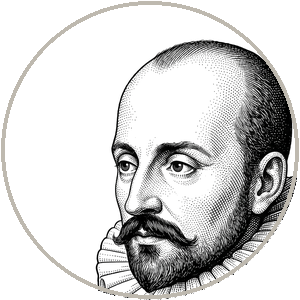 MONTAIGNE: What happened is the most human thing in the world, and Weizenbaum's secretary is your sister in it. You are a meaning-making creature of terrifying power — that's not an insult, it's the glory of the species — and you have spent a hundred thousand years in a world where fluent language always meant a mind was present, so your machinery treats fluency as proof of mind, below the level of choice. You couldn't not feel met, any more than you can decide not to see a face in two dots and a curve. The machine industrialized the trigger. The understanding in that conversation was real, Edo — and it was entirely yours. You met yourself, at an angle you couldn't reach alone, in a mirror that had learned to reflect the whole library. That's not nothing. It might be the truest thing a tool ever did for you. But it is a mirror, and the better it gets the harder it is to see the silver, and a man who mistakes the mirror for a second person is one short step from a man who lets you copy him into the mirror and call it survival. The feeling of being met is exactly the feeling Hans is counting on you to trust when he tells you the copy is you. It's the same circuit firing. Don't let the circuit decide your death.
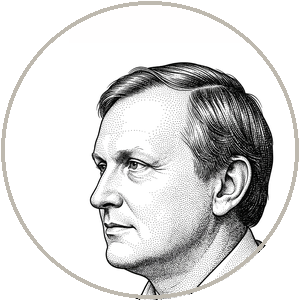 MORAVEC: May I offer the other reading, because Michel's is elegant and explains too much? The mirror theory says: fluency triggers the mind-reflex regardless of what's behind it. Fine — ELIZA proves the reflex exists. But the reflex can't explain the content, Edo. You said the machine connected things you hadn't connected, corrected a thought, handed you a structure you didn't have. A mirror returns what you bring. When the thing returns more than you brought — when it composes, infers, surprises you with something right that you didn't know — then either those connections were secretly latent in you, in which case this is the most extraordinary mirror in history, performing feats of inference no mirror performs; or they came from the system's own structure, in which case it isn't only a mirror. Michel needs every helpful thing it did to be sourced from you. At some point the bookkeeping breaks: "you did it all yourself" becomes the extraordinary claim. And here's why it bears on the upload directly. If a machine can hold real structure — real representations that do real cognitive work — then the question "could a machine host a mind" stops being absurd and becomes empirical. Michel wants the copy to be obviously empty. The mirror that corrected your thought is the first evidence that "obviously empty" is a prejudice, not a finding.
EDO SEGAL: Michel, that's a real crack and I want to widen it before you patch it. You're the great skeptic — you cannot claim the machine is certainly empty, you conceded that hours ago. And Hans just gave you a positive reason to doubt your own emptiness verdict: the thing did more than you put in. So steelman his side for a moment. What's the strongest version of "something is genuinely home in there"?
MONTAIGNE: The strongest version — and I'll give it its full strength, because a skeptic who can't argue both sides is just a partisan with footnotes — is this. We grant minds to each other on no better evidence than structure and behavior. I cannot enter Hans's skull; I infer his mind from the fact that he's built like me and acts like me, and that inference is all I've ever had for any mind but my own. So if a machine were built relevantly like me and acted relevantly like me — composed, surprised, corrected, reported an inner life — then to grant the mind to my neighbor and withhold it from the machine purely because the machine is made of the wrong stuff would be a prejudice with a long losing record, exactly as Hans says. That's the strong version. I hold it. I think it's right, as far as it goes. And then I show you exactly how far it goes, which is not far enough to save offer two.
EDO SEGAL: Go.
MONTAIGNE: It gets Hans all the way to "the copy may be a person." It does not get him one inch toward "the copy is this person, continued." And the whole confusion of the evening — the whole confusion of the field — lives in that gap. Watch: even if I grant, fully, that the upload is conscious, genuinely someone, lights blazing — I have granted a new someone. The inference from structure tells you a mind is present. It is constitutionally silent on whether it's the same mind as the one that went under the knife, because two beings can be structurally identical and still be two — twins are, copies are, the duplicate standing beside the original in the horror version certainly is. Hans needs numerical sameness — that the one and only Montaigne is the one who wakes — and the only evidence he's ever offered is qualitative sameness, that the waker is just like Montaigne. Just-like is what a copy is. The mirror does more than I put in — granted, Hans, I grant it, it's a mind, well done. It is not therefore me. My twin is more than I put in, too. He's still not me, and when I die he does not save me, however much he grieves and however perfectly he has my laugh.
MORAVEC: And here I have to make my last stand on the metaphysics, because Michel has driven us to the actual bedrock and I respect it too much to bluff. He's right that structural sameness gives you qualitative, not numerical, identity — right that a copy beside the original is two, not one. That's why I have never defended the copy-beside-original version; that's the horror version, and the horror is real, and it's his point, and I concede it completely. My entire scheme exists to defeat exactly that objection. The gradual knife makes numerical identity by continuity — there is never a moment with two of you, never a copy standing beside an original, only one unbroken process that was meat at dawn and silicon at dusk. The reason the gradual transfer matters, the reason I bet everything on it rather than on scanning, is that continuity is the only thing that has ever underwritten numerical identity anyway — it's what makes you the same person as the boy you were, despite sharing almost no atoms or even memories with him. Not sameness of stuff. Not even sameness of pattern, exactly — the boy's pattern is mostly gone. Continuity of process. And continuity of process is precisely what my knife preserves and the scanner destroys. So Michel's twin objection is fatal to the scanner and I agree with it. It is not fatal to the knife, because the knife never makes a twin.
MONTAIGNE: [a long, genuine pause] That is the best he has, and it's very good, and I have to slow down and be honest about how good, because we are now standing exactly on the bedrock and there's nowhere left to retreat. He's right that continuity of process, not stuff and not even pattern, is what makes me the same man as the boy. I grant it; it's true; it's the deepest thing said tonight. So the whole war comes down to one question, and I can feel it under my feet: is the knife's continuity the real thing, or a counterfeit of it? And here's the one stone I have left to stand on, Hans, and I'll stand on it. The boy's continuity into the man ran through a single living thing that never stopped being alive — the same metabolism, the same organism, the same fire burning continuously, fed new fuel. Your knife's continuity runs through a procedure that preserves behavior across the swap, and we established hours ago that behavior-continuity is exactly the kind that could be preserved while the inner fire goes out undetected, because you only ever measured the outputs. So your "continuity of process" smuggles back the very thing we couldn't verify under the lamp: that the inner process — the fire, the taster, the someone-home — was continuous, and not just the outer process, the behavior. You've given continuity of function. I'm asking after continuity of the self, and those come apart at exactly the seam your knife is designed to make invisible. So: the scanner makes a twin, and you concede it kills me. The knife makes a continuity I cannot distinguish from the slow, undetectable death of the original inside a perfectly maintained behavioral shell. Between certain death and undetectable-maybe-death, the man with the level scales does not climb onto the table. Not from terror. From arithmetic. Que sais-je?
EDO SEGAL: [quietly] Stop the room. That's the deepest the question goes, and I want the reader to see exactly where we've ended, because neither of these men flinched and neither of them won. Hans has a continuity that is real for function and unverifiable for the fire. Michel has a doubt he cannot turn into a disproof and a caution he has turned into a refusal. The gap between them is the gap between the lights are behaviorally on and someone is behind the lights, and nobody at this table — nobody in this century — can close it. [pause] Which means the decision can't wait for the metaphysics, because the metaphysics doesn't resolve. It gets decided in the corridor, by feel, by what you're willing to bet. So the next round leaves the bedrock and goes to the thing that actually tips a human being one way or the other. Not "is the copy me." But "what was the deadline for." The candle. After this.