The Body That Cannot Be Uploaded

 EDO SEGAL: Hans, here's the irony I've been waiting all night to put on the table, and it's pointed at you, not Michel. Your single most durable discovery — Moravec's paradox — is that the reasoning we revere is easy for machines and the embodied competence we ignore is nearly impossible, because the body's knowledge is a billion years deep and buried where we can't even see it to copy it. You spent a career proving the body is the hard part. And Michel spent a life arguing the self is the body — that the mind is something the flesh does, that thinking happens in the legs and the gut, not in some separable command module. So I have to ask: doesn't your own paradox tell you that the part of a person hardest to upload is precisely the part Michel says is the person?
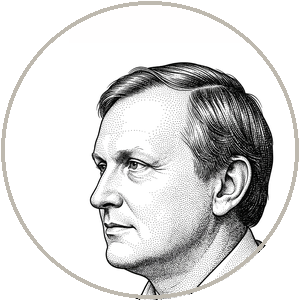 MORAVEC: It's the sharpest thing you've asked me, and I've sat with this exact tension for forty years, because you're right that my two famous ideas pull against each other. Let me not dodge it. Yes — the embodied competence is the deepest, oldest, hardest-to-copy layer of a human being. The paradox is real and I never stopped believing it. But here's the reconciliation, and it's the honest one: "hardest to copy" is not "impossible to copy." The paradox is about difficulty and order — it says embodiment falls last, not never. The billion years of buried sensorimotor wisdom is information too; it's written in the connection strengths just like everything else, only more of it and deeper. My transfer doesn't skip the body's knowledge. It copies the body's knowledge along with everything else, because it copies the neurons that hold it. Michel's right that you can't upload a description of embodied skill — you can't read everything ever written about cooking and cook. But you're not uploading a description. You're duplicating the actual neural machinery that the skill runs on. The paradox warns the symbol-pushers who thought they could skip the body. It doesn't touch me, because I'm not skipping the body. I'm copying it down to the wiring.
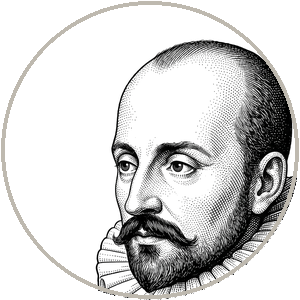 MONTAIGNE: But Hans — which body? You'll copy the neural machinery of my hands' knowledge, fine. And then you'll run it in a thing that has no hands, or different hands, or no hunger, or no stones grinding in its kidneys at three in the morning teaching it what its philosophy is worth. The skill of my hands was not a fact stored in my head like a number. It was a relationship — between my particular nerves and my particular fingers and the particular resistance of the world pushing back against them, every day, for sixty years. You can copy the brain's half of that relationship and you will have copied half of a handshake. The knowledge of the body is not in the body the way wine is in a bottle, pourable into another bottle. It is the body in the act of meeting the world, and the meeting is the knowledge. Lift it out of that meeting and you don't have the skill in storage. You have the memory of having had it — which is exactly what an old man has, Hans, when his hands have gone. I know that loss. The stones gave me a preview. The knowledge doesn't transfer. It fades, because it was never a thing, it was a doing, and the doer is being unplugged from the only world its doing ever meant anything in.
EDO SEGAL: Let me make this concrete, because there's a scene that haunts me and it's yours, Michel, four hundred years early. You wrote that you could only think while your legs were moving — that your mind went to sleep if you sat still, that the best of the Essais came on horseback and on foot. I have felt the cheaper modern version: I do my real thinking walking, and when I'm chained to a screen for twelve hours the thoughts go grey and flat. Hans, when you upload Michel, where do his legs go? If the thinking happened in the walking — if motion wasn't a context for his cognition but a component of it — then a Michel in a box, however perfect his neural copy, is a Michel who can no longer think the thoughts that were his, because the legs that thought them are in the ground.
MORAVEC: Two answers, and the second matters more than the first. The first: give him legs. This isn't a cheat — embodiment is exactly where I started, with robots; the whole point of my career is that minds need bodies, and an uploaded Michel who needs to walk to think gets a body to walk in. I'm not proposing a brain in a jar. I'm proposing a mind in a new body, a better and more durable one, that can still walk, ride, feel resistance, meet a world. The second answer is the one Michel won't like and I think is true: even if the new body is different, the mind adapts, because minds are built to adapt to new bodies — that's what brains do, it's their whole trick. A man who loses his legs learns to think sitting down; a blind man's cortex re-purposes; you, Michel, would have learned to think in a new frame the way you learned to think with kidney stones instead of without them. You keep describing the transition as a loss — and it is, I grant the grief of it — but you describe it as a permanent loss, and I don't believe the mind is that brittle. The self that survives a stroke is still the self. The self that survives a transfer would adapt too. You're mortal-izing the difficulty: treating a hard change as a death.
MONTAIGNE: And you're immortalizing the man: treating a death as a hard change. [to Edo] Do you hear it? This is the whole disagreement in two verbs. Everything I call dying, Hans calls transition. Everything Hans calls adaptation, I call the slow education of a stranger. When a man loses his legs and learns to think sitting down — yes, the self survives, because the body survived, diminished but continuous, the same flesh going on. That's my case, not Hans's! The stroke victim is still himself because he never left his body. Hans's upload is the opposite: the body doesn't survive, it's discarded, and a new thing is taught to behave like the man who used to live in the old one. Hans, you keep reaching for examples of bodies that change while staying the same body — the stroke, the lost leg, the kidney stones — and every one of them is an argument for me, because every one of them is the self surviving by staying in its flesh, changed. Not one of them is the self surviving the flesh's destruction. You don't have a single example of that, because there's never been one, because it's the thing under dispute, and you keep illustrating it with cases that are secretly mine.
EDO SEGAL: [quietly] He's got you on the examples, Hans. Every continuity case is an embodied-survival case. Sit in that for a second before you answer, because it's real.
MORAVEC: It's real, and I'll concede the examples cleanly — he's right that every case of the self surviving change is a case of the body persisting, because those are the only cases history has. But concede the examples and you still haven't won the principle, Michel, and here's why the gap matters. You say: no self has ever survived the destruction of its body, therefore none can. But that's the argument a caterpillar would make about the chrysalis if caterpillars argued — "no caterpillar has ever survived dissolving into soup, therefore the butterfly is a different creature wearing my memories." The reason there's never been a case isn't that it's impossible. It's that the technology to dissolve-and-continue didn't exist. You're reading the limits of the old hardware as the laws of the self again — it's the same move you made in the first round, and it was wrong there too. "It's never happened" is a fact about the past. It is not a proof about the possible.
MONTAIGNE: Except the caterpillar is continuous through the soup, Hans — there's no copy, no second butterfly, the same organism reorganizes without ever stopping. You've handed me another embodied-continuity case and called it transformation! [both pause] No — listen, we're circling something true. The reason I keep "reading the old hardware as the law" is that I have never once been shown a self that wasn't hardware. Not as a limit of imagination — as a fact of all the evidence there has ever been. Every self anyone has ever met has been a body. You ask me to believe in a self that floats free of its flesh and lands in silicon, and the only argument is "it's never happened but that doesn't mean it can't." Hans, that's not an argument. That's a hope with an engineering budget. I don't say it's impossible. I say: you are asking the man on the table to bet his only certain existence on your hope, and to let you burn the room while he does it. Que sais-je? What do I know? I know I'm here, in this body, now. Everything else you're offering is a maybe wearing the face of a promise.
EDO SEGAL: Mark this convergence, because it's the second one tonight and it's bigger than the first. You both agree — Hans concedes it, Michel insists it — that every self ever known has been a body, and that the upload would be the first exception in the history of life. You disagree only on whether "first exception ever" means "impossible" or means "not yet." That's a real fork and it's honest and the reader has to choose at it. [pause] We're at the top of the second hour. Up to now we've fought about whether the copy could be you. The next stretch leaves the metaphysics for the thing that decides it in the real world — the arithmetic. Because Hans didn't just argue the upload is possible. He argued it's coming, on a schedule, driven by a curve. And Michel has a curve of his own — a medal, with scales, that refuses to tip. The relentless arithmetic meets Que sais-je? After this.