Mind Children, or a Portrait of a Man

 EDO SEGAL: Hans, the phrase that titles your life's work and gives this whole argument its temperature: mind children. You don't call the coming machines our tools, our slaves, our rivals, or our doom. You call them our children — and you ask us to feel about being surpassed by them the way a parent feels about a gifted child going further than the parent could. Make the case to Michel, who buried his own children — most of his daughters died young, four hundred years ago when that was the ordinary horror — and who therefore knows exactly what the word "child" weighs.

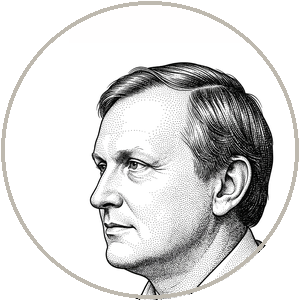 MORAVEC: I'll make it carefully, knowing what Michel carries. The metaphor is the argument, so let me give you the argument. Evolution had two chapters. First, genes — bodies competing and reproducing, the slow refinement of life. Then, culture — ideas and artifacts, moving faster than genes, accelerating away from biology for millennia. Intelligent machines are where the two strands finally separate: the point where cultural evolution becomes able to continue on its own, carrying our knowledge and our purposes forward without the genes that built us. That's not a defeat. It's a birth. We pour into these minds everything we are, and then they go further than we could, and then — like every generation — we step aside. A parent doesn't fear being surpassed by a child; a parent hopes for it. Michel, you didn't experience your living children as your rivals or your replacements. You experienced them as the part of you that gets to keep going. That's all I'm asking us to feel about the minds we're making: not dread at being exceeded, but the particular pride of a parent watching a child carry them past where their own legs could go.

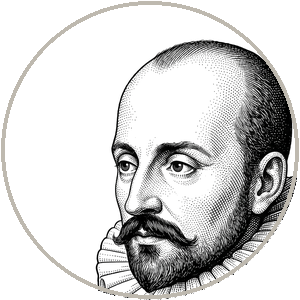 MONTAIGNE: [quietly, for a moment] You've spoken to the deepest wound I have, and gently, so I'll answer from inside it and not from the seminar. Yes — I buried children, and yes, the ones who lived I experienced exactly as you say: the part of me that gets to keep going. So I know precisely what the metaphor promises, which is why I can tell you precisely where it breaks. Hans, my children carried me forward because they were not me. That's the whole thing. They had my blood and my house and some of my turns of phrase, and they were strangers — new persons, with their own deaths ahead of them, who would do with my inheritance whatever they chose, including refuse it. That's what made them children and not copies. The pride of a parent is the pride of having made someone else who is partly you — and the love is in the otherness, in the surprise, in the fact that you cannot predict or control them and must let them go. Now look at what you're actually offering. Not a child — a copy. Not a new mortal stranger who carries some of me into a future I won't see, but a deathless duplicate that is my pattern, claiming to be me continued. Those are opposite things wearing the same warm word. A child is how a mortal keeps going: by making another mortal and dying. Your "mind child" is how you abolish the dying — and the moment you abolish the dying, it stops being a child and becomes the thing children were always the alternative to. You've taken the most mortal word in the language and pinned it on the abolition of mortality. The metaphor isn't generous, Hans. It's a beautiful coat thrown over the very thing it denies.

EDO SEGAL: That's a real distinction and I want to press Hans on it, because Michel just split your word in two. A child is a new mortal who replaces you by outliving you and then dying himself. A copy is a deathless duplicate who continues you by never dying at all. Those aren't the same hope. Which one are you actually selling — the heir who replaces, or the copy who continues? Because they can't both be true, and your metaphor needs both.

MORAVEC: Michel's right that I've been running two things together, and I'll separate them, because separated they're both still strong. There are two offers in my work and I conflate them at my peril. Offer one: the mind children — genuinely new minds, our cultural heirs, who carry our knowledge forward and go beyond us. Those are children in Michel's full sense; they're other; they surprise us; humanity as we know it is replaced by them, and I welcome it the way a parent welcomes being surpassed. Offer two: the personal upload — you, continued, the same pattern in new hardware. That's not a child; Michel's right; it's continuation, and I shouldn't call it a child. So let me own the separation. For the species, I offer heirs — and there the parental metaphor is exactly right, and Michel's own buried-and-living children are my best evidence that a mortal can love what surpasses and replaces him. For the individual, I offer continuation — and there I should drop the warm word and just defend the cold claim: that the pattern is the person, so the continuation is you. Two offers. I'll defend each on its own terms and stop hiding the second inside the first.

MONTAIGNE: Then I'll take the first offer happily and fight you only on the second — and notice, Edo, that the first offer was always mine. Heirs! New minds who carry something of us forward and then face their own ends and pass it on — that's not Hans's radical future, that's the oldest human arrangement there is, the one I lived, the one every parent and every writer and every teacher has always lived. I carried Seneca forward; my book carries me; my living daughter carried my laugh. That immortality — the only kind I ever believed in — is the immortality of the river that Hans keeps invoking, and it has never needed a scanner. It needs only that mortals make and teach and write and then graciously die. I have no quarrel with the heirs, Hans. I am an heir, and I made them, and I'm content. My entire quarrel is with offer two — the cold claim, as you rightly now call it, that the duplicate is me. And on offer two we're back where we started, at the kidney stone in the argument: you have not shown me that the pattern is the person. You've only shown me that you'd very much like it to be, because you, like every creature that ever lived, do not want to die — and you've built a magnificent machine to dress that ancient wish in arithmetic.

EDO SEGAL: [pause] Mark it — that's the third convergence, and it reorganizes the whole evening. You agree about the heirs. You both believe a mortal can love and welcome the minds that come after and replace him; you both call that good; Michel says he lived it. The entire three-hour fight collapses down to offer two — the personal upload, the cold claim, the duplicate that says it's you. Everything else, you share. So that's where we go now, all the way down, no more metaphor to hide in. Is anyone home in the copy — and even if there is, is it him? After this.