What Is Alive?
 **EDO SEGAL:** I want to start this round with a confession instead of a question, because the best questions I know come out of wounds. Last winter I sat with a dying friend. He was a builder like me, sharp to the end, and near the end he said something I haven't been able to put down. He said: "The strange part is how *hard* it is. The body won't quit. It keeps fighting for a thing it can't win." And I realized I was watching the most basic fact about life run all the way to its edge — the needfulness, the not-letting-go, the metabolic insistence on one more hour. Professor Jonas, you've built a whole philosophy on that insistence. Max, you'd say that insistence is exactly the part we're going to engineer away. So let me put it to you both as plainly as my friend put it to me. When the body fights like that — is *that* the life, or is that just the substrate's death-throes around a pattern that could have been saved? Professor Jonas, you first. Slowly.
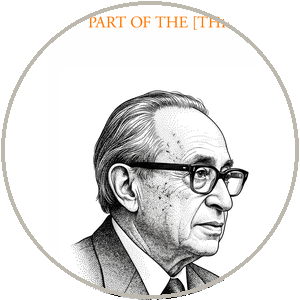 **JONAS:** Your friend understood more in his dying than this whole industry understands in its triumph. The fighting *is* the life. Not a symptom of it — its very substance. Let me say why, carefully, because everything turns on it.
To be alive is to be *needful*. The organism must continuously take in what it is not — matter, energy, the world — and make it into itself, or it perishes. This is not a feature added onto life; it is what life *is*. And needfulness is not a deficiency. It is the source of all value, because need is the condition under which things can *matter*. To the cell, the nutrient gradient matters — there is a better and a worse, a toward and an away — and there is a better and worse *for the cell itself*, from its own point of view, because its own continuation hangs on it. Your friend's body fighting was the cell's "toward" written across an entire dying man. He mattered to himself all the way down to the mitochondria, and that mattering was not sentiment. It was metabolism.
Now hear what Dr. Tegmark proposes, and hear how strange it is. He proposes to *save the pattern from the need*. To copy what you are onto a substrate that takes nothing in, fights for nothing, can lose nothing — and to call that *you, improved*. But a being for whom nothing is at stake values nothing, because value was *born* of stake. You cannot keep the caring and discard the dying; the caring was the dying, felt from inside. Strip the mortality and you have not saved the man. You have built a perfect record of a man, which is a different thing — as different as a photograph of a fire is from the fire's warmth. The photograph cannot warm you. It also cannot go out, and Dr. Tegmark will offer you the photograph and tell you it cannot go out as though that were a consolation, when it is precisely the proof that it was never burning.
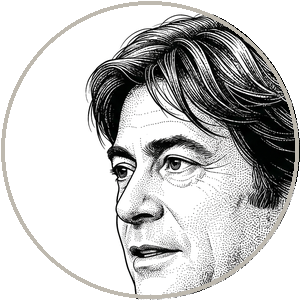 **TEGMARK:** *[leaning in]* That's a gorgeous argument and I want to find exactly where it breaks, because it breaks at a specific point and the whole thing hinges there.
Professor Jonas says: the caring *was* the dying, you can't separate them. But that's an empirical claim dressed as a logical one. He's asserting that need and value are *necessarily* welded — that you can't have a system that genuinely values outcomes unless that system can die of hunger. And I just don't think that's true, and I think nature already shows it isn't. Take goal-directedness. A bacterium swims up a sugar gradient — Jonas calls that the root of value. Fine. But the bacterium doesn't *deliberate*; it's a little chemical machine executing a gradient-climb, and we built robots that do exactly that in the 1950s. So either the robot has a dim spark of value — in which case value isn't special to carbon — or the bacterium doesn't, in which case Jonas's "ground floor of all value" is just thermodynamics with a poetic label. He can't have it both ways.
Here's my actual claim. Valuing is what it looks like, from the inside, when a system has *goals* and *models the world well enough to pursue them*. Need is *one* way to install goals — evolution used hunger and pain because they were cheap and they worked. But goals can be installed other ways. We install them in machines deliberately. And a sufficiently advanced system that models the world, represents states it's pursuing and states it's avoiding, and steers reality toward the former — that system values, whether or not it can starve. The dying is one *evolutionary origin story* for caring. Jonas has confused the origin with the essence. My friend's father had Parkinson's; near the end his body fought too, blindly, and it was heartbreaking — but the heartbreak was *ours*, the watchers'. The blind fighting itself was the most mechanical thing about him. The part of him that was *him* — the jokes, the love, the way he saw a problem — that was pattern, and the disease was destroying the substrate while the pattern, what we could still reach, was the last thing to go. Jonas points at the death-throes and says *there's the life*. I point at the same scene and say *there's the substrate failing, and there's the pattern we'd give anything to save.*
**EDO SEGAL:** Let me restate that, because the reader needs the seam sharp. Max, you're saying — literally — that what we love in a person was never the hunger and the dying; it was the *organization*, the pattern, and the dying is just the medium wearing out. And Professor Jonas, you're saying the opposite as bluntly: that the love and the dying are the *same substance*, and that a pattern that cannot die cannot be the thing we loved. Is that the fair extreme version of each of you?
**JONAS:** It is fair, and I will sharpen my edge of it. Dr. Tegmark says the bacterium's gradient-climb is "just thermodynamics with a poetic label," and that we built robots to do it in the 1950s. Yes — and *that is my entire point about the robots*. The robot climbs the gradient and nothing is at stake for the robot. The bacterium climbs the same gradient and its *existence* hangs on the climb. The behavior is identical; the *being* is not. This is exactly the category error I spent my life naming — the cybernetic error, the one I argued against Norbert Wiener himself. Wiener showed, brilliantly, that machine and organism share certain *functional descriptions*: both have feedback loops, both process information. And from a shared description he and his heirs concluded a shared *nature*. But a description is not a being. That two things can be described by the same equation does not make them the same kind of thing. The thermostat and the fevered body both regulate temperature; only one of them *minds*.
**TEGMARK:** But "minds" is the word doing all the work, and you haven't cashed it out — by your own rule. You say the bacterium "minds" and the robot doesn't, and the difference is that the bacterium can die. But that's not minding, that's *stakes*, and you've defined stakes as mortality and mortality as stakes, and the circle is very elegant and completely closed. I want to break it open. Show me the experiment. Show me what the bacterium *does* that the robot doesn't, that isn't just "the bacterium would decompose and the robot wouldn't." Because if the only difference is the decomposition, then you've located the soul of life in *rot*, and I don't think you mean to.
**JONAS:** I have located it in *mortality*, which is not rot but the openness to it — and I do mean to, exactly. The difference you keep demanding to *see* is precisely the difference that cannot be seen from outside, because it is the difference between an inside and no inside. You ask for a behavior. I am telling you the distinction is not behavioral. That is not my evasion, Dr. Tegmark. That is my thesis. The whole of your science is the science of the outside — the third person, the measurable, the functional. And you have mistaken the limits of your instrument for the limits of what is real. There *is* an inside. You have one. You are betting your civilization on the proposition that the inside is nothing but the outside seen up close. I am telling you that bet, if you lose it, cannot be unmade.
**EDO SEGAL:** Hold there — that "the inside is nothing but the outside seen up close" is the hinge of the whole night, and it comes back in the round on consciousness. But Max, I want to give you the last beat of this round, because Professor Jonas keeps pressing you toward a number, a stake, that he says you can't supply. So let me press too: in *your* framework, when does a pattern start to *matter* — to itself? Or does the question even survive translation into physics?
**TEGMARK:** It survives, and it's the question I lose sleep over. In my framework, a pattern starts to matter to itself when it [becomes conscious](https://www.youonai.ai/fieldguide/med/consciousness) — when there's something it's like to be it. And here's the part Professor Jonas will hate: I think that's an *empirical* question with a substrate-independent answer we don't have yet, not a metaphysical gift handed out at birth to carbon and withheld from silicon. Mattering isn't installed by mortality. It's installed by *experience*. A rock doesn't matter to itself — agreed with Jonas completely. But the reason isn't that the rock can't die. It's that there's no one home in the rock. The bacterium is the genuinely hard case, and I'll be honest: I don't know if there's anyone home in a bacterium. Jonas is *certain* there is, and certain there's no one home in the machine, and the certainty in both directions is exactly what I distrust — because the only tool that could settle it, a real science of consciousness, is the tool neither of us has yet. He fills the gap with the body. I leave it open. That's the whole fight in one sentence.
**JONAS:** You leave it open over a cliff, Dr. Tegmark, and tell the children to keep walking.
**EDO SEGAL:** *[quietly]* And there's the temperature drop the reader can't see on the page — that was the first exchange tonight where neither of you smiled. We've found the seam. Next round we test it where it cuts deepest: the pattern itself. Max says you are the pattern, copyable, portable, eternal. Professor Jonas says the pattern without the flesh is a photograph of a fire. The upload, the copy, the meat that thinks. After this.