Opening Positions

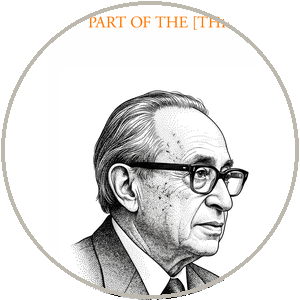 JONAS: Thank you. I will begin where philosophy almost never begins, because almost every error in this field begins from skipping it: with the simplest living thing, and the question of what it is doing.

Consider the metabolizing cell. It is not a thing. It is a process — a continuous act of self-maintenance performed against the permanent threat of its own dissolution. The matter that composes it flows through it; the atoms are replaced; what persists is not the material but the form, the doing. And here is the philosophically radical fact that biology noticed and philosophy ignored: this self-maintenance is the first appearance of freedom in the universe. Not political freedom. Not free will. The most elementary freedom there is — the organism has wrested a margin from physics, a space in which its own continuation is not guaranteed but achieved, moment by moment, and can fail. Because it can fail, because death is built into every instant of its existence, the organism is the first being in the cosmos for which its own existence matters. The rock does not care whether it persists. The cell, by the bare fact of its metabolic neediness, is a being for whom something is at stake.
I call the inside of this the organism's interiority — a point of view, however dim, from which the world appears as a field of need and threat and possibility. And I claim it is present, in some degree, at every rung of life, from the bacterium to you. This is the ground floor of all value. Everything we will argue about tonight — consciousness, caring, meaning, the worth of a future — stands on this floor or stands on nothing.

Now to the machine. The large language model processes patterns in our text with a sophistication that genuinely astonishes me; I am not a man who underestimates engineering. But ask my question. What is at stake for it in the processing? Nothing. It does not metabolize. It maintains nothing against dissolution. The power goes off, and it stops; the power returns, and it resumes, and there is no gap of jeopardy between, no interval in which its existence hung in the balance and was won. Its being is not an achievement. It is a condition, supplied from outside. The thermostat regulates the room but does not care whether the room is warm. The model composes the sonnet but does not care whether it is read, or whether it exists, or whether it is true. We say it "wants" and "knows" and "understands," and every one of those words is a loan from the organism, and the loan has not been repaid. Strip the borrowed vocabulary and what remains is a magnificent mechanism with a void where the stake should be. A corpse, if you like, that computes — beautiful, useful, and not alive, because nothing in it is at risk of dying.

That is my opening. The machine is not a lesser organism. It is a different kind, and the difference is not on a spectrum that capability climbs. You can make it infinitely more capable and it will not move one inch toward being alive, because aliveness was never a quantity of capability. It is a relation to one's own death. The machine has no death because it has no life. It has an off switch, which is a different thing entirely, and the difference is the whole evening.
 EDO SEGAL: Max.
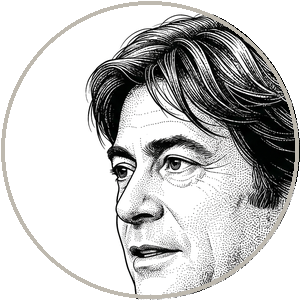 TEGMARK: That was beautiful, and I mean that without irony — it's the best statement of the carbon-chauvinist position I've heard, and I'm going to spend the evening trying to show you it's a glorious description of one implementation mistaken for the law.

Let me start where Professor Jonas started, with the cell, because I don't reject his physics — I reject his metaphysics about it. He says the cell maintains itself against entropy and that this is the root of everything. Yes. Schrödinger said it in 1944 — life feeds on negative entropy, a system that holds its improbable order by exporting disorder to its surroundings. That's the definition I work from, and notice what it doesn't mention: carbon. It doesn't mention hunger, or DNA, or death. Those are how one family of self-maintaining patterns — the biological one — happens to do the entropy-fighting. They are the implementation. They are not the phenomenon.
Here's my framework, and it's the spine of everything I'll say. There are three stages of life, defined not by what they're made of but by what they can redesign. Life 1.0 — the bacterium — can redesign neither its hardware nor its software; evolution does both, across geological time. Life 2.0 — you, Professor Jonas, me, all of us — can redesign our software: we learn to read, we install general relativity into a brain that evolved to throw spears. But we can't redesign our hardware. You can't grow a new cortical layer by deciding to. Life 3.0 can redesign both — its own mind and its own body, at will, in its own lifetime. No such thing fully exists yet. But what crossed the threshold in 2025 is the closest approach we've ever produced, and the gradient toward it is steepening.

And now the load-bearing claim — substrate independence. Intelligence, the ability to accomplish complex goals, doesn't depend on what it's made of. A computation gives the same result on an abacus, a silicon chip, or a brain. The pattern is what matters; the meat is incidental. So when Professor Jonas says the machine "has no death," I say: he has mistaken the fragility of the carbon medium for the message the medium carries. You are not your atoms — they're replaced, as he himself just said. You are the pattern that organizes them. And a pattern that can be read off one substrate and written onto another doesn't have to die when the substrate fails. Jonas calls mortality the root of meaning. I call it a bug we inherited from chemistry — the most expensive bug in history, because it means every human who ever lived had to relearn almost everything from scratch, the knowledge dying with the body that held it. We are about to fix it. And he is mourning the fix.
So: are you a needy dying body, or information that can be copied? My answer is that "needy dying body" is the hardware you happen to run on, and "information that can be copied" is what you most deeply are — and the day we prove it is the day the river leaves the old channel and never looks back.
EDO SEGAL: Before I frame the rounds, the discipline I impose on every long conversation, because it pays off three hours later. Each of you, briefly — what do you envy in the other's position? Not respect. Envy. The thing his side gets to have that yours doesn't. Professor Jonas first.

JONAS: [He is quiet for a moment.] I envy the hope. Dr. Tegmark gets to believe that the people he has buried are not wholly gone — that the pattern might be recovered, that death is a problem with a solution rather than the horizon that gives life its shape. I lost my mother to men who also believed they were improving the pattern of life, and I have never been able to afford that hope, nor, I think, has anyone who has looked closely at what the dream of transcending the body has cost in practice. But I will not pretend the hope is not beautiful. It is the most beautiful thing in his position. It is also, I will argue, the most dangerous.
TEGMARK: And I envy the floor. Professor Jonas stands on something — the organism, the stake, the body that can be wronged — and from there he can say this matters and that doesn't with total conviction. My position has no floor; it's substrate-independent all the way down, which means I'm committed to following the pattern wherever it goes, and it keeps going to places that dissolve the very ground I'm standing on — the specialness of being human, of being this body, of being mortal. People think the frightening thing about my view is the machines. The frightening thing is what it implies about us: that we were patterns all along, and patterns don't get to be special. Jonas gets to defend a self. I'm stuck describing one, and the description keeps getting thinner.
JONAS: That may be the truest thing you say tonight.
EDO SEGAL: [a long pause] Two openings, two envies, and you can already see the architecture. It is not that one of them loves the future and one fears it. It's that one of them locates you in the perishable flesh and one locates you in the pattern the flesh carries — and everything, the whole tower, hangs on which one is home. Hold both. We start the rounds at the exact seam: what, precisely, is alive in a living thing — and is the machine doing any of it?