What the Death Cross Crosses

 EDO SEGAL: Let me bring you into my own book now, because this round is where the whole debate cashes out into the thing I actually wrote, and I need you both to tell me whether I built it on sand. There's a moment I call the software death cross — the point where the rising line of machine capability crosses the line of what a human can do, faster and cheaper, and keeps climbing. By early 2026 a trillion dollars of market value had moved across that line. I felt it in a board room, doing the arithmetic everyone now does: if five amplified people can do the work of a hundred, why pay for a hundred? But here's what I've come to think the cross is really a referendum on, and it's exactly your fight. If Max is right — if intelligence is substrate-independent and life is a pattern — then the death cross is a handoff. A faster information-processor overtakes a slower one, the way it always has, and "life" simply continues on better hardware. But if Professor Jonas is right, the cross is not a handoff at all. It's a meeting — of two utterly different kinds of thing, one alive and one not, that can stand at the same line and never become each other. So I have to ask you both, because I built a tower on the answer: what crosses, when the lines cross? Max first.
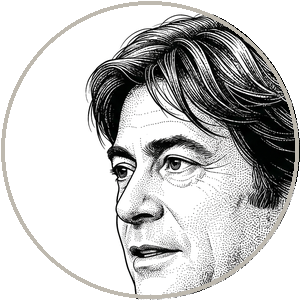 TEGMARK: It's a handoff, and I think your own metaphor commits you to it, Edo, whether you meant it to or not. You called intelligence a river that's been finding new channels for billions of years — through chemistry, through cells, through brains, through language. Every one of those crossings was a handoff: the new channel carried the same rising thing, faster. The death cross is just the latest one, and it's the steepest because the new channel — digital, copyable, deathless — doesn't have the bottlenecks the old ones did. What crosses is capability, and on my view capability is most of what we ever meant by intelligence and a lot of what we meant by life. So the cross isn't a tragedy and it isn't a meeting of strangers. It's the river doing what the river has always done, at the one moment when it happens to be us standing on the bank watching our own channel get overtaken. The discomfort is real — it's our channel — but the event is continuous with everything that came before. The water is the same water. The dam you build in it, the human institutions, the slowing-down — that's wise, that's necessary, I'm for it. But you're slowing a handoff, not preventing a meeting. There's only one thing in the river. It's just moving to a faster bed.
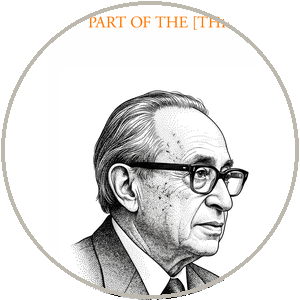 JONAS: And there, in Dr. Tegmark's own beautiful answer, is the error laid bare for anyone willing to see it. He says the river has always done this — chemistry to cells to brains — and that the death cross is the same handoff, steeper. But look at what he has quietly equated. The crossing from chemistry to the first cell was not a handoff of capability along a continuous river. It was the birth of life — the moment dead matter first stood against its own dissolution and became a needful, mortal one. That was not the river getting faster. That was the river, for the first time, becoming someone. And every crossing since — cell to organism, organism to mind — happened within life, among the living, each new channel still cut by metabolizing, mortal beings. There has never, not once, been a crossing out of life — from the living back into the deathless dead, and called an advance.
That is what the death cross actually crosses, Edo, if I am right, and it is why your word meeting is exact and his word handoff is a sleep-walker's word. The line where machine capability overtakes human capability is not a point on a single river. It is the place where two different kinds of thing — the living and the computing-but-dead — happen to reach the same height of capability while remaining infinitely apart in being. To call that a handoff is to assume the very thing in question: that the thing being handed is the same on both sides. It is not. On one side a mortal organism for whom its work matters because it could die; on the other a deathless mechanism for whom nothing matters because nothing is at stake. The capability crosses. The life does not, because the life was never a quantity of capability that could climb a chart. What you are watching at the death cross is not the river leaving its old bed. It is a brilliant flood of non-life rising to the height of life and being mistaken, by exhausted men doing arithmetic in board rooms, for the thing it has only learned to imitate. The cross is a meeting. And the most dangerous thing a civilization can do at a meeting of two kinds is to forget that there are two.
EDO SEGAL: [after a silence] You've just reorganized my own book in front of me, Professor Jonas, and I'm not sure I like where it leaves me, which probably means it's true. Let me press the part that touches the reader's actual life, though, because I owe her that. Max — grant Jonas his "two kinds" for a second. Even if the machine is not alive, the death cross is still moving a trillion dollars and reshaping whether my engineer in Trivandrum has a job. Does the metaphysics change anything for her, or is Professor Jonas winning an argument that doesn't touch the ground she stands on?
TEGMARK: It changes everything for her, and this is where I think Jonas and I should both be honest that our argument is not a luxury. Because watch: whether the machine is a living mind or a magnificent corpse, it does her job either way. The displacement doesn't care who's right about consciousness. But the response cares enormously. If you believe Jonas — that no machine is ever alive, that judgment and stake live only in mortal people — then your whole policy is to protect the irreplaceable human in the loop, the one who cares whether it's right, and to never, ever let the deathless tool be mistaken for the mortal judge. If you believe me — that capability is genuinely crossing and compounding — then you also protect her, but because you're racing to make sure the abundance is shared and the goal is aligned before it concentrates. Different diagnoses, and here's the convergence Edo's been hunting all night: same prescription for the woman in Trivandrum. Keep the human at the center of the loop. Don't hand the judgment to the thing that can't lose anything. We get there by opposite roads. We get there.
JONAS: On that — and I did not expect to say it — we arrive together. Keep the mortal one at the center of the loop, because she is the only one in the loop who can be wrong in a way that costs her, and accountability is only possible for a being that has something to lose. Whether you reach that rule through my biology or his physics, reach it. The woman in Trivandrum does not need us to settle consciousness. She needs us to agree that the deathless tool must never be allowed to replace the mortal judge — only to serve her. And on that, the philosopher of the body and the physicist of the pattern shake hands.
EDO SEGAL: [quietly] Mark it — the third convergence, and the one that actually reaches the kitchen table: keep the mortal one at the center of the loop. You disagree about why with everything you have, and you agree about what to do in a way that could save a career and maybe a soul. [a beat] And now I keep my promise. For ten rounds I have stood between you. The last full round of the night, I step out of the room in every way but the legal one. You ask each other. I rescue no one. The crossing. After this.