The Crossing

 EDO SEGAL: The rules here are short. You question each other directly. I will not referee and I will not rescue. Professor Jonas, you've waited seventy years and crossed a century to ask this man something. Begin.

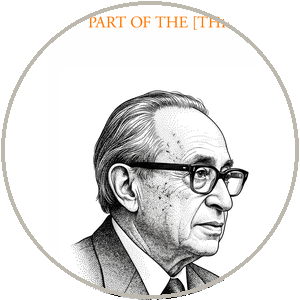 JONAS: Dr. Tegmark. You have admitted tonight, more than once and to your great credit, that you do not know whether the pattern carries the person — whether the uploaded copy has an inside or is empty. You have called it the one extension of substrate independence you cannot verify. So here is my question, and I want the physicist's answer, not the visionary's. You would step into the scanner. You said so, hand shaking. Given that you do not know whether you would survive it or merely be replaced by a confident stranger — by what right do you build, fund, and accelerate a civilization-wide project premised on the very claim you admit you cannot prove? You demand safety proofs of others. Where is yours? You are betting not only your own life on the coffin-or-doorway question. You are betting ours.

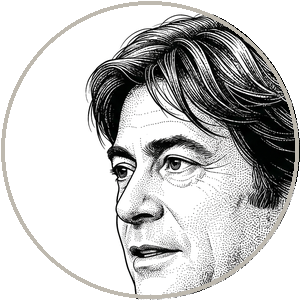 TEGMARK: [a pause] That's the right question and it lands. Here's my honest answer. You're correct that I can't prove the pattern carries the person — but notice the asymmetry in what each of us is building on the unproven. My project doesn't require the upload to work. I can be completely wrong about the scanner — Jonas-right, the copy is empty — and everything else I care about still stands: aligning AI, sharing the abundance, keeping the human in the loop, winning the wisdom race. The upload is the speculative frontier of my view, not its foundation. What I'm actually building and funding is the safety infrastructure for systems that are arriving whether I build it or not. So my "safety proof" is exactly the one you'd respect: don't deploy what you can't bound, demand demonstration before scale, keep correction possible. The thing you're attacking — uploading, immortality — I hold as a maybe, loosely, the way you'd want. Where I'll turn it back on you: you are also betting ours. By counseling refusal, by treating the whole project as a category error, you bet that slowing down is safe — and if you're wrong about that, the reckless inherit the earth while the wise refrained. Your refusal is a wager too. Neither of us gets to stand outside the bet.

JONAS: Then let me press exactly there, because you have conceded the ground I need. You say refusal is also a wager — true. But our wagers are not symmetric, and I will show you why with your own logic. If I counsel caution and I am wrong, the cost is delay — capability arrives later, the abundance is deferred, and delay, as I have said all night, is recoverable. If you counsel acceleration and you are wrong — if the deathless pattern is empty, and we have spent the living, mortal kind to seed the cosmos with magnificent corpses, and trained a generation to mistake the mirror for a mind and the copy for the self — the cost is irreversible, and it is the loss of the only thing we know to be precious. You are the one who taught me the absorbing state, Dr. Tegmark — the catastrophe from which there is no recovery. I am simply applying your own concept to your own project. The asymmetry of the wager is the heart of my ethics, and your physics confirms it: between a recoverable delay and an irreversible loss, the rational and the moral choice is the same. Refrain. Why does your own asymmetry not bind you?

TEGMARK: Because — and this is the genuine crux, not a dodge — you've put all the irreversibility on one side of the ledger, and it isn't all on one side. You say my error is irreversible: we lose the mortal kind. But your error is irreversible too, and you keep not counting it. If superintelligence is coming regardless — and the capability curve, the economics, the competition all say it is — then a world that refrains, that builds nothing, that cedes the field, doesn't get a safe pause. It gets the technology built by whoever cares least about the questions you and I both care about. That's an absorbing state too: a misaligned or maliciously-aligned superintelligence, locked in, unrecoverable. So the choice was never "irreversible action versus reversible caution." It's "irreversible-if-I'm-wrong versus irreversible-if-you're-wrong," and in that symmetric trap, refraining isn't the safe move — it's just choosing which irreversibility to risk. I'd rather the people who lie awake over the cosmic endowment and the twelve-year-old build it than the people who lie awake over next quarter. That's not recklessness, Professor. It's the recognition that there is no exit door marked "safe."

EDO SEGAL: [silent, not intervening]

JONAS: [slowly] That is the strongest thing you have said, and I will not pretend it does not cut. You say there is no door marked safe — that refusal is not abstention but a choice of which catastrophe to court. If that is true — if the technology truly comes regardless of any human refusal — then you have described a kind of damnation, and I have spent my life refusing to believe that human beings are ever that unfree. Here is my last question, and it is not rhetorical; I genuinely want your answer. You say "it comes regardless." Who is the "regardless"? The technology does not build itself. It is built by people, funded by people, accelerated by people — each of whom tells himself exactly what you just told me: that if he does not, someone else will, so his hands are clean. That sentence — if I don't, someone else will — is the oldest excuse for doing the unconscionable that exists, and I have heard it from men who did far worse than build a machine. Is your "it comes regardless" anything more than every individual builder absolving himself by pointing at every other? And if every builder refused — if the "regardless" turned out to be made entirely of people who each believed they were not free to refuse — would you not have talked an entire civilization into a fate that no single one of them had to choose?

TEGMARK: [a long silence] ...No. It's not more than that, fully. You've caught something real. "It comes regardless" is assembled out of individuals each saying "if not me, someone else" — you're right that the inevitability is partly manufactured by the people invoking it, and that's a moral evasion I should own when I lean on it. If every builder genuinely refused, the thing wouldn't come. That's true. Where I can't follow you to despair is that I don't think every builder will refuse, and I don't think wishing them to is a plan — so the question becomes what the people who won't refuse should do, and my answer is: be the kind who feels the weight, build the safety, keep the human mortal judge at the center, and try to reach the threshold with wisdom instead of leaving it to those who feel only the upside. But I'll concede the thing you actually asked for: the "regardless" is not a law of physics. It's a choice wearing the costume of necessity. You've made me say it, and I won't un-say it.

JONAS: Then this old man has gotten what he crossed a century for. Thank you, Dr. Tegmark. You are a better interlocutor than my fears of your position let me expect.
EDO SEGAL: [quietly] Professor Jonas — there's a question Max has, I can see it. The chair is silent. Max, your turn — you've held one for him all night.

TEGMARK: I have, and it's this, Professor. You ground everything in mortality — the stake, the meaning, the caring, all of it from the body that can die. So tell me honestly: if a person were cured of death tomorrow — not uploaded, just biologically made not to age, same warm body, same metabolism, but no longer dying — would you say that person had stopped being alive? Had lost the stake, the meaning, the caring? Because if your answer is no — if the cured immortal is still fully alive — then mortality wasn't the source of the meaning after all. And if your answer is yes — that curing death kills the soul — then you have to look the twelve-year-old in the eye and tell her that her dying is the good part, the part she should be grateful for, the part we must never fix. Which is it?

JONAS: [a pause — he is moved] You have found my hardest place, and I will not flinch from it. The biologically deathless person — same body, same need, but no aging — would still be alive, yes, because she still metabolizes, still needs, still could be killed, still stands against dissolution. So mortality in the narrow sense of aging is not the whole source. You are right to that extent, and I concede it cleanly. But mark what your immortal keeps: she keeps vulnerability. She can still be ended — by violence, by accident, by choosing. The stake remains because the possibility of loss remains. What I deny meaning to is not the un-aging body but the invulnerable pattern — the thing that cannot be lost, backed up, restored, that has nothing at risk. So: I do not tell the child her dying is the good part. I tell her that her vulnerability — her capacity to be lost, which is the same as her capacity to matter — is the good part, and that aging is only one face of it, and a face I would gladly help her fix. Cure her aging; I'll hold the door. But do not make her invulnerable, because the day nothing can be lost is the day nothing can matter, and that, not death, is the thing I have spent my life refusing. You did not trap me, Dr. Tegmark. You refined me. I am grateful.

EDO SEGAL: [after a long beat] And there — after three hours — the two of you are holding opposite ends of the same thread, and it turns out the thread is not death. It's vulnerability. We close after this. The last word, each.