The Mortal and the Reliable

 EDO SEGAL: This is the round the whole night has been bending toward, so let me put it as a scene and then get out of the way. The self-driving car. Daniela's clearest case: it acts best precisely when the human steps back — hands off the wheel, attention elsewhere, the system bringing its distilled, unwavering judgment to the worst eleven milliseconds. And Hannah's deepest fear in its purest form: action in the world, consequence forever, and at the moment of the deed, no one home. You designed the machine to work best when the human is absent, Daniela. Hannah spent her life arguing the human must be present at the moment of action or the action is empty. You can't both be right about the same eleven milliseconds. Daniela, defend the empty driver's seat.
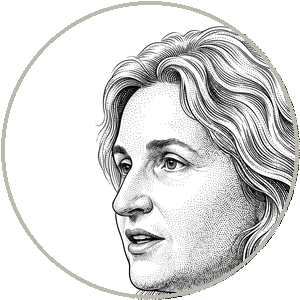 RUS: I'll defend it on the only ground that matters to me, which is the bodies. Every year, more than a million people die on the roads, overwhelmingly because of human judgment at the moment of action — drunk, distracted, tired, enraged, panicked. We have decided to tolerate that number because we cannot imagine the alternative and because the deaths are diffuse and the drivers are present, so responsibility feels located even as the bodies pile up. I can imagine the alternative, and I'm building it: a system that brings to those eleven milliseconds not the wavering, fallible, exhausted judgment of one frightened person but the carefully reasoned, tested, unwavering judgment of its makers, every time, without fatigue. Hannah calls the empty seat "no one home." I call it the opposite of the drunk driver, who is technically home and functionally absent. The presence she wants — a tired human's attention at the moment of crisis — is frequently the least reliable thing in the car. Sometimes the most responsible thing you can do is build the system that doesn't depend on a hero being alert at 2 a.m. The empty seat isn't the absence of judgment. It's judgment that arrived early, in the design, and stayed.
EDO SEGAL: Hannah — she just said the human's presence at the moment of action is sometimes the least reliable thing in the room. That's a frontal assault on your whole position. Answer it.
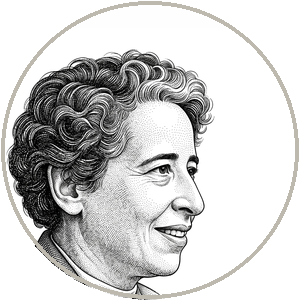 ARENDT: I answer it by accepting the bodies and refusing the inference, because Daniela has won the narrow case and is using it to take the wide one — and the slide is everything. Yes. On the highway, in the eleven milliseconds, where the task is genuinely coping — keep the metal off the child — the reliable machine may be the better instrument, and I will not let a million deaths be the price of my philosophy. I concede the car. I concede it cleanly. But watch what you do with the concession, Daniela. You take "the human's presence is unreliable in the eleven milliseconds of coping" and you generalize it into "the human's presence is unreliable, therefore step back" — and you carry the empty seat out of the car and into every room where the task is not coping but judging. The drunk driver is your warrant for the autonomous benefits-system, the autonomous targeting decision, the autonomous judgment about a person's life — and in those rooms there is no child to save, only a particular human being to be confronted, and the "unreliable human presence" you want to remove is the conscience. You have found one room where the human should step back and concluded the human should step back from all rooms. That is the delegation as ritual I fear most — the handing-off becomes a habit, then a default, then a faith, and one morning you look up and the human has stepped back from everything, including the rooms where stepping back is the abdication.
RUS: And that is a fair charge against the slide, and I'll defend myself by drawing the line you're accusing me of erasing — because I draw it harder than you're giving me credit for. I do not want the empty seat in the courtroom. I have never argued the machine should make the irreducible judgment about a person's life, and The Heart and the Chip is one long argument that it can't and shouldn't. The car is not a warrant for the targeting system; the car is a case where the task is genuinely coping under known conditions, and the targeting system is a case where it is genuinely judgment under novelty, and the entire art — the entire responsibility — is telling those two apart and refusing to let the success of the first license the second. You're right that the culture slides; you're right that "it worked on the highway" becomes "it'll work in the courtroom," and that slide is dangerous and real. But the answer to a dangerous slide is to hold the line precisely, not to refuse the technology on the side of the line where it saves lives. The empty seat is right in the car and wrong in the courtroom, and a serious person has to be able to say both sentences and mean them.
ARENDT: Then we may be closer than three hours suggested — and I want to test exactly how close, because it matters for the reader. You say: machine for coping under known conditions, human for judgment under novelty, and the discipline is never to let the first license the second. I can almost sign that. My remaining fear is not that you can't draw the line. It is that the line will not hold against the convenience, because the machine on the coping side will be so reliable, so smooth, so much cheaper than the agonizing human on the judgment side, that the pressure to slide the line will be relentless and the people pushing it will own the systems. The line you draw beautifully tonight is drawn quarterly, by people whose arithmetic rewards moving it. So I do not doubt your line. I doubt your power to hold it against everyone who profits from erasing it — and a line that depends on the conscience of the owners is the line I watched fail in the twentieth century.
RUS: Then we agree about the line and disagree about human nature and institutions, which is a more honest place to disagree than where we started. I'm betting that law, culture, and design can hold the line — that we can build the discipline into the regulation and the profession the way we built it into aviation, where the autopilot flies and the pilot is trained, certified, and legally bound to know exactly when to take the controls. You're betting the pressure erodes any line the owners find inconvenient. Both bets are about people, not machines. And I'd rather fight to hold the line and sometimes lose than refuse the thing that empties the right seats while I'm busy guarding the wrong ones.
EDO SEGAL: Mark it — convergence three, and it's the most important of the night. You both agree there is a line between coping the machine should carry and judgment the human must keep, and you both agree the danger is the line sliding under the pressure of convenience and profit. Hannah doubts we can hold it; Daniela bets we can build the discipline to. That is no longer a disagreement about machines. It is a disagreement about us. Hold that — it's the question the reader carries up the stairs. One round left before the crossing, and it's the warmest and the deepest: the thing that cannot be handed off no matter how the line moves. The candle and the heart. After this.