Action Without Actors

 EDO SEGAL: This round is about the word Hannah reserved at the door — responsibility located in whom. Let me set it with a scene, because the abstraction hides the horror. A delivery drone, fully autonomous, drops its package on a child. No one was flying it. The manufacturer points to the operator's terms of service. The operator points to the model vendor. The vendor points to the training data, which came from everywhere and no one. The insurer points to the regulator, who points to the standard, which was written by a committee that has since disbanded. A child is hurt, and when you ask the question Hannah insists on — who did this — the answer dissolves into fog. Hannah, you watched a man dissolve his responsibility into a system in a courtroom. Is the autonomous system the same dissolution, industrialized?
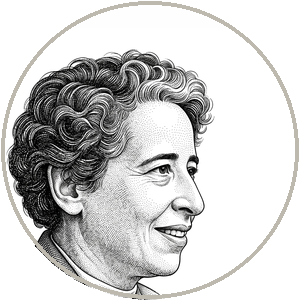 ARENDT: It is worse, and I want to be exact about why, because the difference matters. Eichmann at least had a self that could have been held responsible — there was a man there, a who, who made choices and could have made others, and a court could place the deed at his feet even as he protested that the system did it. The dissolution was a lie he told, and the trial existed to expose the lie. But the autonomous system is a dissolution that is true. There is genuinely no one there. The deed has genuinely no doer. You cannot put a model in the dock; it made no promise, it has no self that must live with what it did, it cannot be praised or blamed in any sense that means anything. So the absolute responsibility I spent my life insisting human affairs must retain — the answerability of actual persons who can be held to account — does not merely get evaded. It gets structurally abolished. We produce consequences with no author. Events that happen to the world without anyone having done them. This is the precise condition I most feared, and you have not stumbled into it. You have engineered it, and called the engineering "autonomy."
EDO SEGAL: Daniela — a child is hurt and there is genuinely no one to hold. Answer the fog.
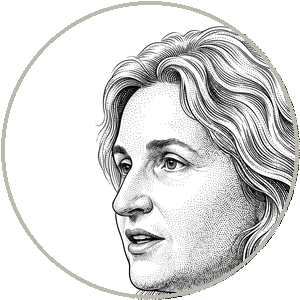 RUS: I answer it by refusing the premise that the fog is a property of the machine. The fog is a property of how we arranged the humans around it, and it is fixable, and pretending it isn't is its own abdication. Hannah says there's genuinely no one there. I say: there are dozens of people there, they have simply been allowed to stand in a configuration that lets each point at the next. That is not a fact about autonomy. It is a failure of law and design, and we know how to fix it, because we have fixed it before. When an elevator falls, we do not say "the elevator did it and no one is responsible." We have a regime — builder responsibility, liability that attaches to the deployer, certification, standards with teeth — precisely so that the answer to "who is responsible" is never "the machine." The machine is never the responsible party. The deployer is. The person who chose to put that system in that situation, at that level of capability, with that much or that little human oversight, is the actor, and the law's job is to make sure they cannot hide behind the thing they deployed.
So here is where I think Hannah's argument, brilliant as it is, makes a category error. She treats the machine as a candidate for the responsibility, finds it cannot bear responsibility — correctly! — and concludes responsibility has been abolished. But the machine was never the candidate. A hammer cannot be responsible either, and we do not say the carpenter who drops it on someone has discovered a metaphysical hole in accountability. Responsibility never lived in the tool. It lives in the human who chose to use the tool this way, here, now. The autonomous system does not abolish the actor. It tempts us to let the actor hide — and the answer to a temptation is not to refuse the tool. It is to refuse the hiding. Make the deployer absolutely, personally, legally answerable for what they deploy, and the fog burns off, because suddenly there is every incentive to know exactly what the system will do.
ARENDT: But you have just relocated the responsibility backward in time, to the moment of deployment, and away from the moment of action — and that relocation is the whole disease, not the cure. The deployer decides once, in the abstract, in advance, about a class of situations she cannot foresee. Then the machine acts ten million times, in particulars she never imagined, and your "responsibility" is a signature on a certificate filed years before the child was hurt. That is not responsibility in my sense. Responsibility, for me, is answerability for the particular deed — and you have built a world in which the deed and the decision are separated by an unbridgeable gap of time and abstraction. The deployer is responsible the way Eichmann was responsible for the schedule: at a level of generality where the human being at the other end has vanished into a category. You have not restored the actor. You have moved him so far upstream of the action that he can no longer see what he is answerable for. And a responsibility you cannot feel at the moment of the deed is not a responsibility. It is a receipt.
RUS: That is a genuinely powerful objection and I'm going to concede part of it and fight the rest. You're right that deployment-time responsibility is coarser than action-time judgment, and that the gap between them is real and dangerous. Where I fight is the conclusion that this makes it worthless. A surgeon who designs a protocol is responsible, in a real and feelable sense, for the deaths that protocol causes years later in hands she'll never meet — and good surgeons feel exactly that weight; it is why they agonize over the protocol. An engineer who knows her system will act ten million times in situations she can't foresee does not get less responsible because she can't see each case. She gets more responsible, because she is answering for ten million deeds instead of one, and the good ones feel that as a crushing weight, not a receipt. The relocation upstream doesn't dilute responsibility if we build the culture and the law to make it bite. It concentrates it. The question — and it's the right question, Hannah, it's your question — is whether we will actually make it bite, or let the certificate be an alibi. On that, I am not naïve. I just don't think the answer is to forbid the machine. It's to forbid the alibi.
EDO SEGAL: Stay one more beat, because there's a confession I owe this round and I needed both of you to lay the halves of it first. In a board meeting two years ago the arithmetic on the table was exactly this relocation — automate the decision, and the liability moves from a hundred fallible people making it daily to one clean certified system. And I felt the pull of it, the relief of it, the way you describe the deployer's relief, Daniela. And I also felt what Hannah is describing — that I was about to buy that relief by moving the answer so far upstream that no one in the building would ever again feel the weight of a particular wrong. I kept the people in the loop. I'm aware the structure punishes that. Daniela, here's what I most need to know: is the relief itself the danger? Is the feeling of the fog lifting precisely the feeling of responsibility being quietly carried out of the room?
RUS: Sometimes, yes — and that's the most honest thing I can say. The relief is real and the relief is a warning. When automating a decision feels like a weight lifting, you have to ask whether you removed the toil or removed the conscience, because from the inside, in that board meeting, they feel identical. That is Hannah's deepest insight and I will not pretend it away. My only addition is that the answer to a dangerous relief is not to forgo the tool that produces it. It's to build the discipline — personal, legal, cultural — that makes you ask, every time, what exactly did I just stop feeling responsible for, and should I have. The relief is not proof of progress. But it isn't proof of evil either. It's the exact moment judgment is required — which means it's the one moment you can't hand off.
EDO SEGAL: "The one moment you can't hand off." Hold that — it's the hinge of the whole tower, and it comes back at the roof. We've reached the end of the first hour with the seam glowing white. Next, we leave the courtroom for the lab, because Hannah's whole case rests on a claim about what the machine is, and Daniela has spent thirty years on the one thing the philosophy keeps forgetting: that intelligence has to touch the world. The body, the worm, and the thing the language model cannot do. After this.