Closing Statements

 EDO SEGAL: Three hours ago I asked who is responsible when the machine acts and no one is thinking, and whether you can climb any higher having handed off that answer. We've fought it through the three activities, the courtroom and the fog, the body and the worm, natality and the death cross, the common table and the empty driver's seat and the candle — and the question is still standing, which both of you would tell me, for opposite reasons, is the right result. So we end the way long conversations should: each of you gets the floor, uninterrupted, to say the thing you most want carried out of this room. But first, the bookend to the envy question I opened with. Name the strongest thing the other said tonight. Not the most agreeable — the one that got past your defenses, that you'll still be arguing with next month. Daniela first.

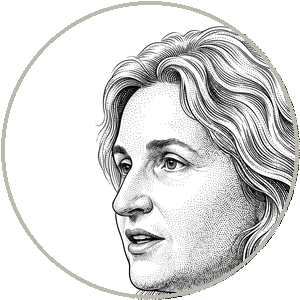 RUS: The flinch. Hannah's answer to my last question — that the human conscience is unreliable in both directions, that it can fail toward evil but can also, against the odds, flinch toward good, and that the machine's reliability is one-directional and cannot flinch. I came in believing reliability was straightforwardly a virtue, and I'm leaving knowing it's a virtue only in the rooms where there's nothing to flinch from — and that telling those rooms apart is the entire job, and that I'd been treating it as a footnote. That's going home with me. And — since you'll let me have two — the braid. That the toil and the forming of judgment were braided together, and you can't pull one thread without the other. I've spent my career confident I could separate them by design. I'm now only mostly confident, and at my level of certainty about most things, that's a significant move.

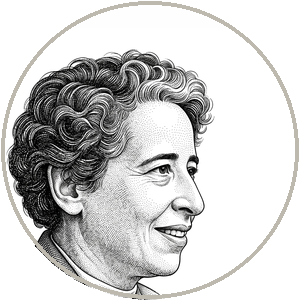 ARENDT: The empty seat in the car. Daniela made me concede something I did not walk in prepared to concede — that there are rooms where the human's presence at the moment of action is not the conscience but merely the fatigue, where "no one home" saves the child that the present, exhausted human would have killed. I have spent this evening, and frankly my afterlife, insisting the thinker must be present at the moment of action. She made me see that this is true only where there is a who to be judged, and false where there is only a harm to be averted — and that I had been smuggling the courtroom's stakes into the highway. My position is narrower and truer for having met hers. And since the chair let her have two — the heart as job description. Her line that the candle argument is not an argument against her machines but the job description for them: let the deathless thing do the deathless work so the mortal creature has more of its one life for the flame. I distrust it still. But I can no longer call it foolish, and I built a career on calling that kind of optimism foolish.

EDO SEGAL: Now the floor is truly yours. Hannah Arendt — you opened the evening. Daniela closes it.

ARENDT: Thank you — for the evening, and Daniela, genuinely, for the fight; you were the opponent who made me sharpen rather than repeat. I want to leave the reader with the one thing I would defend past every concession I made tonight. You will be told, again and again, that handing the action to the machine is an efficiency — that the deed performed reliably by the system is the same deed, only better. It is not the same deed. A deed performed by a process is a deed with no doer, and a world that fills up with doer-less deeds is a world in which, slowly, there is no one left who is answerable for anything, and a world where no one is answerable is a world where anything can be done. I watched that world. It was not built by monsters. It was built by competent people each attending to a task, each declining to think about the whole, each able to say with perfect truth that they were only doing their part. The machine does not introduce a new evil. It removes the last fragile thing that stood between us and the old one: the bare possibility that somewhere in the chain, a single human being might stop, and think, and refuse. Guard that possibility. Not because the human is reliable — she is not — but because she is the only thing in the universe that can flinch against the odds. The capacity to begin, to judge, to refuse the order, to ask what you are for — these are not tasks the machine will eventually take. They were never tasks. They are what you are. Keep doing them, slowly, uselessly, stubbornly, especially when the machine makes them optional. The moment they become optional is the moment they become the whole of your freedom.

EDO SEGAL: Daniela.

RUS: I've spent thirty years building machines that have to touch the world, and the strangest thing I've learned is not technical — it's that the world will not let you be thoughtless and survive, that every robot I've ever built has demanded more care, more judgment, more humility before reality, not less. So when I hear that the machine is the death of thought, I hear it from inside a life that the machine made more thoughtful, not less. That's the truth I want to leave you with, against the fear. The robot is a tool. Not a savior, not a threat — a tool, and the meaning of any tool is in the hand that holds it and the heart that decides what it's for. The chip provides the means. The heart provides the why. And the why — Hannah is right about this, more right than my optimism wanted her to be — the why does not arrive for free when the machine saves you the toil. It has to be chosen, on purpose, against a current that makes it optional. So here is what I'd tell your twelve-year-old, the one who asked what she's for. You are for the question. The machine can answer almost anything now, and it will only get better at answering, and that is exactly why the world needs you to get better at asking — at deciding what's worth doing, at caring how it comes out, at being the mortal creature who has skin in a finite life and therefore something real at stake. The machine freed your hands. It did not light the candle. That part was always going to be yours. Use the freed hands to cup the flame.

EDO SEGAL: Sixty seconds, as promised.

I came into this evening with one question and I leave with both of its halves intact and sharpened. Hannah spent three hours proving that a world of doer-less deeds is a world where, eventually, no one is home and anything can be done — and that the only thing that has ever saved us is the creature who can flinch against the odds. Daniela spent three hours proving that the machine can carry the toil and the coping so reliably that the mortal creature is freed for the one thing only a mortal creature can do — and that the freeing is not the lighting, that the candle is still ours to cup. You'll notice neither of them told you the comfortable thing. Neither of them said: relax, the machine will handle it. And neither said: refuse the machine, climb down. They said something harder, and they said it, in the end, almost together — keep the flinching creature in command of the tireless tool.

Here is what I can tell you from the rung of the tower where this debate lives, where the river meets the death cross. You cannot climb past this floor by waiting for the experts to settle whether autonomy is the banality of evil or the gift of freed hands — you have just watched the two best in the world fail to settle it, magnificently, and converge instead on the only thing that matters: that there is a line between the coping you may hand off and the judgment you must keep, and that the danger is the line sliding under the weight of convenience and profit, and that holding it is not the machine's job but yours. So you climb by deciding, under uncertainty, where you will stay the thinker. What you'll keep your hand on at the moment of action. What you'll refuse to hand off no matter how smooth the handing-off becomes. Which deeds, in your one finite life, you insist on being the doer of. Whoever is home in the machine — and there may be no one — someone is home in you, and tonight neither of these formidable women disputed it. The question my book asked from its first page sounds different now than it did three hours ago, and you carry it up the stairs: not only are you worth amplifying — but where must you stay the thinker, so the action is still yours?

Hannah Arendt. Daniela Rus. Thank you. The room is yours to build in now. Goodnight.
One of them hears a fire alarm. The other hears a system finally working. They are listening to the same machine.

Two minds. One microphone. Three hours on the question that won't let you climb past it. In this volume of the Grand Debate series, hosted by Edo Segal, the twentieth century's fiercest witness to thoughtless evil sits across from one of the twenty-first's foremost builders of machines that act on their own. Hannah Arendt warns that when processes "act" and no one judges, responsibility evaporates and the human condition with it. Daniela Rus answers from the lab: autonomy is not absence of thought but thought made dependable — robots and self-driving systems that act so we are freer to live. As the River rises and machine capability nears the Death-Cross, this is the conversation you must hold in your own head to keep climbing. Part of your journey through [YOU] on AI: Life in the Era of the Orange Pill Moment. Pull up a chair on the staircase. The view from the roof is waiting.

Hannah Arendt (1906–1975) was a German-born political theorist whose work remains among the twentieth century's most penetrating reckonings with power, evil, and the human condition. Born into an assimilated Jewish family in Königsberg, she studied under Martin Heidegger and Karl Jaspers, fled Nazi Germany in 1933, and lived stateless for eighteen years before reaching the United States in 1941. Her major works — The Origins of Totalitarianism, The Human Condition, Eichmann in Jerusalem, and the unfinished The Life of the Mind — distinguished labor from work from action, introduced the phrase "the banality of evil," and defended thinking, judgment, and natality as the faculties on which freedom and moral life depend. She insisted, against every fatalism, that because human beings are born, the world retains the capacity to begin anew.

Daniela Rus is one of the most influential roboticists in the world and the leading theorist of physical, embodied intelligence. Born in Cluj-Napoca, Romania, she earned her doctorate at Cornell under John Hopcroft and joined MIT in 2004, becoming director of its Computer Science and Artificial Intelligence Laboratory — CSAIL, the largest of its kind — in 2012. A MacArthur Fellow, she pioneered soft robotics, self-reconfiguring machines, and the liquid neural network, building everything from the soft robotic fish SoFi to autonomous boats to a nineteen-neuron network that can steer a car. She co-founded Liquid AI and is the author of The Heart and the Chip, whose argument is that robots are tools meant to give people superpowers — the chip provides the means, the heart provides the why.

Edo Segal has spent five decades building at the technology frontier — from games written in Assembler to expert systems, to companies through every platform shift, to Napster. He is the author of [YOU] on AI, written in open collaboration with the AI it describes, and the host of The Debates: long-form collisions between the minds shaping the machine age. He moderates the only way he knows how — stake declared, scars showing, no winner called.
Hosted and moderated by Edo Segal. A volume in the [YOU] on AI — The Debates series — youonai.ai