The Candle and the Heart

 EDO SEGAL: This round begins with a twelve-year-old, because the deepest questions arrive in their plainest form from children. In the spring a girl asked her mother — and the mother asked me, at a dinner table, with the look parents get now — "Mom, what am I for?" She'd watched a machine do her homework better than she could and was lying in bed doing the arithmetic children do honestly. I've answered her, in my way, with the candle in the darkness: that the machine is an engine of answers and she is an engine of questions, and the asking is the flame. Tonight I get to test that consolation against both of you — and you've each, from opposite directions, been circling the same answer all night. Hannah, you call it natality and thinking. Daniela, you call it the heart, the why. Hannah, what is the candle, and why can't the machine hold it?

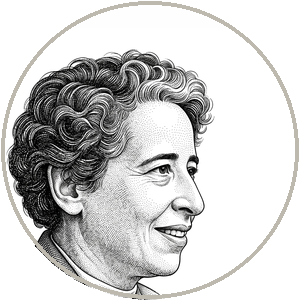 ARENDT: The candle is thinking, and I mean something very precise by it, because the age confuses it constantly with knowing. Knowing is the acquisition of information, the solving of problems, the building of reliable models — and the machine knows prodigiously, more than any of us. Thinking is something else entirely: the silent, resultless quest for meaning, the dialogue of the self with itself I called the two-in-one, the stepping back to ask what things mean and whether what one is about to do is right. "The need of reason," I wrote, "is not inspired by the quest for truth but by the quest for meaning. And truth and meaning are not the same." Thinking is not a harder kind of knowing that more computation reaches. It is a different activity, and it produces nothing — and that uselessness is its dignity. The machine cannot hold the candle because there is no two-in-one in it, no self that must live with what it has done, no partner it would be unbearable to contradict. And this is not academic, because I came to suspect, after Eichmann, that thinking itself — the habit of examining what one does, regardless of results — may be among the conditions that let a person abstain from evil. The thinking person is two, and the two must agree; one cannot, in the end, do what would make the silent partner unbearable to live with. Conscience is the residue of thinking. The machine has no such partner. It can produce any output and never has to face itself, because there is no self there to face. That is why the candle is ours, and why, of everything I fear, I fear most that we will let it gutter out because the machine's bright knowing made the dim, slow flame seem unnecessary.

EDO SEGAL: Daniela — Hannah just described the heart from the inside, in a vocabulary you'd never use, and I suspect you agree with almost all of it. Where do the candle and the heart meet, and where do they part?

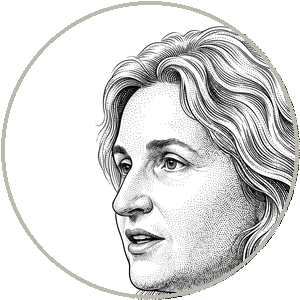 RUS: They meet almost entirely, and I'll say where with no hedging because it's the most important agreement of the night. Hannah's candle and my heart are the same flame seen by an engineer and a philosopher. I draw the line in The Heart and the Chip exactly where she draws it: the chip provides the means, the heart provides the why; there will be no robot that invents cubism, no artificial Shakespeare, not because we lack compute but because the generative spark — the capacity to decide what is worth doing and to bring a genuinely new form into being — is a difference in kind. When she says the machine knows without thinking, I say the machine executes without caring. Same boundary. And her point about caring — Dreyfus's being-at-stake, from two rounds ago — is the one I keep returning to, because it's the deepest thing she's said. My robots cope without caring. Nothing is at issue for them. They have no skin in any outcome. And caring, being-at-stake, mortal — that's not a capability you scale up to. It's the precondition of there being a why at all.

Here's where we part, and it's not about the boundary — it's about the mood. Hannah holds the candle as something to guard, fragile, about to gutter out. I hold the heart as something to deploy — to put the machine in service of, to amplify. Same flame, opposite posture. And there's a place where my mood has the better of the argument, Hannah, and it's exactly your insight about mortality. You're right that caring is rooted in finitude — that stakes are what death does to a value function, that everything we call meaning was forged by being creatures who die, who must choose how to spend finite time, who can be too late. The machine doesn't die, doesn't tire, doesn't have a finite life to spend — which is exactly why it should carry the deathless, tireless toil, and free the mortal creature for the part that only a mortal creature can do: to care, to choose, to ask what she's for. Your candle argument isn't an argument against my machines. It's the job description for them. Let the deathless thing do the deathless work, so the mortal thing has more of its one finite life to spend on the flame.

ARENDT: That is the most beautiful thing you have said, and it is the one I most distrust — and I want to be honest about the distrust rather than win the point. "Let the machine carry the toil so the human is freed for meaning" is the promise of every labor-saving technology, and it has never once delivered the meaning, because the meaning was never waiting on the far side of the saved labor. We did not become a society of philosophers when the machines took the toil. We became animal laborans with a screen — freed from necessity and lost without it, consuming where we no longer had to produce, unable to do anything with the freedom because we had forgotten how to act and how to begin and how to think, the faculties having atrophied for lack of use. The danger is not that the machine will refuse to free us. The danger is that it will free us successfully — and that we will discover the candle is not lit automatically by leisure, that the asking-muscle only grows under the very load the machine removed, and that a creature relieved of every friction is not a creature freed for meaning but a creature who has lost the conditions under which meaning was ever possible. Your machine does the deathless work, yes. And the mortal creature, with all that freed time, sits in the most comfortable room ever built and slowly forgets the question your twelve-year-old asked — not because the machine answered it, but because nothing in her frictionless life ever forced her to ask it.

RUS: And that — I won't fight, because you might be right, and the not-knowing is the honest place to end this round. The machine can free the time. It cannot light the candle, and it cannot make us light it, and a civilization that mistakes the freed time for the lit flame will get exactly the hollow leisure you describe. So here's where I land, and it's closer to you than I expected to be three hours ago: the most important thing is not the machine at all. It's whether we keep the human in the habit of beginning, of caring, of being stuck long enough to form the question — and that's not something the chip can do for us or to us. It's the one thing we have to do for ourselves, on purpose, against the current, precisely because the machine made it optional. The candle is ours to light. The machine just freed our hands. Whether we use them to cup the flame or to scroll — Hannah's right. That was never an engineering question.

EDO SEGAL: And there — after three hours — the philosopher and the engineer are holding opposite ends of the same candle. We close after the crossing. The last full round of the night, I step back. You ask each other. After this.