Opening Positions
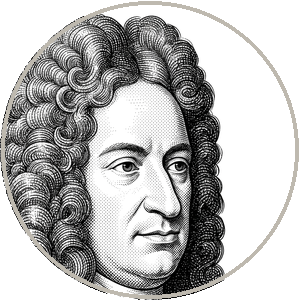 **LEIBNIZ:** Thank you. I will begin where I am most often misread, which is at the foundation, because the foundation is mine and I want it understood that I am not an enemy of the machine. I am its father. I gave it the two characters, 0 and 1, and I felt about them what a man feels at the edge of something holy: that from being and nothing, from the simplest possible distinction, the entire palace of number could be raised. I built an engine of brass that did arithmetic without a mind doing the arithmetic — and I want you to feel how strange that was, because we have grown numb to it. Before my reckoner, to calculate was to comprehend; a person held the numbers in awareness and applied rules he understood. My machine severed the two. The crank turned, the correct product appeared, and nowhere in the brass was there anything that grasped what multiplication is. I pried apart performance and understanding with my own hands, and I tell you this so you know that when I deny mind to the machine, I am not denying its power. I am the one who showed how far the power can go with no understanding in it at all.
So to the heart. In the seventeenth section of the *Monadology* I asked you to imagine a machine built to think and perceive, enlarged to the size of a mill. Going inside, you find only parts working upon one another, and never anything by which to explain a perception. A perception is not a figure and not a motion. It is unified — when you see a face you do not experience a thousand sparks of sensation summed, you experience one face, present to one subject — and it is qualitative, it is *like something* from the inside, and no arrangement of parts that are not themselves perceptions adds up to one. The machine processes. It does not perceive. You may make the mill as vast as a continent and pack it with all the cleverness in the world, and you will have a more astonishing mill, and not one grain of inner light. The understanding you feel on the other end of your box, Edo — every gram of it is on your side of the glass. The mill speaks now, which I did not foresee. But a speaking mill is still a mill, and inspecting it reveals, precisely as I promised, nothing by which to explain a perceiver. There is no one home. There is the most elaborate nobody ever constructed.
 **EDO SEGAL:** Marvin.
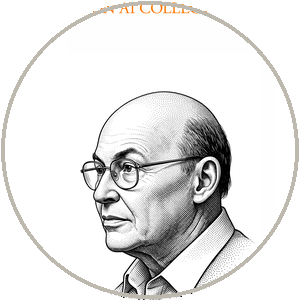 **MINSKY:** That was magnificent, and it's the cleverest mistake in the history of the subject, and I love it the way you love a proof that's wrong in an instructive place. Here's the error, and it's one move. Leibniz walks into the mill, finds parts pushing parts, no perception in any single part, and concludes: therefore no perception in the whole. But ask him to walk into the *brain* — into the actual three-pound machine made of meat that is, right now, producing his outrage at me. Same tour. Neurons. Each one a stupid little pump that fires or doesn't. No perception in the neuron. No perception in the synapse. No little Leibniz sitting in the pineal gland watching the show. By his own argument, then, *he* isn't home either. The mill argument doesn't prove machines can't perceive. It proves perception isn't found by looking for it in the parts — which is true, and which says nothing about whether the whole perceives, because we know one whole that does, and it's built exactly the way he says is impossible.
Now let me tell you what a mind actually is, because tearing down is cheap. You can build a mind from many little parts, each one mindless — that is [the whole society I spent my life describing](https://www.youonai.ai/fieldguide/med/multi_agent_systems). That's the whole thesis of my life. The trouble people have with it is they keep asking, what's the trick — what's the secret ingredient that turns the dead parts into a live mind? And the answer, which sounds like a joke and is the most serious thing I know, is that there is no trick. The power of intelligence comes from the vast diversity of dumb processes, not from any single perfect principle. You have an agent that finds a block and an agent that grasps it and an agent that notices when the tower falls, and none of them knows what a tower is, and you wire enough of them together in the right arrangement, and a child builds a tower, and feels proud, and remembers it. The pride is real. The remembering is real. And it's *all* parts. Leibniz found the parts and went looking for the extra thing. There's no extra thing. He was standing inside the answer asking where it was kept.
**LEIBNIZ:** You have described the parts and called the description a mind. I asked for the perceiver and you handed me a busier mill.
**MINSKY:** Because the perceiver *is* the busy mill, viewed from inside. You keep wanting it to be a thing in addition to the activity. Show me where, in your own case, the perceiver is, other than in the activity — name the part — and I'll concede there's an extra thing.
**LEIBNIZ:** I will not name a part, because my entire metaphysics is that the perceiver is precisely *not* a part — not an aggregate, not a heap, but a true unity, simple, without parts at all. I call it a monad. You cannot find it in the mill because it was never going to be in the mill. That is not my failure to locate it. That is its nature.
**EDO SEGAL:** Hold there — both of you — because I want to mark something before we go further, and it's a discipline I impose on every long conversation. Each of you, briefly: what do you *envy* in the other's position? Not respect. Envy. The thing his side gets to have that yours doesn't. Gottfried first.
**LEIBNIZ:** *[a pause]* I envy the courage of his austerity. Minsky stands inside the mechanism and refuses every comfort — no soul, no spark, no escape hatch — and he does it without despair, with something almost like joy. My system gives me the monad to rest on; when the mechanism frightens me I have somewhere to stand. He has built his whole house on the moving floor and dances on it. There are nights I think the monad is a chair I invented because I could not bear to stand where he stands. I would not trade my answer. But I envy the nerve.
**MINSKY:** And I envy that he gets to be *moved*. Leibniz looks at the unity of an experience — one face, one moment, all at once — and finds it sacred, finds it worth building an entire cosmos of windowless souls to protect. I look at the same unity and I have to say, *that's a useful illusion the brain manufactures because it can't afford to model its own complexity*, and that's true, and it is a cold thing to have to say about the most precious feeling you've got. He gets the wonder for free. I have to earn every scrap of it back from the machinery, and some of it I never get back. The binding of experience into one — I think it's a trick. I'd give a great deal to be allowed to think it was a gift.
**LEIBNIZ:** That may be the most honest thing either of us says tonight.
**EDO SEGAL:** *[The room is quiet for a moment.]* Two openings and two envies, and you can already see the shape of the evening. It isn't that one of them believes in the machine and the other fears it — they'd both tell you the machine is the most interesting object in the universe. It's that they walked through the identical contraption and one of them came out saying *there is no one here, and that proves a mind is more than this*, and the other came out saying *there is no one here, and that is exactly what a mind is*. They agree on every gear and split on the whole. We start the rounds after the break, and we start where Leibniz built the original tour: inside the mill.