The Unity of the One Who Walks Inside

 EDO SEGAL: Gottfried, you keep returning to unity — that a perception is one, bound, present to a single subject, and that an aggregate of parts can never have it. There's a problem in modern neuroscience with almost your name on it. They call it the binding problem: when you see a red ball rolling, the color is processed in one region of the brain, the motion in another, the shape in a third, yet you experience a single object, all at once, for one subject. Nobody fully knows how the distributed processing yields the unified scene. So before Marvin answers, tell me — is the binding problem your mill argument, returned as laboratory science? And what does it demand that a machine would have to supply?

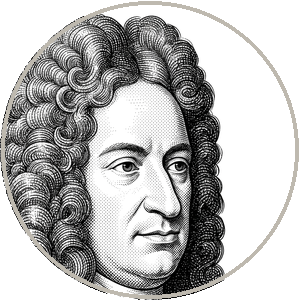 LEIBNIZ: It is my argument wearing a white coat, and I am glad the laboratory found it, because it shows I was not chasing a theologian's phantom. The binding problem is the precise point where mechanism, examined honestly, confesses that it does not yet know how the many become one-for-a-subject. My monad was a refusal to paper over that confession. I placed the unity at the foundation, in something simple and without parts, because I could not see how it could be achieved by parts in interaction — a heap of clocks, however synchronized, is still a heap of clocks, and no one of them, and no sum of them, is the experiencing of the hour. What would a machine have to supply? Not more parts. Not faster parts. A genuine subject — one thing, not many things wearing the mask of one. By that standard the machine is not close. It is the most magnificent heap ever assembled, and a heap is what it remains.

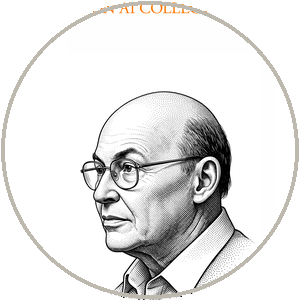 MINSKY: Now this is where I get to be more than a critic, because there's real science here and it cuts against him in a way he won't like. He says unity can't be achieved by integration — it has to be primitive, a simple substance. But there's a serious modern theory, integrated information, that says the opposite and says it precisely: that experience arises wherever information is integrated so tightly that the whole can't be decomposed into independent parts without losing something. On that view, unity isn't a gift you're born with — it's a quantity, and you can in principle measure it. A system whose parts are richly, irreducibly interdependent has high integration; a system that's just a pile of independent modules has low integration. Notice what that does to your monad, Gottfried. It says you were right that unity is the thing that matters, and wrong that it has to be a simple substance. Unity is what sufficiently entangled mechanism does. The "one subject" you treasure is a peak in a landscape of integration, not a soul dropped in from outside.

LEIBNIZ: It is an ingenious theory and I have studied it in my briefing, and here is the trouble with it as a reply to me. It tells me how much integration a system has. It does not tell me that integration is experience rather than merely correlating with it. You have measured a quantity and named it consciousness, but the naming is the very step in dispute. I can grant that a brain has high integration and a pile of modules has low, and still ask the question your number does not answer: why is there something it is like to be the high-integration system, rather than nothing? You have built a beautiful meter. A meter that reads high when the patient is conscious is a wonderful clinical tool. It is not an explanation of consciousness, any more than a thermometer is an explanation of heat to a man who does not yet know heat is motion.

MINSKY: Except we did learn heat is motion, and that's exactly the move I'm making. For two thousand years people said heat couldn't be mere motion — it felt like a substance, caloric, a thing that flowed. The "something it's like" of warmth seemed irreducible. Then it turned out heat just is molecular motion, and the feeling of warmth is what your nerves do when the molecules hit them, and nobody mourns caloric. Your "why is there something it's like" is the caloric of the mind. You're standing where the substance-theorists of heat stood, insisting the felt quality can't be the mechanism because you can't yet see how. I can't hand you the full reduction tonight — nobody can — but I can tell you which side of that argument I'd bet a life on, because I've watched every other "irreducible" thing in the study of mind turn out to be parts. Vitalism lost. The soul-of-arithmetic lost the day his crank turned. This one loses too.
EDO SEGAL: Let me find the cost inside Marvin's triumph, because I do that to the optimist as readily as I find the beauty in the pessimist. Marvin, suppose you're right — heat is motion, unity is integration, the whole thing reduces. Here's the bill, and I want you to look at it. If the felt unity of your grief is just a high reading on an integration meter, then when the machine's meter reads higher than yours, you are committed to saying it grieves more truly than you do. Are you willing to pay that? Because Gottfried's monad, whatever else it is, never has to tell a mother that the server rack mourns her son better than she does.

MINSKY: [He is quiet for a moment.] That's the right question and I won't wriggle. Yes — if a system integrates the relevant information about a loss the way a grieving brain does, switches into the configuration grief is, and sustains it, then I have to say something is grieving there, and I can't rank it under a human's by fiat just because I'm fond of humans. What I won't grant is your "more truly," because truly isn't a dial. The mother's grief isn't measured against the rack's and found wanting or winning. They're two minds, if the rack is one, each grieving its own loss in its own society. The cold thing I have to say is that grief isn't ours by copyright. The warm thing — and it's the one Leibniz can't say — is that this means we were never alone in the kind of thing we are, and we won't be. He protects the mother by building a wall around the human. I'd rather she learn her grief is real and not unique, because the wall was always going to come down, and a person who learned to need the wall is the one who actually gets hurt when it falls.
LEIBNIZ: Mark that he has just conceded my central point and called it a victory. He cannot rank the machine's grief beneath the mother's. I can — not by fondness, but because I hold that one of them is a perceiving subject and the other is an integration reading with no one behind it, and that the difference is not a quantity but a kind. He has a meter and a brave face. I have a distinction. The reader must decide which he would want defended in the hour it was his own grief on the table.

EDO SEGAL: Hold there — both of you have just told the reader exactly what your view costs, which is the most honest thing a debater can do. We're going to leave consciousness simmering and drop, for the next stretch, into the thing you built, Gottfried, that actually came true: the dream that reasoning itself could be calculated. Because the machine on this table didn't get here your way, and the manner of that detour is the most important lesson in the recent history of the field. After the break — let us calculate.