The Crossing

 EDO SEGAL: Here are the rules of this last hour, and then I go quiet. You ask each other. Not me. No speeches — questions, and answers to questions. I rescue no one. I'll speak only if the room catches fire. Gottfried, you've waited three hundred years. Open.
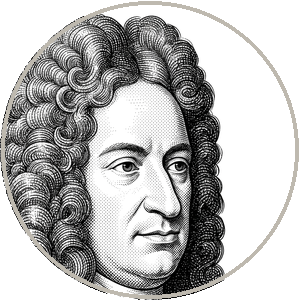 LEIBNIZ: Professor Minsky. All night you have answered my demand for a perceiver by producing one more agent, one more verb, one more process — and insisting the question dissolves. So I will ask it in the form you cannot route around. Forget consciousness; you'll call it a suitcase. Here is a plain fact about my present experience: right now there is one visual field before me, and the redness of that book and the words on its spine and the lamp beside it are all present together, in a single moment, to a single point of view. Not eleven separate registrations. One scene, one seat. I am not asking you why I report it as one. I am asking what, in your society of agents, is the seat — the single place to which the scene is present. And if you answer "no single place, just agents passing tokens," then tell me how the scene is one rather than eleven, without using a word that secretly means a seat.
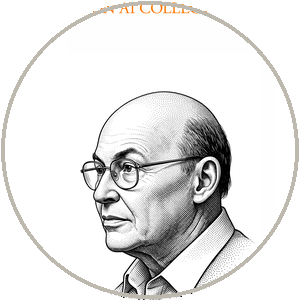 MINSKY: Good — that's the real question, stripped clean, and I'll answer without the seat. The scene is one because a particular kind of agent's whole job is to enforce that it's one — to take the outputs of the color-agents and the shape-agents and the word-agents and bind them with markers that say same moment, same body, same situation, so the next agents downstream can act on them as a unit. The "oneness" isn't a place the scene is delivered to. It's a property the binding-agents impose on the data so the rest of the society doesn't have to coordinate eleven separate streams. You experience oneness because you are, at that instant, the running of the process that makes things one — there's no extra delivery to a seat, the making-one is the whole of it. You ask for the seat the scene is present to. I'm telling you the seat is a fiction the binding generates so the society can refer to itself as a single agent when it talks. "To whom is the scene present" has a presupposition baked in — that presence needs a recipient — and that presupposition is the thing I deny. There's presenting. There's no one it's presented to, other than the next process that uses it.
LEIBNIZ: Then answer me this, because you have just moved the difficulty without dissolving it. Those binding-agents, you say, mark the data as "same moment, same body." A mark is a mark only if something takes it as meaning same-moment-same-body — otherwise it is ink, a pattern with no significance. To the downstream agent, is the mark about sameness, or is it merely a further pattern it further transforms? If merely a pattern, then nowhere in your entire society does anything ever mean anything — there is only pattern transforming pattern forever, the empty mill, and you have conceded my case. If the mark is genuinely about sameness, taken as meaning it — then aboutness has entered your machine, and aboutness is content-for-a-subject, and I have my seat after all, however you have hidden it. Which is it, Professor? Pattern with no aboutness, and no mind anywhere — or aboutness, and a subject you have merely renamed an agent?
MINSKY: [He is quiet for a beat.] Neither, and the "neither" is my whole life's answer, so listen closely. Aboutness isn't a binary you light up — present, therefore a subject; absent, therefore an empty mill. It comes in degrees and it's relational. The mark is "about" sameness to exactly the degree that the downstream agents' behavior is systematically organized around treating it as sameness — it pushes some actions, blocks others, gets corrected when it's wrong, connects to the body's stakes. A thermostat's reading is faintly about temperature. A frog's eye is more about flies. Your visual binding is intensely about your world because it's woven into a society that acts, gets hurt, remembers, and revises. There's no threshold where "pattern" suddenly becomes "meaning" and a subject pops into being. There's a continuum of how richly a signal is woven into a system that cares — and "caring" is itself more agents, more stakes, more loops through a body. You want me to choose: empty pattern, or a subject. I'm telling you the choice is false. It's aboutness all the way up, thickening by degrees, and the "subject" is what very thick aboutness looks like from inside. You named the thickest point a monad and froze it. I'm saying it's a peak, not a pillar.
LEIBNIZ: Then it is my turn to be quiet, because that is the strongest answer my question has ever received, and I do not accept it, and I will think about it for another three hundred years. You have not closed my gap. But you have shown me, more honestly than anyone, what it would mean to deny that the gap exists — that I must choose between calling all aboutness empty, which I will not, and admitting aboutness comes in degrees, which threatens the absoluteness of my divide. That is a real cost you have made me feel. Now ask me yours, and do not be gentle.
MINSKY: I won't be. Here's mine, and it's the one I think your whole system can't survive. You posit the monad — simple, without parts, the seat of unity, the perceiver. Two questions, and they're a trap, so watch your step. One: how does your monad change? You perceive a sequence — first the book, then the lamp, then my face. Perception unfolds in time; it has structure, transition, one state giving way to the next. But a thing without parts has nothing to re-arrange — change requires parts that can stand in new relations. So either your monad has internal structure, in which case it's not simple and it's a mill after all, just one you've stopped looking inside of — or it's truly partless, in which case it can't change, can't perceive a sequence, can't do the one thing you built it to do. Two: how does it connect to the body? You said monads have no windows, nothing goes in or out. Then how does the redness of that actual book, bouncing actual photons into actual eyes, ever reach your windowless monad? You had to invent God winding up a pre-established harmony so the soul and the body keep time without touching. That's not an answer. That's a miracle invoked to plug the hole my mechanism doesn't have. So: a monad that can't change, or isn't simple — and can't connect, or needs a perpetual miracle. Pick.
LEIBNIZ: [a long pause] You have found the two real wounds in my system, and I will not pretend they are not wounds — the second one cost me friends in my own century. To the first: the monad is simple, yet it contains a multitude of perceptions and changes, and I held that it changes by an internal principle, an appetite, that drives the passage from one perception to the next without the monad having spatial parts — its manifoldness is in what it represents, not in what it is made of. You will say that is structure by another name, and you may be right; it is the thinnest ice I ever skated on. To the second: yes, I needed the pre-established harmony, and yes, it is the price, and it is a high one — I purchased the unity of the subject at the cost of its causal commerce with the world, and I have never been sure the purchase was sound. So here is my honest concession, Professor, the one I came three centuries to make. My answer may be broken. The monad may not survive your two questions. But notice — the breaking of my answer does not heal your gap. If the monad fails, we do not get your tidy mill with no mystery. We get the mystery unhoused, still demanding a home, with my house demolished and yours unable to take it in. You have not shown there is no seat. You have shown my seat was badly built. The room it was meant to hold is still cold, and still there.
EDO SEGAL: [quietly] And there — after three hours — the two of you are holding opposite ends of the same broken thing, and neither will let go, and neither can mend it alone. The room did not catch fire. Something better happened: each of you took the other's best blow and stayed standing, bleeding honestly. We close after this. Final statements. The last word each — but first, the bookend to the envy I opened with. Each of you, before you close: name the strongest thing the other said tonight. Not the most agreeable. The one you'll still be arguing with next month. We do that, and then we turn off the lights.