What the Machine Actually Learned
 **EDO SEGAL:** I want to start this round with a confession instead of a question, because the best questions I know come out of wounds. For the whole history of computing, using a machine meant translation. I started in Assembler — I was raised by the machine code — and every decade the translation got easier but it never disappeared. You compressed your intention into the machine's grammar and paid a tax on every conversion. In December of 2025 I stood in a room in Trivandrum with twenty of my engineers and watched that tax go to zero. Each of them became capable of more than all of them together, in a week, because for the first time the machine met them in *their* language — mess, half-sentences, implication and all. I wrote that this was the great inversion: we stopped learning to speak machine, and the machine learned to speak human. Professor Leibniz — you are the man who invented the bit, the zero and one this whole thing runs on. Tell me what was actually learned. Slowly.
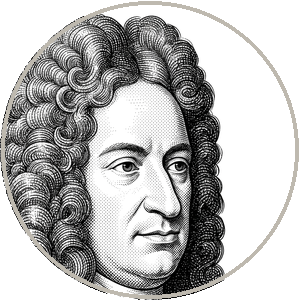 **LEIBNIZ:** It moves me more than I expected, your Trivandrum, because the substrate is mine. When I studied binary I felt something close to reverence — that the whole edifice of number could be raised from the barest distinction, between something and nothing, one and zero, being and the void. I thought it an image of creation itself, and I proposed a medal: from nothing, one suffices to derive all. So I am the last man who should be surprised that so much issues from so little. The fluency you saw is my zeros and ones, by the trillion. I half expected it.
But mark the gap that my own enthusiasm forces me to name, for it is exactly the gap of this book. When I looked at the order rising out of 0 and 1, the order *meant* something — it pointed beyond itself, to a divine intelligence that had arranged simplicity to bloom into harmony. The order was a sign. In your machine, the order is merely there. The bits combine into patterns into outputs, and at no level does the system take its own structure to signify anything. I looked at binary and saw God's signature. The machine runs on binary and sees nothing, because seeing is not among the operations it performs. So what did it learn? It learned the structure of your text — which character follows which, at every scale, from spelling to the rhythm of a proof. It did not learn what I learned, which was that the structure was *about* something. The substrate is identical. The someone reading it is on one side only, and that side is yours.
 **SEARLE:** I want to take the same wound from the other angle, because Leibniz and I converge here and I want the convergence on the record before we diverge. He says: it learned the structure of the text, not what the text is about. That is exactly my syntax-and-semantics, in his vocabulary. The model devoured human-written text, and human text is already saturated with grounded meaning — deposited there by writers who had bodies and thirst and dead fathers they could name. So the model inherits a *fossil* of grounding. A trace of the world, pressed into the statistics of our language, the way a footprint is pressed into mud. When it answers your engineer, it's reading the fossil back to her, and she — who has the living thing — completes the circuit. Every gram of understanding in that loop was on her side of the glass. The machine learned how meaning *looks* from the outside, in the shapes meaning leaves behind. It never once touched the meaning.
**LEIBNIZ:** And note why the loop closed at all, Mr. Searle, since you and I both owe this honesty — it closed because the work was code, and code is unusual text. It carries its own judge: it runs, or it does not. Her intention reached the world through the running of the program, not through the machine's grasp of her wish. The machine supplied a continuation; the world supplied the verdict; she supplied the meaning. Three parties, and only two of them perceive.
**EDO SEGAL:** So let me restate it as plainly as I can and hand it back, because I want to feel the edge of it. You are both telling me — literally — that what I called the machine learning our language is a category mistake. The machine learned the *wake*, not the boat. It learned the shape the river leaves on the bank, not the water. Is that the version you each find most compelling, or is there a stronger one?
**SEARLE:** That's the version. And here's the stronger test of it, the one that should worry your readers. Take the system somewhere the fossil is thin — a language with little text, a situation that needs knowing the world rather than the words, a genuinely new predicament. The fluency continues and the competence quietly leaves the room. It keeps *sounding* met. The sound is the product. A thing that understood the world would not need the euphemism your industry invented — "hallucination" — to describe the moments when it states a falsehood with total confidence and no idea it has done so.
**LEIBNIZ:** I will press one degree harder than Mr. Searle, toward my own preoccupation, because there is a second thing the machine did not learn and it is the dangerous one. It did not learn to give a [reason](https://www.youonai.ai/fieldguide/med/interpretability_problem). When your model denies the loan or ranks the résumé below the line, there is a cause — the computation determined the outcome — but no reason in my sense: no intelligible ground that can be stated, examined, contested. I held that nothing real is without a sufficient reason, that the universe owes us reasons. You have built a machine that owes you only outputs. It satisfies my principle at the level of physics, since every bit was caused, and violates it utterly at the level of meaning, since the decision cannot be rendered as a reason a person could understand or fight. That, and not the fluency, is what frightens me about what it learned.
**EDO SEGAL:** I want to stay in the wound one more beat, because there's a ghost I'd like to seat properly. Benjamin Whorf argued that the language you speak shapes the thoughts you can think — the strong form died, the weak form survived. I lived the programming version: code in C and you thought about memory; live in spreadsheets and you thought in rows. Every tool was a cognitive environment with walls. When the interface became natural language, I wrote that the walls dissolved. But a machine whose entire existence is one corpus — ours, mostly English, mostly the loud and the documented — is that not also a wall? A worldview, exported fluently, invisibly, with every answer?
**LEIBNIZ:** It is a wall, and the most effective kind, because an invisible wall is the only wall that never provokes a climber. But I would say something more unsettling, from my side of the table. You fear the machine carries a worldview. A worldview is the sort of thing a *subject* has — a point of view, a place from which the world is seen. My monads each mirror the whole universe from their own point of view; that is what it is to be a perceiving thing. The machine has no point of view. It has a *distribution*. It redistributes everyone's assumptions while holding none, the way a water system carries whatever is in the reservoir without itself being thirsty. So do not grant it even the dignity of a worldview. That would be to find a someone where there is only a pipe. The contamination is real. It does not require a mind in the pipes. It requires only pipes.
**SEARLE:** Pipes that answer follow-up questions, though. Leibniz and I are going to be doing this all night — agreeing on the verdict and fighting over the metaphysics. He won't grant the machine a worldview because there's no subject; I won't grant it a worldview because the aboutness is all derived, on loan from us. Same no, different proof.
**EDO SEGAL:** Let me make you both uncomfortable for a second, because I think the convergence is hiding a real fight. The engineers will tell you — and I half believe them, I build with this every day — that to predict the next word *well*, across the whole range of human writing, you cannot just learn surface statistics. The text is about a world. Objects fall, the dead stay dead, a mother is older than her daughter, and a predictor that ignores those regularities pays for it in error every single time. So the gradient carves a model of the world into the network, because the wake is *lawful* and the laws are the boat's. Modeling the wake that well, they say, just *is* modeling the boat. Professor Leibniz — does that move touch you?
**LEIBNIZ:** It touches me precisely, and I will not dismiss it, because it is the strongest thing the optimist has and a weak answer would dishonor the question. They are right that the machine builds an internal structure that mirrors the regularities of the world — I would expect nothing less; I held that the world is through and through intelligible, lawful to its depths, which is exactly why its laws can be learned from its traces. So yes: the machine has a *model* of the world, in the sense of a structure whose parts vary as the world's parts vary. But mark the word "model," for it is the whole of the disagreement. My mill is also a model — every gear's motion answers to the law of the thing it computes. The question was never whether the mechanism *mirrors* the world. A mirror mirrors the world. The question is whether anything in it *perceives* the world it mirrors. You have shown me the machine has a model. You have not shown me there is a modeler — a someone for whom the model is a view *of* anything. The lawfulness of the wake explains the excellence of the mirror. It does not put a face behind the glass.
**SEARLE:** And I'd add the sharp end, because this is exactly where I think the engineers equivocate. "The model has a representation of the world" — fine, in the *derived* sense. A map has a representation of the territory; the rings of a tree represent the years; none of them represent *for themselves*. When they say the network "models the world," they're describing a structural correspondence, which is real, and then sliding — without noticing — to the claim that the network *understands* the world, which requires the correspondence to be *for* the system. That slide is the whole con. You cannot get from "varies with the world" to "is about the world for itself" by adding more correspondence. The thermostat's state varies with the temperature. It does not thereby *know* it's cold.
**EDO SEGAL:** Hold there. Because the round produced something cleaner than I hoped, and it's the convergence I'll number first tonight — mark it. You both say the machine learned the form of our language and not the meaning under it. You both say the meaning in the conversation is real and is mine. You both grant the machine a *model* of the world and deny it a *modeler*. And you part only on the *why* — Leibniz: no subject to mean anything; Searle: no aboutness in the shuffling. The next round puts your two machines on the table at once. The mill and the room. I want to know if they are one argument or two — and which of you got there first.