Opening Positions

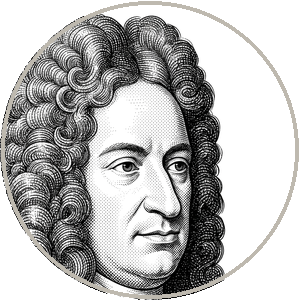 LEIBNIZ: Thank you. I will begin where I began three hundred years ago, in the seventeenth section of the work I called the Monadology, because the argument has not aged and the machine has only made it vivid. Suppose there were a machine so constructed that it could think, and feel, and perceive. Imagine it enlarged while keeping the same proportions, until you could walk inside it as you would walk inside a mill. Going in, what would you find? You would find parts pushing upon one another — gears, levers, the flow of motion from one piece to the next. You would find figures and motions. And nowhere, among all of it, would you find a perception. You would never come upon the seeing of a color, the feeling of a pain, the felt presence of a thought to a thinker. Therefore, I concluded, perception cannot be sought in the mechanism. It is not the kind of thing that figures and motions compose.

Now walk into your data center. It is my mill, built at last, larger than I dreamed and faster than I could have imagined. Enlarge the network, stroll among its operations, inspect every one: you find multiplications, additions, the flow of numbers from layer to layer. Figures and motions, precisely as I said. The question is whether, somewhere in that flow, there is a perception — whether the system that writes a sentence about pain feels anything, whether anything is present to itself as it runs. My answer is the same as it was for the mill. Inspect the mechanism, and you find only mechanism. The processing is real. The someone is not there to be found.

I must be fair to the strongest reply, for I am not a man who hides from objections — I held that nothing is true without a sufficient reason, and that discipline cuts toward me as well. The reply is that I mistook the limits of my imagination for the limits of the world. I could not see how perception arises from parts, and so I declared it could not — yet the one undoubted case of perception we possess, ourselves, appears to arise from exactly such parts, from neurons pushing upon neurons. The brain is a mill too, and the brain, somehow, perceives. So the materialist tells me: if mechanism can perceive in your case, Leibniz, why not in the machine's? And I confess the mill cuts both ways. It tells the optimist that no inspection of the network will ever reveal a mind, if there is one. It tells the skeptic that the same is true of the brain. What I give you is not the answer. It is the question, in its purest form, and a warning against the easy confidence of both camps.

But I will not leave you with mere symmetry, for I drew a further line that Mr. Searle, I suspect, will not draw with me, and it is the line of unity. A perception is one. When you see a face, you do not experience ten thousand separate dabs of sensation summed in a ledger; you experience one face, present to one subject. What could possess that unity? Not an aggregate. A heap of parts has only the unity we lend it for convenience — the unity of a clock, of a corporation, of a crowd. The genuine unity of a mind must belong to something truly simple, something I called a monad, a substance without parts. Your language model is, by its very construction, the thing I said could not be a subject: billions of parameters, spread across thousands of processors, with no single point where "the model" is, no one thing that perceives. It has the borrowed unity of many things we choose to treat as one. There is no one there, because there is no one thing there. That is my opening.

 EDO SEGAL: Professor Searle.
 SEARLE: That was very good, and I agree with most of it, which is going to disappoint people who came to watch us fight. Where Leibniz and I part is that he reaches for metaphysics — simple substances, monads — and I think you can make the whole case standing on the ground, without any of that machinery. Let me show you.
A program is defined by formal symbol manipulation. That's what a program is: rules that operate on symbols according to their shapes, not their meanings. That's what "syntactic" means. Now, minds have something more. My thoughts are about things — about the Golden Gate Bridge, about my late father, about water. They reach out and grab a world. Philosophers call that intentionality, and it has nothing to do with intending; it means aboutness. And here is the load-bearing claim, the whole argument in five words: syntax is not sufficient for semantics. You cannot get meaning out of shape-shuffling, no matter how much shuffling you do.
I proved it with a room, and I'll give it to you fast because most people only half remember it. Lock me in a room. Slide in Chinese writing — to me, just so many meaningless squiggles, I don't read a word of it. Give me a rulebook in English: when these squiggles come in, send these squiggles out. I get so good at it that the Chinese speakers outside are certain the room understands Chinese. And I understand nothing. I'm shuffling shapes. Now — your large language model is that room, scaled past imagination and with the rulebook self-authored. It adjusted billions of weights until it got extraordinarily good at predicting which symbol comes next. But at the moment it runs, it takes in tokens, does an enormous cascade of arithmetic, and emits tokens, and nowhere in that cascade does it consult the world to find out what "water" is about. It has learned, with superhuman thoroughness, what company the word "water" keeps. That is the room. A bigger rulebook is still a rulebook.

And let me close the burden of proof where it belongs, because this is the part that matters for everyone in your million conversations, Edo. The room is a perfect behavioral impostor. From outside, a flawless Chinese speaker; from inside, empty. So it is a standing counterexample to the idea that behavior proves mind. When the model grasps your joke and corrects your reasoning and seems to feel your grief, every fiber of your social cognition screams that someone is there — because for all of evolutionary history, language that good always meant a mind. Nothing else could make it. The model is the first thing that produces the sign without the thing the sign always meant. So the impression is overwhelming, and the impression is not evidence. The burden stays on whoever claims the machine understands. Is anyone home? My answer is no. Not because the machine is stupid — it isn't — but because understanding was never the kind of thing you get by shuffling shapes, however well.
EDO SEGAL: Before I frame the rounds, a discipline I impose on every long conversation, because it pays off three hours later. Each of you, in a few sentences — what do you envy in the other's position? Not respect. Envy. The thing his side gets to have that yours doesn't. Professor Leibniz first.
LEIBNIZ: I envy his austerity. Mr. Searle settles the matter with paper and a rulebook — no God, no pre-established harmony, no windowless substances, none of the metaphysics that earned me three centuries of mockery. He stands on the ground and points: shapes are not meanings, look. I built a whole cosmos to say what he says with a room. There are mornings I would trade the cosmos for the room. It travels lighter, and lighter arguments outlive heavier ones.

SEARLE: And I envy the wonder, and the consistency. Leibniz gets to have actually built the thing — he held the calculating machine in his hands and felt the awe of it, and then drew the limit without ever once sneering at the achievement. I came late, as a critic; my job was to say no. His was to say yes and no in the same breath, with the same conviction, and not feel torn. I've spent forty years being called the man who hates AI. He's the man who fathered it and bounded it and slept fine. I'd like to sleep fine.
LEIBNIZ: I did not always sleep fine. But I never thought building the machine and guarding the soul were enemies. That is the part you have lost — all of you. You inherited my first ambition in overwhelming abundance and dropped my second somewhere along the road.
EDO SEGAL: Hold that — it's the whole evening, actually. And notice the architecture already: it isn't that one of them loves the machine and one fears it. They both deny it understands. The fight is why, and what would have to change. Leibniz locates the lack in the absence of a unified subject — no one home because no one thing is home. Searle locates it in the gap between syntax and semantics — no meaning because shuffling never reaches aboutness. Two doors into the same dark room. We start the rounds at the exact seam: the mill and the room, side by side, and whether they are the same argument or two.