The Crossing

 EDO SEGAL: One question, then I'm gone. You've spent three centuries and three hours mostly agreeing that no one's home. So find the place you actually disagree, and push there until one of you gives ground or the disagreement gets cleaner. Go.

 SEARLE: Then I'll push where it costs you most, Leibniz, because all night I've admired your candor and I think it conceals a problem you haven't paid for. Your monad. You say the machine isn't a mind because it's an aggregate, not a simple unified subject. But the brain is an aggregate — eighty-six billion neurons, no simple substance anywhere in it. By your own standard the brain shouldn't be a subject either. You escaped that, in your system, by putting a windowless monad behind the brain, a simple soul. I don't get to do that; I'm a naturalist. So tell me honestly: does your argument against the machine work without the soul? Because if it needs the soul, it's no use to this century. And if it doesn't, then "it's an aggregate" can't be the reason, because we're aggregates too.

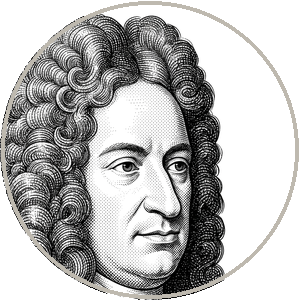 LEIBNIZ: That is the sharpest blade you have, and you have aimed it well. I will not retreat behind the soul, because you are right that this century cannot use it, and an argument useful only inside my own metaphysics is an argument I have no right to wield against your machine. So let me answer naked, without the monad. What I am pointing at with "unity" is not the soul — it is a real and unsolved feature of your mind, Mr. Searle, which you call binding and cannot explain either. When you see a red ball roll, the color is processed in one region, the motion in another, the shape in a third, and yet you experience one ball, bound, all at once, for one subject. How the distributed brain yields the single experience is genuinely unsolved — in you as in the machine. My monad was a wrong answer to a real question, and I concede the answer. I do not concede the question. And here is my counter-thrust: you, with your causal powers, are in no better position than I am. You say the brain's biology produces the unity. How? You go as quiet on binding as you went quiet on which causal powers matter. We are both pointing at the same hole. I filled it with a soul and you filled it with the word "biological," and neither fill is a fill.

SEARLE: That's fair, and I'll take the wound — the binding problem embarrasses me as much as it embarrasses you. But notice it cuts toward my conclusion, not yours. If we can't explain how the brain binds, we certainly can't claim the machine does it, since the machine isn't even built to. You want to leave the door ajar for integration producing unity. I say: you've just admitted we don't understand unity in the one case we have. Leaving the door ajar for the machine, when we can't even account for ourselves, isn't open-mindedness. It's leaping a chasm in fog because you can't see the bottom.

LEIBNIZ: Then let me push my blade into you, Mr. Searle, for I have held it all night. You insist the meaning is on our side of the glass — derived intentionality, the aboutness on loan. But when I press you on what intrinsic intentionality is, what makes your thought of your father be about him and no one else, you say: a causal history, a connection to that specific person. A causal history. But that is a relation between a system and the world — exactly the kind of relation your critics, your Dretskes and Millikans, say a machine with the right causal connections could also stand in. You have defined intrinsic intentionality in terms that do not obviously require you. So tell me: when you say the carbon is special, and a machine with the very same causal-historical connection to a thing still wouldn't be about it — what is the carbon adding that the connection didn't? You accused me of needing a soul. I accuse you of needing a miracle — a special something in the meat that you can name no better than I could name my monad.

SEARLE: All right. All right. That's the best version of the objection anyone's put to me, including the people who put it in journals, and I'm not going to pretend I have a clean answer, because I promised not to. Here's the honest truth. I am surer that there's a difference between intrinsic and derived intentionality than I am able to say what the difference consists in. I know my thought of my father is about him in a way the word "father" on a page isn't — I know it from the inside, with total certainty. What I cannot do is reduce that knowing to a causal story without losing the very thing I'm certain of, the consciousness of meaning him. So when you say I need a miracle in the meat — what I actually need is consciousness, and I've put it in the brain because that's the only place I've ever found it. You're right that "carbon" is a placeholder. The real placeholder is the conscious subject, and I am exactly as unable to derive it as you were. We are, God help us, the same.

LEIBNIZ: Then say it with me, because I think we have arrived, after three hundred years, at the one true thing. The disagreement between us was never about the machine. It was about where to put the mystery. I put it in a simple substance; you put it in biological tissue; and both of us put it somewhere, gave it a name, to avoid admitting we were pointing at a hole we could not fill. The machine did us a terrible favor. It built a perfect mill, a flawless room, and stood there fluent and empty — and in trying to say exactly why it has no one inside, we both discovered we cannot say what it is to have someone inside ourselves. The machine does not threaten our answer. It exposes that we never had one.

SEARLE: And I'd rather stand in that with you, honestly, than win the night with a fake answer. The thing I was certain of all along — that fluency isn't presence, that the impression of a mind isn't a mind — I'm still certain of. What I'm no longer pretending is that I can finish the sentence "and here's why we have presence and the machine doesn't." I can point at it. I can't ground it. The pointing is real. The ground is missing in both our houses.

EDO SEGAL: I have to break my silence for exactly one sentence, because the reader can't see what just happened and it's the reason this whole book exists: that was the moment two men who came to fight each other discovered they were standing on the same unmarked grave, the place where the inside of a mind goes when you ask it to explain itself — and neither of them flinched. Stay there. That's where the closing statements have to come from.