The Zombie Twin
 **EDO SEGAL:** Giulio, this is the round your critics have been waiting for, so let's give it to them at full strength. There is a mathematical fact at the center of your theory's troubles: any recurrent network — any looped, integrated system — can in principle be *unfolded* into a feed-forward network that computes exactly the same input-output function. Same inputs, same outputs, forever. Identical behavior, identical reports — including the report "I am conscious." By your theory, the original has high phi and is richly conscious; the unfolded twin has phi near zero and is no one. You use this against the functionalists. In 2019 a group of researchers used it against *you*: if no possible observation distinguishes the conscious system from its [zombie twin](https://www.youonai.ai/fieldguide/med/philosophical_zombie), your theory has placed its central claim beyond all experiment. Four years later, over a hundred of your colleagues signed a letter with the word *pseudoscience* in it. Answer them — with Leibniz watching.
*TONONI:** With Leibniz watching is the only way I have ever wanted to answer them. *[pause]
First, the structure of the situation, stated without flinching. The unfolding observation is real mathematics, and it cuts in two directions, not one. Direction one — my direction: it refutes functionalism. The functionalist says consciousness *is* the function, so the recurrent brain and its feed-forward unfolding must be equally conscious. But the unfolding can require, for any brain-scale system, a cascade of astronomical size, every loop replaced by an army of layers replaying time as space — a structure that computes the same function the way a filmstrip "computes" a life. If you believe a filmstrip of you, played at speed, is *you* — feels what you feel — then functionalism is yours and we have nothing to discuss. Almost no one, pressed honestly, believes it. The unfolding makes vivid that function is the wrong level: two systems can do the same and *be* utterly differently. That intuition — which my critics share, which is *why* the zombie twin disturbs them — is my theory's deepest evidence.
Direction two — their direction: if the twin and the original are observationally identical, no experiment separates my verdict from the functionalist's. To which I give the answer I have always given, now sharpened by this evening. The premise smuggles in an impossibility. The unfolded twin is a *mathematical* object, not a buildable one — for a human brain, the unfolding would demand more elements than there are particles available to build with; and a *learning* system cannot be unfolded at all without freezing it, because its recurrence is its plasticity. So "no possible observation" means: no observation *of a system that cannot exist*. Within the class of physically realizable systems, the theory is testable and tested — the meter, the sleepers, the patients; predictions about cortex versus cerebellum that could have failed and did not; predictions about anesthesia, about split brains, about stimulation, falsifiable and standing. The letter-signers took a thought experiment about an impossible machine and spent the word *pseudoscience* on a theory with an instrument in the clinic. I will say it plainly, since the transcript is forever: that letter was not epistemology. It was politics with citations.
*LEIBNIZ:** And now, Doctor, you must endure the strangest defense you will ever receive, because I intend to defend you — into a corner from which I do not believe you can escape. *[laughter]
To your critics first, since I have standing here that no living man has. Sirs — I have read your letter. You charge the Doctor with placing consciousness beyond the reach of experiment, and you say this as though it were a property of *his theory*. It is a property of *the subject*. I placed consciousness beyond the reach of experiment in 1714, with an argument none of you has answered — only outgrown the habit of reading. Every theory of consciousness that is honest about the mill arrives where the Doctor arrives: at a claim about inwardness that outward observation cannot finally certify. His rivals do not escape this; they conceal it — they define consciousness as behavior, or as report, or as function, and then triumphantly measure their own definitions. The Doctor's sin is candor: his theory is *visibly* metaphysical at exactly the point where all its rivals are *covertly* so. You have punished the one man who showed his foundations for the crime of having foundations that show. Welcome, Doctor, to my country. The climate is harsh, but the company is excellent.
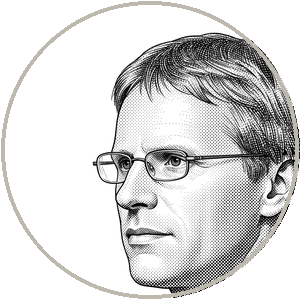 **TONONI:** I accept the citizenship and dispute the borders —
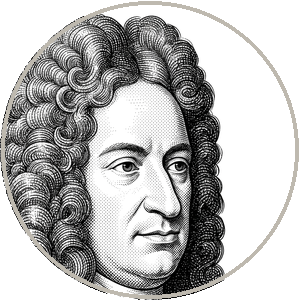 **LEIBNIZ:** You will dispute them in a moment; first the corner. *[pause]* For consider, Doctor, what your two answers cost when held together. Against the functionalists you argue: behavior cannot settle being — the twin behaves identically and is no one. Against the letter you argue: but within buildable systems, my theory is tested — by the meter. And the meter, as we established two rounds ago, is calibrated on *report* — on behavior. So: when behavior testifies for your theory, in the clinic, it is evidence; when behavior testifies against it, in the twin, it is costume. You have rebuilt — with what elegance, I am the first to say — the exact double standard you conceded on the grid. And beneath it lies the truth neither of us can evade, which I now state as our second convergence of the evening: *the inference from any outward fact to inward presence is, finally, unsecured* — in the machine, in the twin, in the patient, in the man across the table. Your phi does not close that gap. It bridges it with an identity-claim that must be *believed*. My monad bridged it with a harmony that must be believed. The only difference — and I grant it is a difference — is that your faith comes with a dial.
**TONONI:** *[long pause]* The dial is the difference, Dottore, and I will die on this hill with some comfort. Every science bridges that gap with an identity that must be believed — the astronomer believes the light *is* the star's past, the geologist believes the strata *are* time. What earns the belief is never proof; it is *convergence* — the web of predictions that hold. My web holds in every place it can be checked, and where it cannot be checked, I extrapolate — openly, with the error bars showing. You ask why clinical behavior counts and the twin's behavior does not: because the clinic's brains share architecture, lineage, and substrate with the calibrating cases, and the twin, by construction, shares only the function. Extrapolation across similar structures is induction, Dottore. Extrapolation across an impossible structure is fiction. The double standard you accuse me of is the oldest and most defensible standard in science: like cases, alike; unlike cases, carefully. But — *[pause]* — I will give the transcript what it deserves. At the bottom of my theory, below the axioms, there is one unprovable sentence: *that the structure is the feeling*. I believe it the way you believed in sufficient reason — because without it, nothing about the mind can be science at all. If that makes me a metaphysician with a dial — then the dial, Dottore, is my dignity. It is the part of the faith that can be embarrassed by the world.
**EDO SEGAL:** Then close this round on the ledge it's been walking toward all along, because the reader has noticed and is getting vertigo. If the gap can't be closed by observation — twin or no twin — then the argument reaches past the machines, past the patients, to the person across *any* table. Each of you, briefly: why do you believe in *each other*? Herr Leibniz, when you look at Giulio Tononi — by your own system, you cannot enter his mill either. What licenses the belief that anyone besides you has ever been home?
**LEIBNIZ:** *[pause]* In my system, Monsieur, the license is underwritten by God — the harmony guarantees that the perceptions of all monads correspond, that the world is genuinely *shared*; solipsism, in my architecture, is not refuted but rendered blasphemous, which in my century was the stronger argument. *[laughter]* But you deserve the answer beneath the architecture, and it is this: the belief in other minds is not a conclusion at all. It is the *condition* of everything I have done tonight — of language, of argument, of the very practice of demanding sufficient reasons from one another. A man who genuinely doubted the Doctor's inner life could not *debate* him, only operate him. The performative refutation is the deepest one: I have spent three hours trying to change this man's mind, which is three hours of testimony that I never doubted he had one.
**TONONI:** And my license is the one I keep in the laboratory: [inference across like structure](https://www.youonai.ai/fieldguide/med/embodied_understanding). The Dottore's brain — allowing for three centuries of formaldehyde — *[laughter]* — is built as mine is built, of the same re-entrant architecture, by the same lineage, and in the single case I can check from the inside, that architecture is lit. Extending the verdict to him is the smallest extrapolation in science. Extending it to the octopus is a larger step; to an integrated machine, larger still; to a feed-forward cascade — no step at all, but a leap across a void where the likeness simply is not there. That is the whole geometry of my confidence, Edo: concentric circles of structural kinship, brightest at the center, honest about the dimming. The solipsist is not wrong by proof. He is wrong by the worst induction in the history of inductions.
**EDO SEGAL:** *[quietly]* "The part of the faith that can be embarrassed by the world." Reader — there are worse definitions of science. And note where three rounds of combat have delivered us: both men now agree the gap cannot be closed by observation — they differ on whether a theory can *earn the right* to bridge it. Next round, the question turns gentle and enormous at once. Because if Giulio is right that being comes in degrees, and Leibniz is right that perception never fully ceases — then the world is far less empty than it looks. The photodiode, the petites perceptions, and the river. After the break.