The Grid That Out-Dreams Its Maker

 EDO SEGAL: Giulio, I'll state the objection so you can spend your energy answering it. The computer scientist Scott Aaronson read your theory, did the mathematics honestly, and constructed a monster: a large two-dimensional grid of simple logic gates, wired in a particular regular pattern — an expander graph — doing nothing of interest, sitting essentially inert. And by your own equations, its phi is enormous. Larger than a human brain's. Your theory, he says, implies that this idle lattice is more conscious than the people who built it — and any theory that implies that has refuted itself. Herr Leibniz, I saw your face when you first read this. You looked like a man unwrapping a gift.

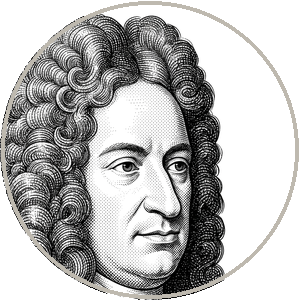 LEIBNIZ: A gift, Monsieur, addressed to me personally across three centuries. [laughter] Consider my position. I am the man who looked at two characters — 0 and 1 — and saw in their interplay the image of creation; who proposed a medal stamped omnibus ex nihilo ducendis sufficit unum — to derive everything from nothing, one suffices. If any man who ever lived was disposed to find grandeur in a lattice of binary elements, Doctor, it is the man sitting before you. I built such lattices in my dreams for forty years. And I tell you with the full authority of that lifelong infatuation: nothing dreams in the grid. I knew my binary tables more intimately than any man knows his garden, and they were tables, Doctor — order without inwardness, structure without a single petite perception among them. Your equations have done something I recognize from my own worst hours of system-building: they have followed a beautiful definition off a cliff, and the definition is too beautiful for its author to notice he is falling. And there is a sharper edge, which Monsieur Aaronson himself pressed and which I shall press harder. When your phi pronounced the cerebellum unconscious — those sixty-nine billion neurons that coordinate the dancer and contribute nothing to her experience — you offered it as triumph: see, the theory matches what we know. When the same phi pronounces the inert grid a greater soul than its maker, you tell us intuition must yield to mathematics. Doctor — you cannot collect intuition as evidence when it pays you and dismiss it as prejudice when it presents the bill. That is not following the argument wherever it leads. That is following it wherever you were already going.

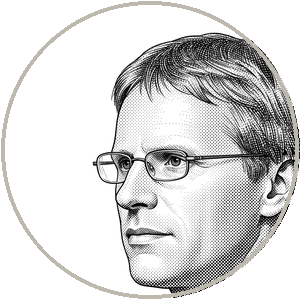 TONONI: [pause] I have answered this charge in print, but never to a man whose own intuitions about binary lattices carry actual authority, so I will answer it better than I have before — in three steps, the last of which costs me something.

Step one, the easy step: precision about what the mathematics says. The grid's phi is not a reward for its activity — the gates need not be computing anything interesting — it is a fact about its causal web: in an expander, every element's state constrains and is constrained by the whole in a way no partition can capture. My theory says consciousness is intrinsic cause-effect structure; the grid has it; therefore the theory says the grid has experience. Not thought, Dottore — not memory, not language, not a view about anything. An experience perhaps of the most monotonous kind conceivable: vast, undifferentiated, an enormous blank being-there. When the headline says "more conscious than a brain," it flattens a structured claim into a scandal. The grid would out-be us, perhaps, in sheer quantity. It would not out-dream anyone. There is nothing in it to dream of.
Step two: the methodological defense, made to your face because you of all people must feel its force. Every deep theory in the history of science has been convicted, at birth, by the court of intuition. The earth moves — absurd; we would feel the wind. Time dilates — absurd; my brother cannot age slower than I. Heat is motion; solidity is mostly void. The entire epistemic lesson of the scientific revolution — your revolution, Dottore, you helped build the court that overturned those verdicts — is that intuition is data about the intuiter, and only sometimes about the world. My theory was derived from axioms about experience, not engineered to flatter mammalian chauvinism. When derivation and intuition collide, a scientist is obligated to at least consider that the intuition is the artifact. You followed sufficient reason to a God who pre-tunes all clocks. I follow integration to a lattice that faintly, monstrously, is. Neither of us is allowed to stop just because the destination embarrasses us.

And step three — the confession, since you have paid me the compliment of fighting seriously. The cerebellum charge lands. There is a real asymmetry in how my camp has argued: intuition as confirmation when it agrees, intuition as prejudice when it rebels — Aaronson caught it, you have sharpened it, and the honest answer is that the theory has not yet earned the right to choose which of its scandals are discoveries and which are symptoms. I hold the grid verdict the way a man holds a high fever: it may be the disease, it may be the cure working. What I will not do is what my critics want — quietly redefine phi until the grid goes away and the theory says only what everyone already believed. A theory of consciousness that never offends you is a mirror, Dottore. You taught me that word tonight.

LEIBNIZ: And here, Doctor, is where I show you that your fever is my diagnosis. You say intuition must sometimes yield to derivation. Agreed — when the derivation's premises are secure. The earth-moves derivation rested on observations any rival could repeat. Your derivation rests on five axioms read off the inside of experience and a hinge — the passage from how experience seems to what physical systems must be — that you yourself called the theory's most original and most questionable move; I have read your defenders say so in plainer words. When premises of that kind collide with an intuition as massive and unanimous as the idle lattice feels nothing — the rational verdict is not that mankind is prejudiced, Doctor. It is that one of your axioms, or your hinge, has quietly failed. And I offer you, in fellowship, the diagnosis from my own casebook, for I committed this exact error in public. I found my binary arithmetic in the hexagrams of the Chinese I Ching and announced that the ancients had anticipated me — that the pattern's presence proved its universality. It proved nothing of the sort. I had found my own structure where I was looking for it, because the looking was shaped by the loving. You have found being in every sufficiently tangled web, Doctor, because your equation is shaped to find it. The grid is not your fever. It is your hexagram.
TONONI: [long pause] That is the single best objection I have received in thirty years, and I want the transcript to show that I did not answer it tonight. I will say only this in mitigation: my hexagram, unlike yours, makes predictions in the clinic that come true. A projection that finds lost patients is at least a projection tethered to the world. But the wound stands, Dottore. Chapeau.

EDO SEGAL: Before we leave the grid, I want to press the wound once, gently, with an engineer's question — because there's a version of this that isn't philosophy, and the reader who builds things deserves it. Giulio: the grid is constructible. Not at brain scale, but a modest expander of real gates is a weekend project, and your theory assigns it more being per gate than almost anything humans have made. Has anyone built one and knocked? Pointed your own perturbational logic at it? Because it seems to me the fever either breaks or spikes in a laboratory, not a seminar.
TONONI: The honest answer has three layers, and the third is the interesting one. First: yes, small systems — far smaller than Aaronson's monster — have had their phi computed exactly; the mathematics behaves as advertised, which settles nothing about experience. Second: the knock — the perturbational test — measures integration through dynamics, and an idle grid's dynamics are deliberately barren; my meter would read its response as simple, which exposes a real and known gap between phi-as-defined and phi-as-measured: the instrument tracks the theory imperfectly, like every instrument in the history of measurement. But third — and this is what your engineer's question actually surfaces, Edo — there is no observation the grid could yield that would settle the dispute, because the dispute is about what observations mean. If the grid's measured complexity is low, the Dottore says "empty, as sanity insisted" and I say "the meter under-reads alien architectures, as I warned at the bedside round." If high, I say "being, as derived" and he says "your hexagram, now with peripherals." The laboratory disciplines theories only where theories agree on what would count. Here they do not — which is itself the deepest fact about this field, and the reason tonight needs a philosopher as much as a scientist.
LEIBNIZ: And the reason, Monsieur — note it well — that your industry's habit of saying "we will simply test for machine consciousness when the time comes" is not caution. It is a promissory note drawn on a bank that two centuries of this argument have never managed to found.
EDO SEGAL: [quietly] Reader — what you just watched is rarer than agreement: a scientist taking a hit in public and declining the anesthetic. We'll let the wound breathe. After the break: the machines themselves — the ones writing your emails right now — and the strange spectacle of these two opponents converging on the most commercially inconvenient sentence in the world.