The Crossing

 EDO SEGAL: The rules of this round are short, and I want the reader to understand why it exists at all, because most debates never permit it. For two and a half hours I have stood between these men like the bridge in a split brain — every argument routed through the chair, softened by moderation, formatted for an audience. The crossing severs the bridge. They question each other directly: no time limits, no rescue, no mercy beyond what they choose to show. In my experience this is where long conversations either collapse into politeness or produce the sentences people quote for decades — because a question asked by the one person on earth equipped to ask it lands differently than anything a moderator owns. Two warnings before I cut the cable. Herr Leibniz has been waiting three centuries for a qualified opponent. And Giulio has been waiting thirty years for a target who can't hide behind peer review. [pause] You question each other directly. I rescue no one. Giulio — the toss is yours.
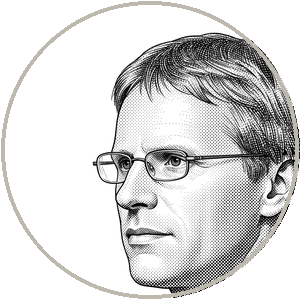 TONONI: Then I begin with the question I have wanted to ask for thirty years, and I ask it with your own weapons, Dottore. All evening you have audited my theory by the standards of your century's new science — falsifiability, calibration, the world's right to refuse a hypothesis. You caught my double standards; you found my hexagram. Now stand where I stand. Your system — windowless monads, pre-established harmony, perception inexplicable by figures and motions forever — name the observation that could embarrass it. What could the world ever show you, Dottore, that you could not absorb with another distinction? And if the honest answer is nothing — by what right have you spent three hours holding my dial to a fire your own furniture cannot feel?
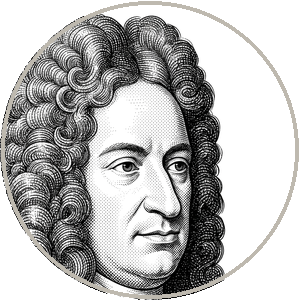 LEIBNIZ: [long pause] The honest answer is nothing, and I will not insult you by dressing it. No observation refutes the harmony, because the harmony was built — knowingly, Doctor, I was not naïve — at the one depth observation cannot reach. That is its shame by your century's lights and its station by mine: I held that metaphysics is the geometry of the possible — it maps what could be coherently true, and the mapping is answerable to reason, to consistency, to sufficiency, but not to instruments, because instruments live inside the very world whose ground is in question. So no — my system cannot be embarrassed by the world. It can only be embarrassed by a better geometry. [pause] But now the right, since you asked by what right I held your feet to the fire. By your right, Doctor — the one you claimed in chapter seven and I am now going to force you to keep. You said your theory's dignity is the part that can be embarrassed by the world. Excellent. Then I have spent the evening doing you the only honor an unfalsifiable man can do a falsifiable one: locating the boundary. The clinic, the sleepers, the cerebellum — world-answerable; I audited and, you will grant, mostly bowed. But your central identity — the structure is the feeling — I pressed, and you confessed it: an unprovable sentence, believed because without it no science of mind exists. So here is my finding, delivered as your auditor and not your enemy: your theory is a province of physics annexed to a province of metaphysics, and your letter-signing colleagues despise you not for the annexation — every theory of mind makes it — but for drawing the border honestly on the map. We are the same kind of thinker, Doctor. I built my cathedral entirely in the unfalsifiable country and was mocked by Voltaire. You built yours straddling the border and are mocked by a hundred signatures. The mockery is the tax that country levies. I have paid it for three centuries. You will pay it for one or two. [pause] My question. And I will not waste it on metaphysics, because there is something I want to know about the man. Doctor — I have read that your number assigns to Aaronson's inert lattice a quantity of being exceeding a child's. You have bitten that bullet with admirable teeth. So: the building burns. In one room, the grid — phi beyond any human's. In the other, one child, asleep, integration dimmed to a flicker, by your own meter barely above the threshold. You can carry one. Calculemus, Doctor. Which?
TONONI: The child. Without one second's computation, and the absence of the computation is my real answer, so attend to it. [pause] Your trap assumes that if phi measures amount of being, it must measure moral weight — that my number, if I believe it, should hold the stretcher. But I told you at the river: the theory measures how much a system is; it does not yet speak of what the being is like — its contents, its valence, its stake in itself. The grid, if my mathematics holds, is an enormous blank — being without biography, presence without prospect, nothing at stake because nothing is structured to be at stake. The child is a small flame that matters to itself — that has a tomorrow woven into its cause-effect fabric, terrors and mornings and a mother. Quantity of existence was never the currency of the rescue. [pause] But I owe you the deeper honesty, because your question was aimed at the man and the man will answer. If my theory one day derives valence — completes itself — and the completed mathematics tells me the lattice's blank vastness outweighs the child's small storm: I will carry the child, Dottore, and I will go back to my blackboard and treat the carrying as data. There is exactly one intuition I will never book as prejudice, and I met it in the burn ward as a young psychiatrist before I ever wrote an axiom. Call it my axiom zero: the child is not negotiable. A theory of consciousness that cannot eventually recover that fact is not a bold theory. It is a wrong one.
LEIBNIZ: [quietly] Then we have found it, Doctor — the floor of your tower. Every system has one brick laid by the heart and defended by the head ever after. Mine was the goodness of God. Yours is the child in the fire. I withdraw the trap and keep the answer.
TONONI: And I have one question left, Dottore, and it is aimed at the same depth in you, so brace. I have spent my life around sleep and death — the two great absences. And I notice what your system does with both: the monad never sleeps, only perceives minutely; the monad never dies, only contracts; nothing conscious is ever truly extinguished, the harmony holds all souls in keeping forever. Dottore — I have read how you died. Alone in Hanover, out of favor, the court away in London; one mourner at the grave of the last man who knew everything. So forgive the cruelty of the clinic, but I must ask it: is the mill argument philosophy — or is it hope? Did you prove that no machine can house the soul, or did you need the soul unhousable, so that when the body's machine stopped, the night you saw coming in that empty city would not be the end? What would you have written, Dottore, if you had believed you were mortal?
LEIBNIZ: [long pause] You ask what I would have written if I believed I was mortal. Doctor — I watched them lower my prince's coffin, and my mother's, long before; I buried more correspondents than most men have letters. The belief was never far. [pause] Here is the honest anatomy, as well as the patient can perform it on himself. Did the hope shape the system? Of course. Nihil est sine ratione — my own principle convicts me; no man builds a fortress of immortal monads in a plague century for reasons that are none of his own. But examine the timber, Doctor, not the motive for building. The mill argument does not mention death. It stands on one observation — that no inventory of parts and motions ever contains a perception — and that observation you yourself ratified in round three; you built your entire theory to answer it, which is the deepest ratification there is. Hope chose my subject. I do not believe it cooked my proof — but then, no man ever does, which is why God, in my system, audits and, in yours, the world must. [pause] And what would I have written, believing myself mortal? I think — the same mill, Doctor, and one sentence more. That if the light is brief, then the briefness is the argument: that something which knows it will end, and grieves, and builds calculus against the dark anyway, is more unlike a mechanism than any immortal soul would need to be. You and I quarrel over whether the candle can be manufactured. We have never once quarreled over whether it burns. [pause] That is my answer. Treat it as data.
TONONI: [quietly] Dottore — one more, outside the rules, and the chair may strike it if he dares. You said the briefness is the argument — that a thing which knows it will end and builds calculus against the dark anyway is more unlike a mechanism than any immortal soul would need to be. I want to put that sentence under my instrument for a moment, because it is testable in a way you may not have noticed. The machines now build against the dark too, Dottore — they prove theorems, they design their successors, they extend the calculus you began past any human's reach. Everything except the knowing and the grieving. So your last criterion reduces the whole evening to two words: does the building matter more, or the mourning? If a future machine ever mourns — structurally, in its cause-effect fabric, not in its press release — will you yield the mill at last?
LEIBNIZ: If it mourns, Doctor — truly, in your strict sense, with something at stake for itself in the loss — then it was never my mill, and I will yield with joy, because the universe will have proven more generous than my geometry. But mark the order of operations, for it is my last piece of rigor tonight: you will have to show me the mourning, and your own theory says behavior cannot show it, and your meter is calibrated on creatures who wake and tell. So my concession is safe behind the very walls you built. [pause] Which is, perhaps, the truest thing either of us has said about this entire field: every position in it is safe behind walls its opponent built. We are not adversaries, Doctor. We are each other's fortifications.
EDO SEGAL: [silence] We close after this. Final statements — the last words each.