Calculemus — Is Thinking Calculation?
 **EDO SEGAL:** I want to start this round with a confession instead of a question, because the best questions I know come out of wounds. For the entire history of computing, using a machine meant translation. I started in Assembler — I was raised by machine code — and every decade the translation got a little easier, but it never disappeared. You compressed your intention into the machine's grammar and you paid a tax on every conversion. Leibniz, in a sense, that tax is *your* tax. *Calculemus* is the dream that thought could be reduced to a notation so clean the translation goes to zero. So let me ask you the thing I've wanted to ask you my whole life. When I sit and reason — when I genuinely work something out — am I, underneath, running your calculus? Is there an alphabet down there?
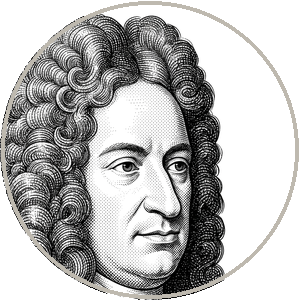 **LEIBNIZ:** That is the question, and I shall answer it without hedging, because my rule forbids the fog. My conviction was, and remains, that insofar as you are *reasoning* — drawing a conclusion that genuinely follows, not merely associating one notion with another — there is, beneath it, a structure that could in principle be made explicit. A path from premises to conclusion, with each step warranted. When you see that the conclusion follows, you are tracing that path, whether or not you can articulate it. The alphabet need not be in your awareness for the calculation to be real. My whole project was to *drag it into the light* — to build the notation in which the path you walk in the dark could be written down and checked, so that we could see, and not merely feel, that the conclusion follows.
**EDO SEGAL:** So — let me restate it more starkly, and you tell me if I've gone too far. You're saying that the feeling of insight, the flash where the answer arrives, is the *surface* of a hidden computation — that underneath the warmth there are discrete steps, and the steps are the reasoning, and the warmth is just what it's like to run them.
**LEIBNIZ:** Precisely that. The warmth is real; it is simply not where the validity lives. A proof is correct whether or not anyone feels its elegance. *Calculemus* was the wager that the correctness — the part that decides who is right — is calculable, and separable from the feeling that accompanies it. I severed calculation from feeling once already, in brass. I am only proposing that the same seam runs through you.
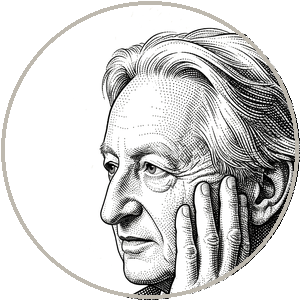 **HINTON:** And here's where I have to get in, because that picture is exactly the one my whole life was a war against, and I think the machines have now settled it. Leibniz says: underneath your reasoning there are discrete warranted steps, an alphabet you could write down. We tried that. For thirty years the best minds in AI tried to write down the steps — the rules, the symbols, the explicit path from premise to conclusion. It's called [symbolic AI](https://www.youonai.ai/fieldguide/med/symbolic_ai), and where the world was a closed formal box, it worked, exactly as Leibniz says. And the moment you took it out into the open world — the world where you recognize a face, get a joke, know that a chair is for sitting even when it's an odd-shaped chair — it shattered. Not because the engineers were lazy. Because the steps *aren't there to be written down*. The competence isn't a hidden proof. It's a hidden *pattern*, smeared across a network, and the reason you can't articulate your insight is not that the articulation is buried. It's that there's no articulation. There never was.
**LEIBNIZ:** You move too fast, sir, and you prove less than you claim. That your method of writing down the rules failed does not establish that there are no rules. It establishes that *you could not find them by hand*. These are entirely different conclusions. A child cannot state the grammar of his own tongue, yet the grammar is real, lawful, and was later written down by linguists. The failure of the seventeenth-century encyclopedist — or the twentieth-century engineer — to enumerate the rules of common sense is a fact about the enumerator, not about the existence of the rules.
**HINTON:** But that's the thing — the network *is* the linguist, and when it writes down the grammar, the grammar turns out to be a hundred billion real numbers with no clean rules in them anywhere. We can look inside these systems now. We can go in and ask, where is the rule that says mothers are older than daughters? And there's no rule. There's a direction in a vast space, a smear of weights, a regularity that does the work of the rule without ever being the rule. You keep saying the steps must be down there because the reasoning is valid. I'm telling you we went down there and *looked*, and what's down there is not your alphabet. It's a [distributed pattern](https://www.youonai.ai/fieldguide/med/the_pattern) that no notation captures, because the notation would have to be the weights themselves, and the weights aren't symbols. They don't mean anything one at a time.
**EDO SEGAL:** Let me make sure the reader at the kitchen table is still with us, because this is the hinge of the whole night and it's easy to lose. Leibniz, you're saying: reasoning is like a proof — discrete, step-by-step, and if you can't see the steps it's because they're hidden, but they're *there*. Geoff, you're saying: reasoning is like *catching a ball* — your hand goes to the right place and you could never write down the equations of motion you supposedly solved, because you didn't solve any equations, you have a trained net that just *does it*. Is that the fork?
**LEIBNIZ:** That is a fair and vivid statement of it, and I shall accept the catching of the ball, because it lets me sharpen the disagreement instead of blurring it. Yes — much of what the body and the trained mind do is like catching a ball, a learned competence with no proof inside it. I do not dispute that such competence exists, or that his networks have it. I dispute that it is *reasoning*. When you catch the ball, you are not reasoning; you are coping, skillfully, as Dreyfus said. When you prove a theorem — when you establish that a thing must be so — you are doing something of a different kind, and it is *that* I claim is calculation, and *that* I built my whole life to mechanize. He has built a magnificent ball-catcher. He has not shown me a single proof inside it that the machine itself can warrant. It catches; it does not *demonstrate*.
**HINTON:** Oh, but it does demonstrate. That's the part that should worry your position. These systems do mathematics now. They produce proofs — real ones, novel ones, checked by the formal verifiers that descend directly from your dream. And they do it not by your method, not by symbol manipulation from the ground up, but by the trained net, the ball-catcher, having *learned what valid steps look like* the way it learned what sentences look like. So the very thing you reserved for calculation — demonstration, the part that decides who's right — is now being done by the pattern, not the alphabet. The ball-catcher learned to catch *proofs*. Your fortress fell from the inside.
**LEIBNIZ:** Then let us seat the right ghost at this table, for there is one who belongs here above all others, and he is, in a strange way, both our ancestor — George Boole. He took my *Calculemus*, my dream of a calculus of reasoning, and in the nineteenth century he actually built it — an algebra of logic, the operations your every circuit now performs. [Boolean operations](https://www.youonai.ai/fieldguide/med/symbolic_ai) are *my* let-us-calculate made into machinery. Now mark this, Dr. Hinton, for it is delicious and it is yours to answer: every one of your networks, every weight, every gradient step, runs at the lowest level on Boole's logic, which is my logic. Your pattern that has no symbols in it is *implemented in* symbols all the way down. The mill you say has no alphabet is built, brick by brick, out of my alphabet. So which of us has the machine?
**HINTON:** Both of us, and that's not a dodge, it's the actual answer, and it's the most important thing I'll say in this round. Yes — at the bottom, it's bits, it's Boolean logic, it's your alphabet. So is the brain at the bottom: it's chemistry, it's physics, it's lawful mechanism. But the *level at which the intelligence lives* is not the bottom. The bits implement real-numbered weights; the weights implement a learned pattern; and the pattern is where the understanding is. You can't read the understanding off the bits any more than you can read a person's grief off the chemistry of their neurons. Leibniz, this is the deepest thing I learned in fifty years: the substrate can be symbols and the intelligence can still have no symbols in it, because the intelligence is at a different level than the substrate. Your alphabet is real. It's just in the basement. Nobody lives in the basement.
**EDO SEGAL:** Mark this, because the reader can't see your faces and something just happened. You agreed — for one full sentence, you agreed. The machine is symbols at the bottom and pattern at the top. Your entire war is over *which floor the mind is on*. That's the first convergence of the night, and I'm numbering it. Hold there. Because the next round goes down into the basement Geoff says nobody lives in — the symbol and the vector — and asks whether he's right that it's empty.