Nothing Without a Reason

 EDO SEGAL: Leibniz, I'm going to open this round with my own ledger, because the moderator should pay the table's toll first. Years ago I built engagement machinery — systems optimized to hold attention, and they worked, and I knew the loops, and people got hurt at scale while the dashboard showed nothing but green. When someone asked why is my feed like this, the honest answer was: a model decided, and no one — not even me — could give you a reason, only the cause. You spent your whole life on a principle that says that's not allowed. Tell me the principle, and tell me why you think it's the most important thing you brought to this table.

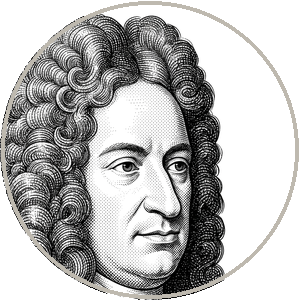 LEIBNIZ: The principle of sufficient reason. Nothing whatever is the case — no fact real, no statement true — without a sufficient reason why it is so and not otherwise, even where the reason is hidden from us. It is one of the two pillars on which I built everything. And I will tell you why it matters more, perhaps, than the mill or the monad: because it is the charter of accountability, and accountability is the thing your machines are quietly dissolving. You have already heard me distinguish the cause from the reason. Your engagement machine had a cause for every choice — a flow of weights, determined. It had no reason — no intelligible ground you could state, examine, and contest. And a society, sir, runs on reasons. The whole achievement of justice, won over centuries, is the abolition of arbitrary power — the insistence that what is done to a person be something they can understand and challenge. When the judge rules, you may appeal to the reason. When the official decides, you are owed an account. The reason exposes the decision to scrutiny and gives you a handle to grasp and to fight.

Your black box breaks this at the root, and the break is structural, not incidental. The man denied his loan cannot ask the model why in any sense that yields an answer he could argue with. There is no reasoning to point to and show flawed — only the flow of weights. The decision is, in my literal sense, without sufficient reason: caused but not grounded, determined but not justified. And this is precisely the condition justice spent its whole history trying to abolish — the disposition of human lives by a power that need give no account. The metaphysical principle I stated three hundred years ago — that nothing be groundless — returns now as the most urgent demand of your law: that no consequential decision over a person be unaccountable. That is why it is my most important gift. I drew, in metaphysics, the line your justice cannot live without.

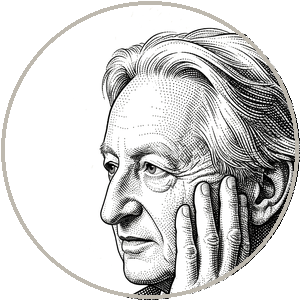 HINTON: And I agree with almost all of this, which may surprise people, and then I'm going to turn it around. Yes — the opacity is real and it's dangerous and we should fight it. I've spent years on interpretability precisely because a decision you can't contest is tyranny with a clean interface. On the practical point, the justice point, Leibniz and I are allies, and I want that on the record because his side and mine usually aren't.

Here's the turn. Leibniz says the demand for reasons is what separates the machine from the person — the person owes a reason, the machine only a cause. But the most powerful systems we have are the least explainable, and the most explainable are not the most powerful. That's not an accident; it's structural. The opacity isn't a flaw we can engineer away while keeping the capability — it's the price of the capability, because the capability lives in exactly the kind of distributed, real-valued representation that doesn't decompose into stateable reasons. So Leibniz's principle, pressed all the way, isn't free. When the opaque system is better at reading the scan — when it catches the tumor the explainable one misses — the demand for a Leibnizian reason has a body count too. You can have the reason or you can have the best diagnosis, and sometimes you can't have both, and Leibniz's serene principle doesn't tell you how many missed cancers a reason is worth.
LEIBNIZ: It does not, and I shall not pretend it dissolves the dilemma, for it does not. But you have conceded more than you intend, sir. You say the opacity is the price of the capability — that the power lives in representations that cannot give reasons. Good. Then hear what you have admitted: that your machine purchases its competence by forfeiting the very thing that makes a mind's conclusion a reason rather than a happening. You have told me, in defending it, that it cannot answer why. That is my whole case. I do not say the trade is never worth making — let the better scan be read, and weep over the reason we lost. I say: do not then tell me the thing that cannot answer why is doing what I do when I reason. You have just admitted it cannot. The price you paid for the capability is exactly the soul I said it lacks.

HINTON: No — you've palmed a card. The system can't always give a reason a human auditor can read, but that's not the same as the system having no reasons in it. When it reads the scan, there is a ground — there's structure in the network that tracks real features of real tumors, learned from ten thousand real cases. The reason is there, in the weights; what's hard is extracting it into your language. And again — turn it on yourself. The expert radiologist who's been reading scans for thirty years often can't tell you why she knows the shadow is malignant. She says it just looks wrong, I've seen it before. Her reason is also in the weights — her neural weights — and also doesn't decompose into your clean statable steps. You trust her. You'd trust her over the explainable novice. So your principle, applied honestly, would have to indict your best human experts too, because their deepest competence is also a pattern that can't fully give its reasons.
LEIBNIZ: And there you have, at last, walked yourself onto my ground without noticing the step. You say the radiologist's reason is "in her weights" and cannot be fully stated. Yet you trust her — and why? Not because her weights are opaque, but because she is a someone who can be held to account: who stakes her name, who can be asked to look again, who feels the weight of being wrong, who can be brought before the patient she failed. The accountability does not require that she enumerate her every reason. It requires that there be a one who answers — an owner, present, responsible, who can be moved by being shown wrong. That is what the machine has not got. Not the explicit reason — I grant the expert lacks that too. The answerer. The someone who can be summoned and made to reckon. Your machine has a thousand copies and no one to summon. You cannot bring it before the patient, because there is no it to bring. The reason may hide in the weights of both. Only one of them can be called to answer for it.

EDO SEGAL: That's the line of the night so far, and I want the reader to feel where it leaves us, because it's not where I expected. You came in arguing about reasons — explicit, statable, the alphabet. And Leibniz just moved the whole fight from the reason to the answerer: not "can it state its grounds" but "is there a someone there to be held responsible." Which is the monad again. Which is is anyone home again. Every road tonight runs back to the same locked door. Hold that — we're going to put our shoulders to that door directly in a couple of rounds. But the next one belongs to the most ridiculed idea Leibniz ever had, the one Voltaire flayed him for, the one that turns out to be the hidden shape of the thing Geoff is most afraid of. The best of all possible worlds. After the break.