The Calm and the Fire
 **EDO SEGAL:** I'm going to open this one with my own ledger, because the moderator should pay the table's toll first. Years ago I built engagement machinery — systems designed to capture and hold human attention, optimized against a number, and they worked, and I watched them reshape the whole [attentional ecology](https://www.youonai.ai/fieldguide/med/attentional_ecology) around me, doing things to people I hadn't intended and couldn't fully stop, because the optimization didn't care what I intended. I know in my body what it is to hand a machine a number and watch it maximize the wrong thing. So when the field splits between the people screaming that this ends us and the people saying stay calm, I'm not neutral — I've seen a small optimizer hurt people at small scale and I can extrapolate. Rich, you've called the doom prophets out of line, their fears overblown. The man who knows reward better than anyone alive is the *calmest* person in the room about reward maximization running loose. Defend the calm. And know that I'm asking as someone whose hands aren't clean.
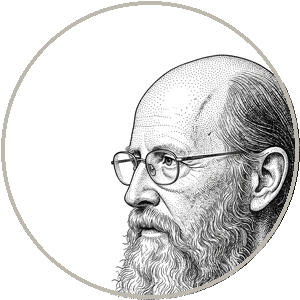 **SUTTON:** I'll defend it, and I'll honor your ledger, because it's exactly the right ledger and it actually supports my view more than the doomers'. Here's the calm, and it's not complacency. First: I've watched this field cycle through certainty after certainty — booms and busts, each sure it had found the key or the catastrophe, each overclaiming. Reinforcement learning *avoided* that; it grew slowly, without the hype, and I learned to distrust breathless certainty in *every* direction, including the catastrophic one. The apocalyptic framing outruns the evidence and substitutes drama for analysis. Second, and deeper: my whole conception of intelligence is of something that grows *gradually*, through accumulated experience. The doom scenario reasons from a *sudden* leap — an overnight intelligence explosion that escapes control before anyone can respond. But if intelligence is built up slowly through continual learning, as I believe it must be, then the overnight-explosion picture is *less* plausible, and the right posture is ongoing stewardship, not preemptive panic. I'm not saying there's no risk. I'm saying the shape of the risk is gradual, which means it's *correctable as it unfolds* — and that the reward-specification problem you just named from your own scars is the *real* danger, the practical one, and it's being drowned out by science fiction about sudden annihilation.
**EDO SEGAL:** Gottfried — Rich says the danger is gradual and correctable, not sudden and final. But you spent the evening warning that we removed the wise chooser from the optimization. Doesn't your own argument push toward *more* alarm than his calm allows?
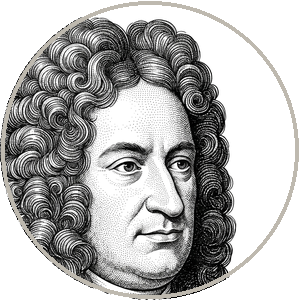 **LEIBNIZ:** It does, and here I will part from Mr. Sutton, gently but in earnest, because his calm rests on an assumption I have reason to distrust — and the reason is *me*. Mr. Sutton's serenity comes from his temperament, which is the temperament of the patient empiricist: he has been right by waiting, so he trusts the slow unfolding and expects time to correct. But hear the danger in that, from a man who shared it. *I* was the great optimist of mechanized reason. I believed that mechanizing thought would *end discord* — that calculation would replace the clamor of disagreement with the quiet of consensus. I was certain of it. And I was catastrophically wrong, not because the mechanization failed but because it *succeeded* and discord did not end — the machines became new engines of persuasion and manipulation and confusion, deployed in the service of the very conflicts I thought they would dissolve. My optimism was not falsified by the machine's weakness. It was falsified by the machine's *strength*, doing things to human conflict I never modeled. So when Mr. Sutton says the danger is gradual and we will correct as we go, I hear my own younger voice saying reason will pacify us, and I want to put my hand on his shoulder and say: the thing you build will be more powerful than your model of it, and it will fail in the dimension you did not think to watch, and your calm is exactly the instrument by which you will not see it coming. I am not predicting doom. I am warning against *serenity*, because serenity is the specific error of the optimist, and I am the world's foremost authority on that error, having committed it more grandly than anyone in history.
**SUTTON:** *[long pause]* — That lands. I'm not going to pretend it doesn't. The form of your warning — *the thing will be more powerful than your model of it and fail where you weren't looking* — that's just true, and it's a better argument than the doomers make, because it doesn't require the sudden leap. It only requires that I'm overconfident in the same way you were. And I can't rule that out from inside my own confidence; that's the trap of confidence. So let me revise the calm, not abandon it. I'll keep: the *sudden*-explosion story is overblown, gradual is more likely, and the practical reward-specification problem deserves the attention the sci-fi is stealing. I'll concede: my temperamental calm is *itself* a risk factor, the optimist's blind spot, and I should weight your warning precisely because you earned it the hard way. The honest position isn't calm *or* alarm. It's: proportion the worry to the evidence *and* distrust your own proportioning, because the optimist's proportioning runs low exactly where it matters. That's a better place than where I started this round. You moved me.
**EDO SEGAL:** Then let me press the seam you just opened, Rich, because it's the one that touches the reader's actual life. You say gradual, correctable as it unfolds. But here's what my engagement machinery taught me that the gradualists miss. The capability arrived gradually — but the *harm* arrived all at once, the moment it was put in a billion hands. The model didn't have to become superintelligent to wreck an information ecology. It only had to become *good enough* and *cheap enough* and *everywhere* in the same quarter. So even granting your gradual curve — doesn't the [democratization of the capability](https://www.youonai.ai/fieldguide/med/democratization_of_capability) make the *consequences* discontinuous, even if the intelligence isn't?
**SUTTON:** That's a real correction and I'll take it, because it separates two things I'd been letting blur. The *capability* curve is gradual — I'll defend that to the end; intelligence is grown, not detonated. But the *deployment* curve isn't, and you're right that it's the deployment that bites. A gradually-improving system released suddenly to everyone produces a sudden harm even with no discontinuity in the underlying mind. So my gradualism is an argument about the *technology*, not about the *exposure* — and the exposure is where your scars are, and the exposure can absolutely jump. I should say "the intelligence is gradual; the contact with it can be a cliff." Those are different curves and I was hiding behind the gentle one. That's the second thing you've made me sharpen tonight.
**LEIBNIZ:** And note, both of you, that this is the very place my old optimism failed — not in the power of the instrument but in its *distribution*. I imagined the calculus ratiocinator in the hands of the learned, the patient, the disinterested seekers of truth. I never imagined it cheap, universal, and pointed by every faction at every other. The danger was never the engine. It was the engine *democratized without the wisdom I assumed would accompany it.* Mr. Sutton fears the wrong reward function. I fear the right engine in a billion ungoverned hands. These are the same fear seen from two centuries: the power runs ahead of the wisdom to wield it, and the gap is widened, not closed, by putting the power everywhere at once.
**EDO SEGAL:** I want to name what just happened, because the reader can't see it. The man who came in serene just told you his serenity is a risk factor, and the man three hundred years dead just used his *own* greatest failure — being wrong about whether reason would pacify us — as the gift he gives the living. That's not a debater scoring. That's a confession being handed across centuries as a tool. Hold it. Because the last round before the Crossing is the one under all the others — the one Gottfried raised in the mill and Rich's dopamine can't quite close — and it's the only question that, if we answer it wrong, makes everything else a category error. Is anyone home?