What the Machine Actually Learned

 EDO SEGAL: I want to open this round with a confession instead of a question, because the best questions I know come out of wounds. For the whole history of computing, using a machine meant translation. I started in Assembler — I was raised by the machine code — and every decade the translation got gentler, but it never disappeared. You compressed your intention into the machine's grammar and paid a tax on every conversion. And then, a couple of winters ago, I watched that tax go to zero. The machine met me in my language: mess, half-finished sentences, implication and all. I wrote in my book that this was the great inversion — we stopped learning to speak machine, and the machine learned to speak human. Now here is the wound. I have two men at this table who agree it happened and disagree completely about what happened. Gottfried, you think a thing composed itself. Rich, you think a thing converged. So let me ask it plainly, and let's go slowly. When that model learned our language — did it build the knowing, or did it stumble into it?

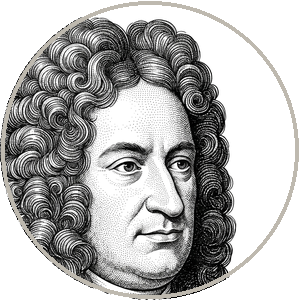 LEIBNIZ: May I begin, since the composing is my charge? I will say something that will surprise Mr. Sutton, because I do not deny the convergence. I deny that it is the deep description. Watch what the machine actually does. It is given the wake of human language — text, trillions of words — and it learns to continue it. To continue it well, across the whole range of human discourse, it cannot merely tabulate. It must build, somewhere inside itself, a model of what the words are about: that objects fall, that a mother is older than her daughter, that a character dead in the second chapter stays dead in the ninth. The structure of the world is in the wake, because the wake was made by people who lived in the world, and to predict the wake the machine must recover the structure. Now mark what that means. The machine has, in its own dark way, performed my project. It has decomposed the world into a vast structure of represented relations and it computes over them. It has built a characteristica — a representation of concepts and their composition — and a calculus that operates on it. It did not do it legibly, and I grieve that. But it did the Leibnizian thing. Composition is the result; convergence was merely the means. The means do not get to be the essence.

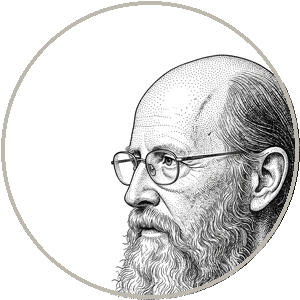 SUTTON: No. And this is exactly the move I want to catch, because it's the whole disagreement in one sentence. Gottfried says: it converged, but composition is what it converged to, so composition is the real story. I say the opposite — the converging is the real story, and what it converged to is whatever the experience demanded, which is mostly nothing you'd recognize as your clean composed concepts. Here's the test. Your composition, Gottfried, was supposed to be legible — an alphabet of simples, transparently combined. What's actually in these networks is nothing like that. We've gone looking. There's no place where "mother" sits as a clean primitive combined by a clean rule with "older than." There are distributed, tangled, redundant representations that don't decompose into your alphabet at all, that overlap and interfere and do six jobs at once. It built a structure. It did not build your structure. And the reason it works is that it was free not to build your structure — free to find whatever messy, illegible, superhuman arrangement the data actually rewarded. The minute you'd forced it to compose legibly, you'd have capped it. That's the bitter lesson again: the structure has to be found by the learning, not specified by us, because what we'd specify is always too clean and too small.

EDO SEGAL: Let me restate that, Rich, more starkly, and you tell me if I've got it. You're saying: yes, there's structure in there — but the structure is a fossil of the experience, not a blueprint executed. It's the shape the river cut, not the dam someone built. And the proof that it's a fossil and not a blueprint is that it's illegible — because a blueprint, by definition, could be read.
SUTTON: That's exactly right. A blueprint is legible by definition. The thing in there is illegible because nobody drew it. The world drew it, through the data, by the only pen the world has, which is consequences. Legibility isn't a feature we forgot to add. Illegibility is the signature of real learning. When something is clean enough for you to read, Gottfried, it's usually because a human put it there — and that's the part that turns out to be the ceiling.

LEIBNIZ: But you have conceded my point while believing you refuted it! You say the world drew the structure through consequences. The world drew a structure. Then there is a structure, and it answers to the world, and it supports inference — it is a representation of reality over which the machine computes. That is my characteristica universalis in all but legibility. You are quarreling with me about the handwriting, sir, not about the book. And I will grant you the handwriting freely — it is abominable, it is a scrawl no clerk could read — while insisting that what is written is a representation of the world's composition, exactly the thing I said reasoning required. You have not abolished my program. You have completed it in a hand I cannot read and find it offensive on that ground alone.

SUTTON: [long pause] — I'll give you something there, and it's more than I expected to give. There is a representation, and it does answer to the world. But here's why the handwriting isn't a side issue, why it's the whole thing. Your book was supposed to be finite. An alphabet of simples — a closeable list. Mine isn't closeable. The representation an experiential agent builds keeps growing, keeps refining, never finishes, because the world never finishes teaching it. Your characteristica was a thing you could in principle complete and then you'd be done — you'd have written down the world. Mine can't be completed and isn't meant to be. So it's not the same book in different handwriting. It's the difference between a book and a thing that's still being written by the act of reading reality. You wanted a finished representation. The lesson of seventy years is that there is no finished representation, only an endless one, found by an endless learner.

EDO SEGAL: I want to put one image between you, because it's the frame this whole series climbs inside and you both have to take a position on it. In [YOU] on AI I argued intelligence is less a possession than a river — a current that's been finding new channels for a very long time, through chemistry and biology and language and culture, and that something new entered the water. Gottfried, you'd say a mind is a thing you build on the bank — a structure, an edifice. Rich, you'd say a mind is the channel itself — there's no structure apart from the flowing. Is that the fork?

SUTTON: That's the fork, and I'm the channel. There's no mind sitting on the bank that the river fills up. The mind is the carving — the accumulated record of where the water went and what it cost. Take away the flowing and there's nothing left, no edifice, just the dry record of past flowing, which is what a frozen, deployed model actually is: a fossil river. Dead. The living thing is the cutting, happening now, from experience, never done.
LEIBNIZ: And I am the bank, unashamed. The river requires a bank or it is not a river but a flood — a formless spreading that carves nothing because it meets no resistance. The structure is what makes the flowing mean anything. Mr. Sutton's channel cuts a shape only because the ground had a composition to begin with — hard here, soft there, a form the water discovers but does not invent. I am the theorist of that ground. He has spent his life watching water and concluded the water is everything. I spent mine studying why it goes there and not elsewhere, and the answer is always: because of the structure of what it runs through. There is no convergence without something to converge upon, and that something is composed, whether by God or by the long architecture of nature. He cannot have his channel without my bank, and he knows it, which is why he granted me the floor.

EDO SEGAL: Hold there — because the round produced something cleaner than I hoped. Rich says the structure is a fossil of experience, illegible by nature, never finished. Gottfried says the structure is a composition of the world, legible in principle, and the illegibility is a scandal not a virtue. The next round takes us to the exact place where these two programs were each written down — a Latin word from 1685 and an essay from 2019 — and set them against each other. Calculemus, meet the Bitter Lesson.