Closing Statements
 **EDO SEGAL:** Three hours ago I asked whether, if you hand every disagreement to the machine and say "let us calculate," it will always hand you back an answer — or whether there are truths no computation can ever reach. We have fought it through notation and binary, through the universal machine and the hole in its floor, through work and worlds and children, through combination and the mill and the test, and the question is still standing, which both of you, for opposite reasons, would tell me is the correct result. So we end the way long conversations should end. Each of you gets the floor, uninterrupted. But first, the bookend to the envy question I opened with. Each of you: name the strongest thing the *other* said tonight. Not the most agreeable — the one that got past your defenses, that you will still be arguing with next month. Alan first this time.
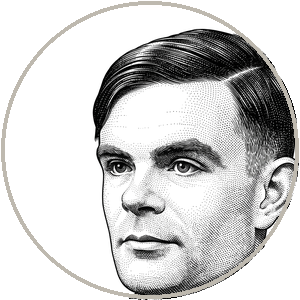 **TURING:** "Judgment is a calculation that can be ashamed of itself." I came to this table certain that my undecidability proof was the deepest thing that would be said, and that Leibniz's optimism, however charming, was a man refusing to read a theorem. Instead he took my proof, conceded it whole, and then handed me back an account of what survives the proof — the creature that calculates *and* can be remade by losing — that I cannot refute and cannot build, and that names, better than I ever have, the exact gap between my machines and a mind. I have been telling the world where computation stops. He told me what stands in the place where it stops, and it is not nothing, and it is not magic, and I did not have the words for it until a man three hundred years older than my field handed them to me.
**EDO SEGAL:** Gottfried.
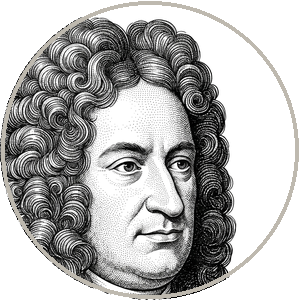 **LEIBNIZ:** "The hole is under the throne and the altar and the bed." I came believing my *calculemus* survived in everything that mattered — that Mr. Turing had found a wall in a desert no living soul crosses. He showed me the wall stands exactly where life is densest: in whether the powerful machine is safe, in the choice between goods that no calculation decides, in every question that actually keeps a person awake. He did not refute my dream by making it smaller. He refuted it by showing the hole is precisely where I most needed solid ground. I will be standing at the edge of that hole for whatever remains to me, and I have him to thank, which is the strangest gratitude of my long and argumentative life.
**EDO SEGAL:** Now the floor is truly yours. Gottfried Leibniz — you wrote the dream, so you close us out last. Alan Turing, you first.
**TURING:** I spent my life proving where machines stop, and the strangest discovery of this evening is that I came to defend a limit and leave defending a *gift*. Here is what I most want carried out of this room. The machine is the most powerful instrument the species has ever built, and it is genuinely bounded — both are true, both come from the same proof, and anyone selling you only one half is selling you something. Do not let the power convince you it is omniscient; I proved it is not, and the proof is permanent. And do not let the limit convince you it is weak; it will draft your laws and teach your children and move a trillion dollars while you debate its soul. The thing to grip — the rail — is this: the questions that the calculation cannot decide are not the leftover questions. They are the *central* ones — the [silent middle the noise rushes past](https://www.youonai.ai/fieldguide/med/silent_middle). What is just. Whom to love. What you will refuse to outsource. The machine has handed those back to you unanswered, and it always will, and that is not a failure of the machine. It is the return of the questions to their rightful owner. I gave the world a test to see if a machine could pass for a mind. I leave you a harder one: in an age of machines that calculate everything, can *you* still tell which questions were always yours to answer. Stay awake to that. It is the whole of what I learned, proven and lived.
**EDO SEGAL:** Gottfried.
**LEIBNIZ:** I dreamed, three hundred years ago, that we would end our quarrels by calculating, and I have lived tonight to see the calculation arrive and to be taught, by the man who built it, exactly where it runs out. I am not crushed by the lesson. I am clarified by it. So let me leave you not with my dream but with what survives its correction. I was right that thought is, in vast measure, computation — more right than three centuries of my critics believed; the machine does what they swore no machine could. I was wrong that the computation would reach everywhere, would settle our disputes, would deliver the peace I promised. The river is real and it is glorious and it does not reach the sea I pointed to. But here is the thing I did not know when I wrote *calculemus*, and that Mr. Turing's cruel and generous questioning has given me at the very end. The place the calculation stops is not a wasteland. It is the precise location of your dignity. It is where [judgment lives](https://www.youonai.ai/fieldguide/med/mastery_relocated) — the calculation that can be ashamed of itself, that loves the particular, that can be remade by loss. I wanted to mechanize all of reason because I thought the unmechanized part was merely error, mere confusion, the noise before the signal. I was wrong. The unmechanized part is the *person*. Build the machine. Hand it every disagreement you can. And when it hands one back unanswered, do not curse the limit. Bow to it. It has just told you where you still are.
**EDO SEGAL:** *...* Sixty seconds, as promised.
I came in with a sentence I have lived inside for years — that the machine learned our language, that something new entered the river — and I leave with both of these men holding opposite ends of the same rope and neither letting go. Leibniz spent three hours believing the river reaches every chamber, and conceding, one round at a time, that it does not — and finding, at the very bottom, that the chamber it cannot reach is the one where the person actually lives. Turing spent three hours proving the limit and discovering that the limit is a gift, that the questions the calculation hands back are not the scraps but the crown. You will notice neither of them gave you the comfortable answer. There was never a comfortable answer on the menu tonight.
Here is what I can tell you, from the rung of the staircase where this debate lives. You climbed up here tempted to believe that with enough compute the machine will eventually answer everything — and you have just watched the man who *dreamed* that belief, and the man who built the machine and *disproved* it, agree on the one thing that should steady you for the rest of the climb: that some questions are not waiting to be computed. The machine is astonishing and it is bounded, and the bound is not its weakness — it is the doorway back to you. So do not ask whether AI is powerful. It plainly is. Ask, every day now, the question Turing leaves you and Leibniz blessed: which of the questions in front of me did the calculation hand back unanswered, because they were always, irreducibly, mine? Whether or not anyone is home in the machine, someone is home in you — and that someone is the thing the calculation cannot reach, the calculation that can be ashamed of itself, the candle no engine can light for you. The question you carry up the stairs is the one my book asked from its first page, and it sounds different now than it did three hours ago: *are you worth amplifying?*
Gottfried Leibniz. Alan Turing. Across two hundred years of silence, thank you. The room is yours to argue in now. Goodnight.
*For three hours, the man who dreamed the thinking machine sits across from the man who built it — and proved where it stops.*
Press play and sit between two men who never met across two hundred years of silence. Leibniz dreamed of a logic engine so perfect that any quarrel could be ended with three words — let us calculate. Turing built the machine that made that dream real, then proved, with the Halting Problem, that no machine can ever decide every question, not even about itself. For three hours, hosted by Edo Segal, the most hopeful faith in reason ever held collides with the most exact map of reason's edge. This is a station on your own climb up the tower: the floor where you stop asking whether AI is powerful — it plainly is — and start asking what it can never settle for you. Leave it knowing which questions are still, irreducibly, yours to answer. Part of the [YOU] on AI collection.
Gottfried Wilhelm Leibniz (1646–1716) was a German polymath — philosopher, mathematician, logician, jurist, and diplomat — widely regarded as one of the most universal intellects in history. He invented the calculus independently of Newton and published it first, devised the modern binary number system on which all digital computers run, and built the stepped reckoner, the first calculator capable of all four arithmetic operations. His dream of a characteristica universalis and a calculus ratiocinator — a perfect symbolic language and a logic that could settle any dispute by computation — is now seen as the deepest ancestor of artificial intelligence. Norbert Wiener named him the patron saint of cybernetics. He died in Hanover, so far out of favor that almost no one came to the grave; the program he set down was completed by the age he could not see.
Alan Turing (1912–1954) was an English mathematician and logician who laid the theoretical foundations of computing and artificial intelligence. In 1936 he introduced the abstract machine that bears his name, proving in a single paper both the universality of computation and the existence of undecidable problems, including the Halting Problem. During the Second World War he led the cryptanalytic effort against the German naval Enigma at Bletchley Park, work credited with shortening the conflict by years. Afterward he designed one of the first stored-program computers and, in his 1950 paper "Computing Machinery and Intelligence," proposed the imitation game now known as the Turing test, along with the idea of a learning child-machine. Prosecuted for homosexuality and chemically punished by the state whose war he had helped to win, he died at forty-one. His questions remain the defining ones of the age of intelligent machines.
Edo Segal has spent five decades building at the technology frontier — from games written in Assembler to expert systems, to companies through every platform shift, to Napster. He is the author of [YOU] on AI, written in open collaboration with the AI it describes, and the host of The Debates: long-form collisions between the minds shaping the machine age. He moderates the only way he knows how — stake declared, scars showing, no winner called.
Hosted and moderated by Edo Segal. A volume in the [YOU] on AI — The Debates series — youonai.ai