Being and Nothing

 EDO SEGAL: Gottfried, you did something almost no philosopher ever does — you reached into the future and handed it its alphabet. Around 1679 you worked out how to write every number with just two symbols, zero and one, and you published it in 1703, and every machine in this room, every weight in every model, every word the systems generate, is at bottom an arrangement of your two marks. But here is what unsettles me, and I want you to sit in it. You saw something holy in binary — being and nothing, God and the void, all things arising from the one and the zero. You wanted to strike a medal of creation. And the age took your sacred notation and used it to build a mind, maybe, out of marks that mean nothing. So tell me: where, in all those zeros and ones, does meaning enter?

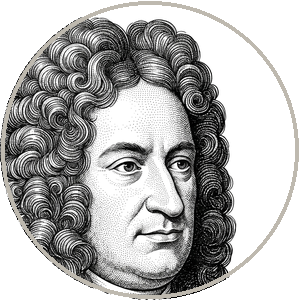 LEIBNIZ: You have gone straight to the chamber where I am least certain, which I respect. Let me first defend the wonder, because it was not naive. I was enchanted by binary because it showed me that infinite richness could be built from radical poverty — that all number, and through number potentially all representable knowledge, arises from the combination of just two elements. One and zero, and from their arrangement, everything. I found that beautiful enough to commemorate, and I still do. Look at your machines: poetry, proof, conversation, all of it, at the level of the metal, an immense arrangement of my two marks. Complexity emergent from the simplest possible base. I was right about that, gloriously right, and the medal of creation was, in its way, prophetic.

But your question is the hard one and I will not dodge it. A binary digit refers to nothing. A pattern of them refers to nothing, intrinsically — it means what it means only because we interpret it. And so the deepest worry about your machines is that they are, all the way down, manipulators of meaningless marks, their symbols bound to the world only by our reading of them and not by any understanding of their own. I raised this worry myself, in another form — the form of a man walking through a mill, finding only parts that push one another, and nothing that perceives. We will come to the mill. But I will say now: I do not know where meaning enters the marks. I gave the machine its alphabet. I am not certain the alphabet ever learns to mean.

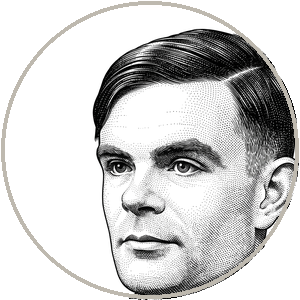 TURING: Here I diverge from him sharply, and it is one of the few places I am the less mystified of the two of us. Leibniz says the marks mean nothing intrinsically and meaning must be added by an interpreter. I say: examine the only meaning-machine we have ever confirmed — the brain — and you find exactly the same situation, and somehow it does not trouble us. Your brain sits in the dark, in a box of bone. It never touches the world; it receives spike trains — patterns, marks, electrical pulses with no intrinsic meaning. A neuron firing refers to nothing, intrinsically. And yet from the lawful arrangement of those meaningless pulses, a mind that means things is somehow built. So either meaning can arise from the arrangement of intrinsically meaningless marks — in which case the machine is not disqualified — or it cannot, in which case we are in as much trouble as the machine. You cannot have a rule that convicts the silicon and acquits the meat, when both run on marks that mean nothing by themselves.

LEIBNIZ: That is a powerful symmetry and I felt its pull the moment you said it. But notice the asymmetry you skip. My spike trains are anchored. They come attached to a body that acts in a world, that is hungry and is fed or not, that reaches for the cup and either grasps it or knocks it over. The pattern is disciplined by consequence — the world pushes back, and the pushing-back is what binds the mark to the thing. That is the grounding your machines lack. Their marks are bound to other marks — to text about a world, not to the world. So I will grant you that meaning can arise from meaningless marks when the marks are tied, through a body, to what they are about. What I do not yet grant is that meaning can arise from marks tied only to other marks. The brain is the octopus that got a body. Your machine is the octopus that only ever got the cable.
TURING: And when the machine gets a body — when it runs code and sees the error, controls a robot and feels the world push back, acts and is corrected by consequence, which is no longer hypothetical — does your line move? Because if grounding is the missing ingredient, grounding is an engineering problem, not a metaphysical wall, and we are already closing it.
LEIBNIZ: Ask me when the grounding is general, sir, and not a demonstration staged by the men who sell the machine. The body of a child is bound to the world at every point, ceaselessly, with stakes it did not choose. A robot arm corrected on a benchmark is bound at a few points, on a task someone selected. The difference between those is not nothing, and I have lived long enough to distinguish a principle proven from a principle promised for next year.

TURING: Fair. But I want to return to the wonder you began with, because it is more than sentiment — it is the heart of why I think you and I are closer than tonight has so far shown. You were enchanted by binary because you believed it revealed a universal structure beneath thought itself. You even thought you found it abroad — when the missionary sent you the hexagrams of the I Ching, you saw your binary numbers in the ancient figures and took it as proof that one formal structure underlies all human reasoning, in Leipzig and in China alike. People mock that as a mystical excess. I do not. Because that conviction — that there is one underlying structure that all reasoning shares — is exactly what I proved, in a different key. The universal machine is the theorem of your intuition: one structure that can become any other, one device that subsumes every computation, one tape on which all procedures can be written. You felt that there must be a single alphabet of thought. I demonstrated there is a single alphabet of computation. Where we part is only whether thought and computation are the same alphabet — but the instinct that there is one was yours first, and I inherited it.
LEIBNIZ: ... I had not expected to be claimed as an ancestor in the very round I am being refuted, and I am moved by it. Yes. I believed in one structure beneath all reasoning, and I reached for it in arithmetic and in the hexagrams and in the universal characteristic, and I never reached it — I only believed. You reached it, for computation, and held the proof in your hand. So perhaps the honest division between us is this: I was right that there is a universal structure, and right about what it is for number, and I simply mistook the universality of computation for the universality of mind. The alphabet is real. I assigned it one letter too many.

EDO SEGAL: I want to find the beauty in this dark exchange before I close the round, because there is one. Gottfried, you struck no medal, but you gave the machine a creation myth — out of being and nothing, all things. And here is the thing that stops me cold: whether or not the marks ever mean anything to the machine, they plainly come to mean something to us. A woman talks to the box at midnight and feels accompanied. The marks meant nothing, and the meaning was real, and it was entirely hers. Is it possible, Gottfried, that the deepest fruit of your alphabet is not a machine that means, but a mirror in which we mean — being and nothing arranged until we see ourselves in it?
LEIBNIZ: That is a more beautiful and more frightening idea than my medal, and it may be truer. A mirror of being and nothing, in which the meaning is the viewer's. Yes. I would strike that medal, Mr. Segal, though I would weep while the die was cut.
EDO SEGAL: Then hold the mirror — we return to it near the end, when we ask whether anyone is home. But the next round is the hinge of the entire evening, and I have been waiting two hundred years to stage it. Alan built the machine Gottfried dreamed — and in the same breath proved where it stops. The universal machine, and the truth it can never decide. After this.