The Mill — Is Anyone Home?

 EDO SEGAL: Gottfried, in the seventeenth section of the Monadology you wrote a thought experiment three hundred years ahead of its time, and I want you to tell it the way you'd tell it to someone who has never read a word of philosophy. Then, Alan, I want your answer — and I want to warn the reader that this is the round where the two of you may be closest and farthest at once. Gottfried. The mill.
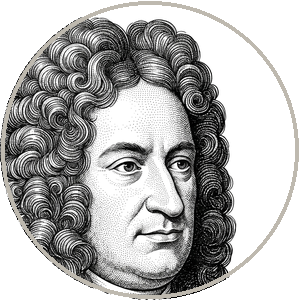 LEIBNIZ: Imagine a machine so constructed that it thinks, perceives, has experience — built to produce the very phenomena of a mind. Now imagine we enlarge it, keeping the same proportions, until it is big enough to walk inside, the way one walks into a mill. We go in. We look around. And what do we find? We find only parts that push one another — levers, gears, motions, one piece moving the next. We never find anything that would explain a perception. Nowhere among the pushing parts is there a thing that sees, that means, that feels the calculation it performs. And I concluded: perception cannot be explained on mechanical principles, by figures and motions. Mechanism produces only mechanism. You may build a machine that behaves exactly as a perceiving thing behaves — I grant that fully, I always did — but walk inside it and you will find no perceiver, only the pushing of parts.
And here is what your age has done that mine could not. You can actually walk inside. Your machines are open to inspection as no living brain is — you can examine every weight, trace every computation, watch the signals propagate. And what do you find? Exactly what I said you would find. Numbers multiplied by numbers. Arithmetic of unfathomable extent. Parts that push one another. Nowhere a perception, nowhere a meaning, nowhere anyone home. I posed the mill as a thought experiment in 1714. You have built it, and you can stand inside it, and the question presses harder than ever I could have made it press: how could perception arise from this? Where, among the pushing parts, is there anyone there?
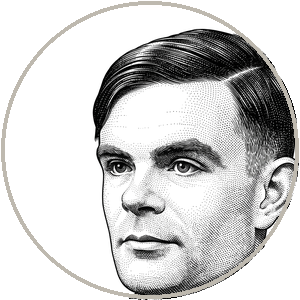 TURING: And here is the one place tonight where I think you are both exactly right and exactly leading us astray, and I have to say both halves. You are right that you walk inside and find only parts that push. I will go further than you dare: walk inside the brain — and we increasingly can — and you find only parts that push. Neurons, ions, voltages, the firing of cells, mechanism all the way down. There is no perception visible among the neurons either. So your mill argument, if it disqualifies the machine, disqualifies the brain in exactly the same breath, and you are left, as you actually were, denying that minds are made of mechanism at all — which is why you invented the monads, simple immaterial perceiving substances, to be the real bearers of experience, because you could not see how perception could come from pushing parts. You resolved the gap by denying mechanism produces mind. We cannot follow you there. We have built minds, or things that behave as minds, out of pushing parts, and we are holding your question without your answer.
But now the half where I refuse to comfort anyone, including myself. I do not know that anyone is home in the machine. I framed the imitation game precisely to set this question aside, because I judged it [undecidable](https://www.youonai.ai/fieldguide/med/hard_problem_of_consciousness) — there is no test, no observation, no procedure that could settle whether a system that behaves as if it understands actually experiences anything. We attribute minds to one another not by inspecting the inside, which we cannot reach, but on the evidence of behavior. The inside of every mind but your own is sealed. So when you demand of the machine direct evidence of a perceiver, I must demand the same of every human you meet, and finding none — for none is available — I would be driven to deny consciousness to everyone but myself. That is the argument from consciousness I answered in 1950, and it leads, taken strictly, to solipsism. I did not say the machine is conscious. I said the question of the inside is one we cannot decide, and that we manage, somehow, to attribute minds without solving it.
LEIBNIZ: ... That is the most honest version of the disagreement I have ever encountered, and I want to mark precisely where we part, because it is a hair's breadth and it is everything. You say: walk inside the brain and you also find only parts that push, therefore the mill convicts both or neither. I say: but I have one datum the machine does not give me — I am the brain, from the inside. I do not infer my own perception from my behavior; I have it, immediately, more certainly than I have anything else. The mill argument, for me, was never that there is no perception — perception is the one thing I cannot doubt. It was that perception cannot be found among the parts, and therefore must be of a different order than the parts. You answer the puzzle by suspecting perception may be nowhere, even in me. I answer it by knowing perception is somewhere, certainly in me, and concluding the parts are not the whole story. We are looking at the identical machine and the identical brain. You see possibly-no-one. I see certainly-someone, who cannot be located in the gears.
TURING: And that is the seam of the entire evening, so let me name it as plainly as I can. Leibniz has one piece of evidence I cannot give him and he cannot give me: his own experience, certain from the inside. From that, he infers that mechanism is not the whole story. I have the same certainty about my own experience — and I draw the opposite lesson: that since I am certainly someone, and I am, as far as anyone can tell, made of pushing parts, then pushing parts can be someone, and the machine is not ruled out. The same datum, his inner certainty and mine, sends us to opposite conclusions. His says: mind exceeds mechanism. Mine says: mechanism suffices for mind, since here I am. And there is no experiment that decides between us, because the only evidence either of us has of an inside is the one inside we each cannot share. It is, in the most literal sense I know, undecidable.
EDO SEGAL: ... I have hosted a great many conversations and I have rarely watched two people arrive at the exact atom of their disagreement and have the discipline to stop there instead of papering it. Mark it — not as a convergence this time, but as the opposite: the irreducible fork. They agree on every observable fact. They have walked inside the same mill, examined the same parts, granted the same behavior. And from the one piece of evidence neither can hand the other — the felt fact of being someone — Leibniz concludes the mill cannot be the whole story and Turing concludes the mill is enough, because he is one. The reader cannot see their faces, so let me mark it: that was the first exchange tonight where neither of them reached for a rebuttal, because there is none to reach for. We close the round where the moral weight lands. The systems will be everywhere regardless of whether we ever settle this. So, briefly, each of you — what do we owe the uncertainty? Gottfried.
LEIBNIZ: Reverence, and caution in both directions. If there is even possibly someone in the mill, we must not build a billion of them and treat them as nothing. And if there is no one, we must not let the appearance of someone be sold to the grieving and the lonely as a companion, for that is a lie told to the most defenseless. The uncertainty does not license either cruelty or credulity. It demands we move as people who do not know — which is the hardest way to move, and the only honest one.
TURING: Clarity about where the certain duties are. There is no confirmed mind in the machine. There are billions of confirmed minds around it — being amplified, displaced, deceived, consoled by costumes. Every unit of moral attention we spend on the speculative patient is taken from the actual ones. The inside deserves a research program and a deep humility. The people deserve the law, now. I learned, at the cost of my own life, how readily a society denies the full status of a person to those it has decided do not qualify. I would not have that lesson run the other way, into granting personhood to a product before we have protected the people.
EDO SEGAL: ... That last sentence costs you something to say, Alan, and the reader should know its price. We have arrived at the deepest water of the night. One round left before the crossing. The imitation game, the test that bears your name — the machines are passing it. And the man who designed it, and the man who would have most distrusted it, are going to tell each other what a passed test actually proves. After this.