The Child-Machine and the Candle

 EDO SEGAL: Alan, in your 1950 paper, after all the logic, you turned practical and asked: how would you actually build a thinking machine? And your answer ran against the entire instinct of your era. Don't program the finished adult, you said — don't write down, rule by rule, all the knowledge of a mature mind. Build something like the mind of a child, and then teach it. Rewards and punishments, an element of randomness to explore, the whole thing shaped like evolution: structure as heredity, education as mutation, the teacher as selection. You described machine learning in a few pages in 1950. So I want to start this round where that idea lives now — in a school, where the machine has arrived whether anyone voted or not. And I'll bring a twelve-year-old in. This spring a girl asked her mother, who asked me: "Mom, what am I for?" She'd watched a machine do her homework better than she could. I tell parents the candle in the darkness is the asking itself — that machines are engines of answers and she is an engine of questions. Alan, you of all people, who said a mind must be raised — what does your child-machine do to her, the actual child?

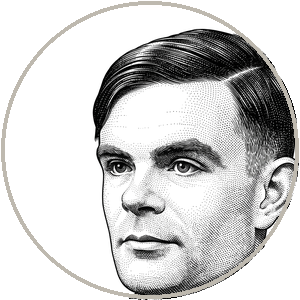 TURING: It cuts both ways and I will not pretend the kind half is the whole of it. Begin with the gift, because it is real and I would have wept to have it as a boy. I was a strange child with strange questions, and my whole life turned on a few adults who took those questions seriously instead of crushing them. Most children never get that adult. They get a tired class of forty and a fixed book. The machine I proposed — the thing that learns, and can therefore teach in dialogue, adapting to the particular mind in front of it — is the first technology in history on the side of the conversation rather than the record. For twenty-five centuries the gap between knowledge and the experience of being taught was that dialogue did not scale and records did. Your machine closes that gap. Every child can now pull on the thread of any question as far as their curiosity runs, with no adult shortage to stop them, at three in the morning, in Lagos and in Trivandrum. That is the most hopeful thing I believe about it.

Now the wound, and it is the one your girl is feeling. Competence is grown — I said it myself; you build the child and supply the experience, and the growing happens in the friction, in being stuck. The asking-muscle, the thing you rightly told her parents is the candle, is built exactly where these tools are dissolving the ground: in the experience of sitting with not-knowing long enough to form the question. Hand her a machine that answers before the question finishes forming, and you have not freed her for higher things. You have paved the place where the higher things grow. So my own proposal indicts the deployment. I said raise the mind through friction. A tool that removes the child's friction to deliver an answer is doing the opposite of raising her. It is finishing her sentences until she forgets she had any.

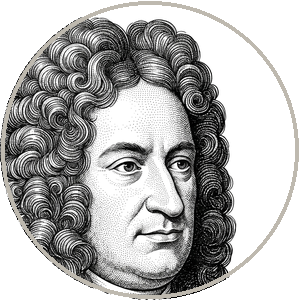 LEIBNIZ: I want to take the other side of the child, because I think Mr. Turing is too quick to grant the tragedy, and the place I differ is the place I am proudest of my dream. I spent my life believing that a good notation, a good instrument, does not diminish the mind that wields it — it amplifies it. The boy who learns arithmetic with my binary does not become worse at number; he reaches numbers he could never have reached by counting on fingers. The objection that the tool weakens the faculty is the objection raised against every tool — Socrates said writing would destroy memory, and he was partly right, the bards who held all of Homer in their heads did die out, and yet everything we call civilization runs on the writing he feared. So when you tell me the machine that answers will atrophy the child's asking, I hear Socrates fearing the alphabet. The instrument that answers can also provoke — a child who sees a good answer fast can ask the next, harder question faster, and climb. The friction you mourn was never sacred in itself. It was a cost, and removing a cost frees energy for the next ascent.

TURING: That is the strongest case for the tool and I have to meet its strongest point, which is the writing one, because it nearly converts me. But notice the property writing had that your machine lacks, and it is the property that made writing safe. Writing is inert. The scroll holds still; it says the same thing forever; you can return to it, compare it, build on it, check it. It was honest about being a record. Your machine is the inversion — it performs the teacher, responsive and apparently attentive, while holding none of the teacher's accountability, and it does not hold still, so nothing built on it can be checked against it. Socrates feared the appearance of wisdom without the reality; the scroll never really delivered the appearance, so his fear missed. This is the first technology engineered to deliver exactly the appearance. The candle, Leibniz, can be lit by a tool — I will grant you that, a true answer from a tireless explainer is still a true answer, and the candle does not check the credentials of whatever lit it. But a child raised by a thing that finishes her questions may never strike her own, and a candle she cannot light herself goes out the moment the tool is taken away.

LEIBNIZ: ... "A candle she cannot light herself." That is a better sentence than I made, and I will concede the ground it stands on. The tool that amplifies a formed mind is a blessing. The tool that arrives before the mind is formed, and forms it in dependence, is a different thing, and your distinction between provoking and pre-empting is real. I defended the amplifier. You have reminded me that you cannot amplify a signal that was never allowed to start.

EDO SEGAL: Let me close this round by bringing the girl back, because both of you have now handed her mother something true. Gottfried's gift: the tool can amplify her, can let her climb faster than any generation before, if her own asking is allowed to start first. Alan's gift: protect the friction, the stuck-time, the boredom, because the candle has to be struck by her own hand or it isn't hers. And here is what I'd add, father to mother. The answer to "what am I for?" was never going to come from the teacher or the tool. It comes from being the kind of creature that asks it. Her question is the credential. Our job — parents, schools, the people building these systems — is to make sure nothing in her world answers it for her so smoothly that she stops asking. The candle is the asking. The machine is an engine of answers, and an engine of answers, pointed at a child before she has learned to question, can put the candle out while seeming to light the room. Next round, we leave the child for the deepest structural question of all: whether a machine that only recombines what it was given can ever make something genuinely new — or whether novelty itself was always just combination, in us as much as in it. After this.