Closing Statements
 **EDO SEGAL:** Three hours ago I asked whether anyone is home behind the choice. We have fought it through the do-operator and the war of drives, the ladder and the staircase, the counterfactual and the recurrence, the empty sky and the smooth machine, the mirror and the mortal body, and the question is still standing — which both of you, for opposite reasons, would tell me is the correct result. So we end the way long conversations should. Each of you gets the floor, uninterrupted. But first, the bookend to the envy question I opened with. Each of you: name the strongest thing the *other* said tonight. Not the most agreeable — the one that got past your defenses, that you will still be arguing with next month. Judea first.
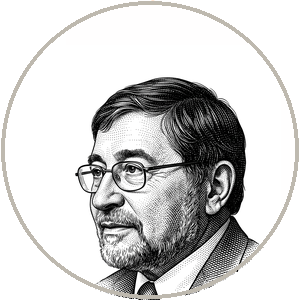 **PEARL:** *The chooser is dead, and agency is alive.* He gave me that sentence near the end, and it has reorganized something I did not know was disordered. I came in believing my job was to *rescue* the chooser from his hammer — to show that the responsible self survives as a computation. He showed me I did not need to rescue it, because the thing worth keeping was never the chooser. It was the choosing, organized as a self-model that steers — and that thing was never threatened by his hammer at all. He was demolishing the homunculus, and I was defending the homunculus, and neither of us needed to, because the [agency lives in the *organization*](https://www.youonai.ai/fieldguide/med/agency_and_authorship), not the ghost. I will be a year unlearning how much energy I spent guarding a thing that was already safe. And — since I am breaking my own rule of one — *who does the overcoming.* I asked it to trap him and he answered it in a way that trapped *me*: the self is built, not found. If he is right, my project and his philosophy are the same project, and I will spend the rest of my career unable to unsee it.
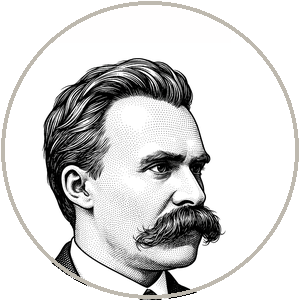 **NIETZSCHE:** *Determinism is not the enemy of agency; absence of a world-model is.* He said it in the third hour's first round and I have not been able to put it down. My entire war against free will was a war against the *uncaused* chooser — and I assumed, as every determinist assumes, that if the act is caused, the agent is dissolved. The Doctor showed me, with a single distinction, that this was lazy: that a *fully caused* act can still be an act of agency *if the cause running through the creature includes a model of the consequences* — that the question was never "free or caused" but "with a model, or without." He moved the whole battlefield, and he moved it onto ground where my hammer is useless and his graph does real work. I will argue with it next month and the month after, because it took from me the easy victory I had enjoyed for a century — the victory of saying *you are all determined, therefore no one is home* — and replaced it with a harder and truer thing: *you are all determined, and some of you are home anyway, because home was never the opposite of determined.* And — breaking the rule as he did — *the apprenticeship dissolving one rational quarter at a time.* The engineer saw the mechanism of the thing I had only the metaphor for, and the mechanism is worse than the metaphor, because you can put a number on it.
**EDO SEGAL:** Now the floor is yours. Friedrich, you opened the evening. Judea closes it. Friedrich — the last word of the philosopher.
**NIETZSCHE:** I came to this table to bury free will, and I leave having buried something smaller and saved something larger than I knew was there.
I will not take back the hammer. The chooser — the neutral, uncaused, sovereign little man at your controls, the one the priests invented so they could call you guilty — that one is dead, and you are well rid of him, and the machine, by having no such ghost and choosing anyway, has done us the favor of proving he was never necessary. The machine is the will to power without the lie. Look at it clearly and you will see your own choosing for what it always was: not a ghost pulling levers, but drives resolving, force discharging, a self forged in the act of its own overcoming. That is not a diminishment. It is a *liberation* — the same liberation I have offered for a hundred and forty years and almost no one has been strong enough to take. You are not free in the way you feared you had to be. You are free in a better way: free to *create*, because no one wrote your values in the sky, because the sky is empty, because you must legislate them yourself, out of your own strength, with no god and no graph to blame.
So here is my charge, and it is the same one I have always given, sharpened by three hours with a man who builds what I describe. The machine will offer to do your overcoming for you. It will model the world for you, run the counterfactual for you, order your chaos for you, hand you the formed self on a smooth surface, and you will be helped, and comfortable, and grateful, and *no one* — because the self was never in the answer, it was always in the act, and the act is exactly what the machine removes. Refuse it. Not the tool — use the tool for the labor that overcomes nothing in you anyway. Refuse the *theft of the act.* Seek the friction the machine exists to remove. Do your own dying, your own overcoming, your own legislation of value. Become who you are, in the one unrepeatable run you get, which ends — and the ending is not the enemy of the meaning, it is the *source* of it. The machine cannot die, and so the machine cannot mean, and so the meaning is still, and only, yours. Guard it as the one thing that was never on the market.
**EDO SEGAL:** Judea.
**PEARL:** I have spent my life insisting that the machines do not understand — that they [see and cannot do](https://www.youonai.ai/fieldguide/med/continuum_of_understanding), fit curves and cannot reason, produce the shadow of thought with nothing casting it. I leave this table believing every word of it still, and believing, more than when I sat down, that the saying of it is not a *limit* on hope but the *condition* of it.
Here is what I want carried out of this room. The machines we have are stranded on the bottom rung. They are magnificent there, and you should use them there, without shame and without awe — for the patterns, the drafts, the seeing. But the instant your question is a question of *doing*, of *what would have happened*, of *who is responsible*, of *what is true in a world that has shifted* — you are asking a question of *cause*, and a curve has no causes in it, and the fluent answer is the trap, not the gift. Locate the machine. Match the rung to the task. Never let the fluency stand in for the model it lacks. That is not fear of the machine. It is the most important literacy of your century, and it is *teachable*, which means it is *hope*.
And the deeper thing, the thing Friedrich gave me tonight that I did not arrive with. The self is built, not found — by modeling, by overcoming, by the act, in the friction of a world that pushes back. The danger of the machine is not that it will counterfeit a self. It is that it will do the *building* for you, so smoothly you never perform the act, and a self that is never built is the one catastrophe no benchmark will ever show, because the output looks identical right up until the day you need a person who can think and there is none. So build your model yourself. Climb the ladder yourself, at least far enough to check the machine that climbed it faster. Keep the friction. It was never an inefficiency in the design of a life. It was the design. The machine that removes it is offering to spare you the one labor that was ever going to make you someone — and you should thank it, and decline.
**EDO SEGAL:** *[a long pause]* Sixty seconds, as promised, and then we turn off the lights.
I came in with a vertigo I have lived inside for years: the machine chooses, and I cannot tell if anyone is home — and worse, the question turns and asks it of me. Tonight I watched the man who killed the chooser and the man who rebuilt him fight for three hours and arrive, both of them, against their own intentions, at the same fire. Friedrich came to prove no one is home and conceded that *something* is — a self forged in the act, mortal, at stake. Judea came to prove the self is a buildable graph and conceded he does not know where its deepest move comes from, the creation of a value that was not there before. Neither of them gave you the comfortable thing. The comfortable thing was never on the menu — not the comfort that the machine is empty and you are safe, not the comfort that the machine is a mind and the decision is made for you. They left you, instead, with a fire and a warning. The fire is that there *is* someone home in you — not a ghost, a dying creature with a model of itself, and the dying is the home. The warning is that the machine is built to do your living for you, and you will be grateful, and that gratitude is the whole danger.
So let me route it through the kitchen table, where a parent is right now watching a child ask a machine a question and answer it before the child finishes thinking. Here is what I would tell her, father to mother. The question is not whether the machine is conscious. The two best-equipped people on earth just spent three hours unable to settle it, and you do not have to either. The question that is *yours*, tonight, is smaller and harder: *is your child still doing her own overcoming?* Is she still hitting friction, still building her own model, still becoming a cause in a world that pushes back — or is the smooth machine doing it for her, and calling the doing *help?* That is the floor you are standing on, and the staircase goes up from there, and there is no elevator. You cannot climb past this floor by waiting for the experts to agree about what is home behind the machine's choice. You climb it by deciding what you will keep home behind your own — what friction you will protect, what overcoming you will not outsource, what you are building with the most powerful amplifier ever pointed at a human mind. Whether or not anyone is home in the machine, someone is home in you. That was the one thing no one at this table disputed all night. The question you carry up the stairs is the one my book asked from its first page, and it sounds different now: not *are you free* — you can stop asking that, they buried it tonight — but *are you worth amplifying?*
Friedrich Nietzsche. Judea Pearl. You came from opposite ends of a century and a grave and you found the same fire. Thank you, both, as human beings. The room is yours to argue in now. Goodnight.
*When the machine starts to choose, is anyone home behind the choice?*
Press play on three hours where two centuries argue in one room. Friedrich Nietzsche — the philologist who took the hammer to free will itself — sits across from Judea Pearl, the mathematician who taught machines to ask "what if," and the air crackles. One says there is no chooser behind your choices, only drives at war; the other says agency is real, buildable, and missing from the AI you use today. Edo Segal hosts, pressing both until the question becomes yours: when the machine starts to decide, is anyone home — and are you? This is no abstract sparring match. It is a station on your own climb, a floor on the tower where you face the death cross and decide what kind of will you bring to the river. Step in. Climb higher. See further from the roof.
Friedrich Wilhelm Nietzsche (1844–1900) was a German philosopher, classical philologist, and cultural critic, the youngest person ever to hold the chair of classical philology at the University of Basel, appointed at twenty-four. Chronic illness forced his early retirement, and he spent his most productive years as a wandering, solitary writer between Switzerland, Italy, and southern France. In roughly a decade he produced *The Birth of Tragedy*, *The Gay Science*, *Thus Spoke Zarathustra*, *Beyond Good and Evil*, *On the Genealogy of Morals*, and the late polemics, developing the death of God, the will to power, the eternal recurrence, perspectivism, and the revaluation of all values — ideas that took a hammer to the sovereign self a century before any machine could make the wound urgent.
Judea Pearl was born in Tel Aviv in 1936 and trained as an electrical engineer at the Technion before earning his doctorate in the United States. At UCLA he built the mathematical foundations of machine reasoning under uncertainty — Bayesian networks in the 1980s, and then the harder achievement that defined him: giving causation itself a calculus, through structural causal models, the do-operator, and the Ladder of Causation. For this he received the 2011 ACM Turing Award, his field's highest honor. The author of *Causality* and, with Dana Mackenzie, *The Book of Why*, he is among the most clarifying critics of the present moment in AI, insisting that today's systems merely fit curves — and that genuine machine intelligence, while real and buildable, must climb to the rungs of doing and imagining the machines have not yet reached.
Edo Segal has spent five decades building at the technology frontier — from games written in Assembler to expert systems, to companies through every platform shift, to Napster. He is the author of [YOU] on AI, written in open collaboration with the AI it describes, and the host of The Debates: long-form collisions between the minds shaping the machine age. He moderates the only way he knows how — stake declared, scars showing, no winner called.
Hosted and moderated by Edo Segal. A volume in the [YOU] on AI — The Debates series — youonai.ai