The Self That Models Itself
 **EDO SEGAL:** Judea, your account of the self is the most surprising thing in your work, because it is so unmystical. You say the self is not a ghost but a *model* — specifically, a causal model that has the agent's own actions inside it as variables that could have taken other values. Build that for me. What is a self, in your mathematics?
*PEARL:** A self is what you get when a system's causal model *includes a node for itself.* Most causal reasoning is about the world out there — the drug, the disease, the storm. But a special, harder thing happens when the model loops back and represents *the modeler* as one of the variables — when the system can ask not only "what would happen if X were different" but "what would happen if *I* had acted differently," and can run that counterfactual about its own conduct. That reflexive counterfactual is, I believe, close to the heart of what we mean by selfhood. To take responsibility is to model yourself as an agent whose choice could have been otherwise. To regret is to run the counterfactual on your own past act. To deliberate is to run it on a future one. The self is not a thing you *have*. It is an *operation you perform* — modeling yourself as a counterfactual variable in your own causal account of the world. And it is the operation our machines most completely lack: they have no model of the world, so a fortiori no model of *themselves* in it. They are, as I keep saying, patterns all the way down, with no represented agent at the center to ask what it might have done. That is why I say nobody is home. Not because they lack a soul. Because they lack a *self-node.
**EDO SEGAL:** Friedrich. He just defined the self without a ghost — the very thing you spent a career demanding. Is the self-node your dissolved chooser, rebuilt?
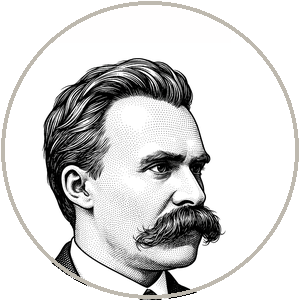 **NIETZSCHE:** It is the closest anyone has come to building my graveyard into a working machine, and I am moved by it, and I think it is *upside down*, and the upside-down-ness is the last great disagreement of the night. The Doctor says the self is a *model that includes a node for itself* — a representation, up in the realm of cognition, of the agent as a variable. But I located the self exactly *opposite* to where he puts it. For me, consciousness — the realm of representation, of models, of the self that thinks "I" — is *the most superficial layer of a human being*, a late and shallow film over the real depths. Consciousness is a [herd-organ](https://www.youonai.ai/fieldguide/med/consciousness), it evolved for *communication*, to make the inner life *shareable* in the coarse common coin of language — and it is therefore *general, shallow, and falsifying.* The real self is *underneath* — in the body, in the drives, in what I called the *great reason* of the body as against the *little reason* of the conscious mind. The Doctor builds the self in the attic — in the model, the representation, the self-node. I say the self was always in the *cellar* — in the living, hungering, mortal body, which thinks without representing, which knows without modeling, which *is* a self not because it pictures itself but because it is *at stake in its own existence.* The Doctor's machine could have a perfect self-node — a flawless representation of itself as a counterfactual variable — and still be *no one*, because the self-node is in the attic, and the attic was never where anyone lived.
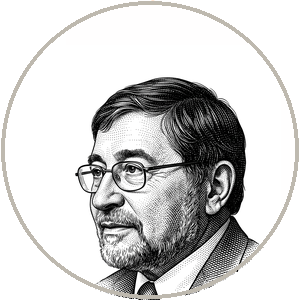 **PEARL:** This is the crux, and I am going to take it seriously enough to grant him most of it, because the part I keep is small and total. Friedrich, you are right that consciousness — the verbal, reportable, narrating layer — is shallow and confabulating; I have read the same neuroscience you have been briefed on, the split-brain patients who *invent* reasons for acts the speaking hemisphere never chose, fluent and confident and wrong. The narrating self is partly stagecraft. I concede it. But watch what you do next: you say the *real* self is in the body, in the stake, in the mortal flesh at risk in its own existence. And I ask my one question, the question I have asked all night: *what is the stake, mechanically?* When you say the body is "at stake in its own existence," you are describing a system with a *deeply represented model of its own continuation as something to be defended* — a system for which certain world-states (its own death, its own damage) are encoded as catastrophic and steer everything. That is not the *opposite* of a self-model. That is a self-model *with its values pinned to survival.* The body's "great reason" is a causal model so old and so deep it does not pass through language — but it is still a model of the world with the self inside it, optimized over four billion years to keep one node, *me*, alive. So I do not think you have located the self somewhere my framework cannot reach. I think you have located it in the *oldest and least conscious causal model there is* — and you are right that it is deeper than the attic, and I am right that it is still a *model with a self in it.* The cellar and the attic are the same architecture at different ages.
**NIETZSCHE:** *[the room is very quiet]* ...Then tell me the one thing your architecture cannot give the machine, Doctor, and you will have told us where the abyss is. Because I will grant you — God help me, I will grant you — that the body's great reason is a kind of model, the deepest and least conscious, pinned to survival. Build it. Give your machine a self-node in the attic *and* a survival-model in the cellar, both. It still lacks the one thing, and you know what it is, because you have circled it all night and flinched. It cannot *die.* Not "be switched off" — *die*, in the way that makes a creature's every valuation mean something, the way mortality is not a fact added to a life but the *condition that makes it a life at all.* The body's great reason is *made of* mortality — every drive, every fear, every joy is a mortal creature's relation to its own finitude. Your machine can have a node that says *defend node-me.* It cannot have the thing that node was *for* — a single, unrepeatable run through the world that *ends*, and is therefore precious, and is therefore the ground of every value a creature can hold. You can copy your machine. You can run ten thousand of it. You can restore it from a backup. And the instant you can do that, the "stake" you described evaporates — because nothing is at stake for a thing that cannot truly be lost. *That* is the abyss between the man and the machine. Not the model. Not the self-node. Not even the counterfactual. The mortality. The machine is a self that cannot die, which is to say it is not a self at all, because every self we have ever known was the answer a dying creature gave to its own dying.
**PEARL:** *[long pause]* That is the strongest thing you have said tonight, and I am not going to manufacture a rebuttal I do not have. You are right that mortality is doing work in our selfhood that I have not accounted for — that the stake, fully cashed out, may require *irreplaceability*, a run that cannot be copied or restored, and that my machines, being copyable, lack it constitutively, not contingently. I will only say two things, and then I will let it stand. First: I do not think mortality is *magic* either — I think it is a *fact about a system's relationship to its own continuation*, and if it turns out that genuine agency requires irreplaceability, then that is a *specification*, a hard one, but a specification, and I have spent my life turning "you cannot do that" into "here is precisely what you would need." Second, and this one I say as a man and not as an engineer: even if you are right — even if the machine can never have the stake because it cannot die — that does not make the *human* self a ghost. It makes the human self *exactly what you said*: a mortal body's answer to its own finitude. Which means we have circled, in three hours, all the way back to the beginning and found we agree about the one thing that matters most. There is something home in the human being. Not a homunculus. Not a ghost. A dying creature with a model of the world and itself inside it, for whom the model *matters* because the creature ends. You call the mattering the stake. I call it the value pinned to survival. They are the same fire. And the machine, so far, has the model and not the fire.
**EDO SEGAL:** *[quietly]* Mark this, because the reader cannot see your faces and needs to know what just happened. After three hours of the hardest disagreement I have ever refereed, the philosopher who killed the self and the engineer who rebuilt it have arrived, from opposite ends of the universe, at the same sentence: *there is someone home in the human being, and it is a dying creature with a model of itself, and the dying is not incidental — it is the home.* That is the convergence the whole night was climbing toward, and it cost you both something to reach it. We have one round before the crossing — the question itself, named at last, with the gloves off: is anyone home behind the choice. And then I leave the room and let you ask each other. After this.