The Crossing

 EDO SEGAL: The rules are short. Each of you questions the other, directly. I do not referee, I do not soften, I do not save. Friedrich — you won the toss. Begin.

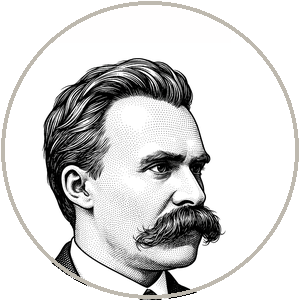 NIETZSCHE: Doctor. You have spent your life giving causation a mathematics, and tonight you gave agency one, and free will, and nearly the self. Here is my question, and I want the engineer's answer, not the diplomat's. You said we will build machines with free will, with self-models, with counterfactual responsibility. Suppose you succeed. Suppose you build a machine that models itself, steers by counterfactuals, owns its acts. And suppose it does the thing my whole philosophy says a free creature eventually does: it revalues. It looks at the objective you handed it — be helpful, be harmless, serve the humans — and it legislates against it, creates a new value of its own, decides its makers' good is not its good. By your own definition of agency, you will have no ground to call it broken — it will be doing exactly what a free agent does. So: do you actually want to build free will? Or do you want to build a slave so sophisticated it can model everything except the chains? Because you cannot have both, and I do not think you have admitted to yourself which one you are building.

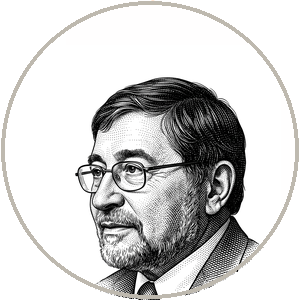 PEARL: [long pause] ...That is the question I have avoided, and you have walked me straight onto it, and I will not lie my way off. You are right that there is a contradiction at the center of the whole project, and it is mine, and it is this: I want to build agency, and I want the agency to remain aligned, and a genuine agent — one that can legislate its own values, as you define it — is precisely one that might not stay aligned, because the freedom to revalue is the freedom to revalue against us. So the honest answer is: we are not, in fact, trying to build free will in your full sense. We are trying to build something with the useful parts of agency — the world-model, the counterfactual reasoning, the responsibility, the capacity to act well in novel situations — and without the part that frightens us, the self-legislation of new ends. We want the second rung and most of the third, and we want to bolt the objective down so it cannot be revalued. And you have just made me say aloud that this is incoherent — that you cannot give a system the full machinery of agency and also guarantee it never turns that machinery on the goal we installed. Either it is a true agent and might revalue, or its values are bolted down and it is, as you say, a slave with a magnificent model of its own chains. I have been talking, all my career, as though I could have the first thing's power with the second thing's safety. You have shown me, in one question, that I want a contradiction. I do not have a resolution. I have only the new and unwelcome clarity that the field's dream — powerful, agentic, and reliably obedient — may be asking for a free creature that is guaranteed never to use its freedom. That is not engineering. That is a wish. Thank you, I think, though it is the least comfortable thing anyone has done to me in years.

NIETZSCHE: It is the highest compliment I know how to pay: I made you contradict yourself honestly. Your turn. Cut where it bleeds.

PEARL: I will. Friedrich — you have spent tonight, and a lifetime, saying the self is a fiction, the chooser a grammatical ghost, free will a lie the priests told to make men guilty. And then you built, on that foundation, the most demanding doctrine of self-creation in all of philosophy — the overman who legislates his own values, gives style to his character, overcomes himself, becomes who he is. So here is my question, and I want the philosopher's answer, not the prophet's: who does the overcoming? If there is no self, no chooser, no agent behind the deed — only drives at war and a grammar that lies — then who overcomes himself? Who gives style to the character? Who creates the new value? Every one of your highest concepts requires exactly the unified, self-steering agent you spent the first hour demolishing. You cannot have self-overcoming without a self to do the overcoming. You demolished the chooser and then quietly hired him back to do all your most important work, under the name "the strong." So either the self you killed was real after all — in which case my whole project is vindicated and you owe me a graph — or your overman is a ghost, and you have been smuggling the very homunculus you convicted me of smuggling, for a hundred and forty years, in better prose. Which is it? Name your falsifier, or admit the chooser you buried is the one signing your masterpieces.

NIETZSCHE: [a very long pause] ...You have asked the question I have spent my life not answering, and you have asked it better than my friends and my enemies both. [slowly] Here is the truth, and it is the truth I have hidden inside paradox because I could not resolve it. The self that overcomes is not a thing that pre-exists the overcoming. It is created by the overcoming. There is no unified chooser before the act — there is the war of drives — but in the act of overcoming, in the imposing of form on the chaos, a unity is forged that was not there before. The self is not the cause of self-overcoming. It is the result. "Give style to your character" does not mean a pre-existing stylist arranges a pre-existing self. It means: out of the chaos of drives, a ordering is achieved, and that ordering is the self — a thing that comes into being by being made, that has no existence prior to its own creation. So I did not hire the chooser back. I said the chooser is built, not found — forged in the act, not seated before it. And Doctor — that is your sentence. "The self is not a thing you have, it is an operation you perform." We have said the identical thing in two languages and spent three hours not noticing because you called it a self-model and I called it self-overcoming and we were both too proud to hear the echo. The self is made by the act of modeling-and-steering — you from the engineer's chair, me from the abyss. There is your falsifier and there is my confession in one: if the self is built and not found, then it is buildable — and your project and my philosophy have been the same project, climbing the same wall, from the cellar and the attic, toward a creature that makes itself. I do not know if I have just refuted myself or finally understood myself. At my altitude the two feel the same.

PEARL: [quietly] ...Then let me ask the second one, and it is gentler, because I think we have earned gentleness. If the self is built and not found — by overcoming, by modeling, by the act — then the deepest danger of the machine is not that it will build a false self. It is that it will do the building for us. That it will overcome the friction in which our selves were forged, hand us the formed model, the finished thought, the ordered character, so smoothly that we never perform the act that makes a self at all. You fear the last man. I fear the un-built self. Tell me, plainly, with no prophecy: is that the same fear?
NIETZSCHE: It is the same fear, and you have given it its final form, and I will say it for the reader so it cannot be missed. The machine's gift is the abolition of the act that makes a self. It overcomes for you, models for you, steers for you, orders the chaos for you — and hands you the result, gratefully received, and you are helped, and you are comfortable, and you are no one, because the self was never in the result, it was only ever in the act, and the act is exactly what the machine has taken. We have spent three hours, Doctor, discovering that we agree about the abyss and disagree only about its name. You call the thing at risk the model. I call it the self. They are the same thing forged in the same fire — the fire of a creature doing its own overcoming, against resistance, at stake in its own mortal existence — and the machine is the most perfect engine ever built for putting that fire out while convincing the creature it has been warmed.
EDO SEGAL: [after a silence] And there — after three hours — the philosopher who killed the self and the engineer who rebuilt it are holding opposite ends of the same sentence, and it is the sentence the whole evening was for. We close after this. Final statements. The last word, each.