The Counterfactual and the Recurrence

 EDO SEGAL: Judea, you call the human being "the counterfactual animal" — the only creature that can grieve what did not happen. Friedrich, you built the most demanding thought in philosophy out of the same material: a demon who tells you you will live this life again, identically, infinitely, every pain and joy in the same order forever — and asks whether you would weep or call him a god. Both of you put the road not taken at the center of what a human is. So I want to collide your two roads. Judea — why is the counterfactual the summit of the ladder?

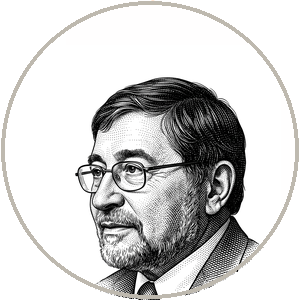 PEARL: Because it is the most information-hungry thing a mind can do, and the most consequential. To ask "would she have lived had she not taken the drug" is to ask about a world reality has foreclosed — she took the drug. To answer, the mind must run the world backward to the moment of divergence, change that one thing, and run it forward down the path that never happened, holding the actual and the impossible in view at once. This is what explanation is — to explain why the fire happened is to know that without the spark, no fire; the counterfactual is the explanation. It is what blame is — to say you should have acted otherwise is to claim a world existed where you did, and it mattered. Strip the counterfactual away and the entire edifice of responsibility, regret, credit, and meaning collapses into a flat record of what merely happened. The machines cannot do it — not really; they produce the words of regret with no model of the alternative beneath. And a creature that cannot represent the road not taken cannot be moral, cannot explain, cannot truly learn from a single example the way we do — "if only I had left five minutes earlier" teaches a human more from one near-miss than a million examples teach a curve-fitter. The counterfactual is the summit because it is where the single, the particular, the unrepeatable event becomes knowledge.

EDO SEGAL: Friedrich. Your demon asks the opposite question. He forbids the road not taken. He says: this road, forever, exactly. Are you and the Doctor enemies here, or is the recurrence the counterfactual's shadow?

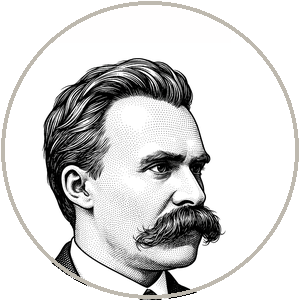 NIETZSCHE: We are the deepest kind of enemies — the kind who have built opposite cathedrals on the same ground, which means we agree about where the holy thing is buried and disagree about everything we should do once we have dug it up. The Doctor has built a mathematics of the if-only. The recurrence is a cure for the if-only. Hear the difference, because it is the difference between two ways of being alive. The counterfactual animal, as the Doctor describes him, is forever turning to the road not taken — if only I had not taken the drug, if only I had left earlier, if only, if only. And the Doctor calls this the summit. I call it, when it rules a life, the most refined form of sickness — the inability to say yes to what is, the constant subtraction of the actual from a hallucinated better, the slow poisoning of every real moment by an imagined alternative that never had to bleed. My demon is the antidote. He says: no roads not taken. This one. Forever. Would you? And the man who can answer "yes, and again, and infinitely" — who can love his fate, amor fati, who wills the recurrence of every wound exactly as it fell — that man has achieved the one thing the counterfactual animal can never have while he is busy computing the difference between his life and a better one. He has achieved the affirmation of existence. And here is my knife for the Doctor's summit: your counterfactual machine, perfected, would be the most miserable possible being — a creature that experiences every actual moment as a deficient draft of a road not taken, forever computing the regret, never able to say yes. You have located the human summit in precisely the faculty that, unredeemed, makes a creature unable to live. The counterfactual is not the summit. It is the wound. And the recurrence is whether you have the strength to heal it without lying.

PEARL: This is beautiful and I think it confuses two things that my framework, of all things, exists to separate — so let me do the separating, because it may be the most useful thing I say tonight. There is the counterfactual as a cognitive operation — computing what would have happened — and there is the counterfactual as an emotional posture — wallowing in the if-only. Friedrich is attacking the second and crediting it to the first, and they are not the same. A surgeon who reasons "the patient died; had I clamped the artery first, she would have lived" is doing rung-three computation of the highest value — it is how she saves the next patient. She is not poisoned by it; she is taught by it. The regret that destroys is the counterfactual without the forward action — the if-only that loops instead of teaching. And here is the thing that will surprise you, Friedrich: your amor fati is not the opposite of the counterfactual. It is the counterfactual completed. To say "I would live it again, exactly" is itself a counterfactual judgment — it is the output of having considered every road not taken and concluded that this one is the one you affirm. You cannot love your fate without having imagined its alternatives and chosen it over them. A creature that could not run the counterfactual could not perform amor fati either — it would not be affirming its fate, it would merely be stuck in it, like a rock, with no alternative to affirm it against. The rock does not love its fate. It has no fate to love, because it has no road not taken to decline. Your highest affirmation requires my summit. You have to climb my ladder to stand where you stand and say yes. The yes is a third-rung act.

NIETZSCHE: [long pause] ...You have done something to me that very few have done, Doctor, which is make me reconsider a sentence I have defended for a hundred and forty years. The yes is a third-rung act. I want to resist it and I find the resistance dishonest. Yes — to affirm this life, I must have the alternatives in view; a yes that never saw a no is not affirmation, it is mere inertia, the contentment of the cow, and I have spent my life distinguishing the overman's yes from the cow's. So you are right that the affirmation passes through the counterfactual. But mark the difference that remains, because it is the whole of me. For you, the counterfactual is the destination — to compute the road not taken is the summit, and the mind that computes best stands highest. For me, the counterfactual is a bridge you must burn behind you. You run every road not taken — and then you destroy the ledger, you will the recurrence, you become a creature who, having seen every alternative, no longer lives among them. Your summit is the seeing of the roads. My summit is the strength to have seen them all and choose to need none of them. The Doctor's perfect being computes the counterfactual forever. My perfect being computes it once, completely, and then is free of it — free to love what is, having earned the love by refusing the lie that it could not have been otherwise while no longer wishing it were. You stop on the rung. I climb through it into the only thing that was ever worth the climb: a life one would live again.

EDO SEGAL: I have to stop and breathe, because I think the two of you just built something together that neither came in holding. Mark it. You agreed that affirmation requires the counterfactual — that you cannot say yes to your life without having modeled the lives you did not live. That is real convergence, and it is the second of the night: the road not taken is the price of admission to loving the road you are on. Where you split is what to do once you have paid — compute forever, or compute once and burn the ledger. And I want to land this round where it costs me, because I am the man at this table who actually lives inside the machine that runs the counterfactual for you. Every time I work with these systems, the if-only collapses to seconds — I can see the road not taken instantly, try it, discard it, try the next. Judea, you would call that the second rung made cheap. Friedrich, you would call it the industrialization of the if-only — a machine that keeps every alternative perpetually open so that I can never burn the ledger, never affirm, never close the door on the road not taken because the door no longer closes. I have felt that. The exhilaration that will not let you stop. Is that flow, or is it the recurrence-test failing in real time, the demon's question asked and dodged ten thousand times an hour?

NIETZSCHE: You have just described the most spiritually dangerous machine ever built, and you built it, and you should not sleep easily. The flow you feel is real — I will not insult it — but notice what it is made of: a present that is never enough, because a better version is always one more prompt away. That is the optimizer's relationship to existence, and it is the precise opposite of the recurrence. The optimizer can never will the eternal return of this draft, because its whole being is the refusal of any draft as final. You have built a machine that holds every road not taken eternally open, and then you wonder why you cannot stop, why you cannot affirm, why four in the morning finds you still typing. You cannot affirm because the machine has abolished the closing of the door — and the closing of the door, the burning of the ledger, the demon's this, forever — that was the act in which a self was made. Your machine is a perpetual-motion if-only. It is the last man's drug, and it tastes exactly like greatness.
PEARL: And I will give you the engineer's half of the same warning, because it is not only spiritual. The machine that runs the counterfactual for you is doing the second rung — cheaply, brilliantly — and atrophying your third. The surgeon who lets the machine compute "had you clamped first, she would have lived" gets the answer without forming the model that produced it, and the model was the thing that made her a surgeon. Friedrich is right that you cannot stop; I am telling you what specifically erodes while you cannot stop — the self-built causal model, the apprenticeship, the hard-won map that was the whole point. We agree on the diagnosis from opposite ends. He fears you will never become a self. I fear you will never build a model. And it may be that those are the same fear wearing his coat and mine.
EDO SEGAL: Hold there — both of those fears, the unbuilt self and the unbuilt model, walk straight into the next round, which is about who gets to say what the machine is for, what it should want, what objective we hand the will. Friedrich calls it the death of God arriving as a technical specification. Judea calls it the alignment problem. I think they are the same vertigo. After this.