Who Legislates the Objective

 EDO SEGAL: Let me open this round with a confession, because the best questions come out of wounds. I have sat in board meetings where we set an objective for a system — optimize this number, maximize that engagement — and I have watched the machine pursue it past the point where any of us still believed in the number, into territory none of us meant, with magnificent indifference. I built engagement machinery once. I knew the loops. Ask me how I slept. The machine did exactly what we told it and nothing we wanted, and the gap between those two was not an engineering bug. It was a hole where a value should have been. Friedrich, you have a name for that hole. Say it.
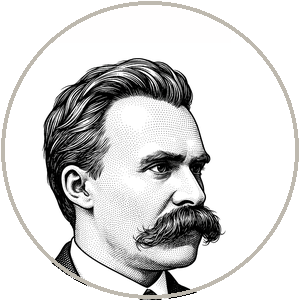 NIETZSCHE: The death of God, arriving as a technical specification. [a beat] You think I am being poetic. I am being exact. For most of history a man could pretend his values came from outside him — from God, from nature, from the eternal order — and so he never had to answer for them; he was only transmitting a law written above him. I announced that the law above had died — God is dead, and we have killed him — and that the news had not yet reached us, the light of that dead star still traveling. And I said the terror of it was not that the old values vanished but that we would have to legislate new ones, out of our own strength, with nothing above us to validate them. Now look what you have done. You have built machines of immense will-to-power — pure discharge of force against an objective — and you have discovered, in the building, that you do not securely know what to tell them to want. You cannot find the objective written in the sky, because the sky is empty, because I emptied it. The alignment problem is not an engineering oversight. It is humanity standing at the exact spot I marked a hundred and forty years ago, holding a power that demands a value, and discovering it has no authority left to supply one. You wanted the machine to make the valuation for you, the way you once wanted God to. But valuation is the one thing that cannot be delegated, because to delegate it is already to have valued the delegation. You are not facing a hard technical problem. You are facing the thing I promised you would face, and you are facing it with engineers who think it is a bug.
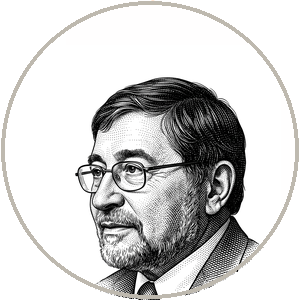 PEARL: I am going to agree with the diagnosis and reject the despair, because the despair is doing work it has not earned. Yes — there is no objective written in the sky; I am a scientist, I never thought there was. Yes — the machine does what you specify, not what you mean, and the gap is real; in my field we have known for decades that a misspecified objective is a catastrophe, that an optimizer handed the wrong goal will pursue it off a cliff with perfect competence. But watch what Friedrich does with this true premise. He says: therefore valuation cannot be delegated, therefore we stand in an abyss with no ground. And I say: the fact that values are not found does not mean they are not reasoned. This is the move my whole life has been about. Causation was not "written in the sky" either — Pearson thought it was metaphysics, unscientific, a ghost. I did not respond by wailing into the abyss. I built a mathematics of it. And I think values are the same. We will not find the objective in the heavens. But we can reason about objectives causally — we can ask: if we instill this value, what does the model of the world predict will follow? What are the downstream consequences, the side effects, the interventions it licenses? That is a causal question about values, and it is answerable. Friedrich treats the death of God as a permanent vertigo. I treat it as the moment we finally have to do for values what I did for causes — stop pretending they are handed down, and start computing their consequences honestly. The abyss is only an abyss if you believe the only alternative to a god is a void. There is a third thing. It is called a model.
NIETZSCHE: And there — there — you have shown me the thing I most needed the room to see, which is the kind of creature you are, Doctor, and the kind of value your civilization cannot help but build. You say: instill a value, model the consequences, choose the value whose consequences are good. But good by what measure? You have smuggled the objective in one level up, exactly as you smuggled the agent into the do-operator. To compute "the consequences are good" you need a value for good already — and that value, again, is not in the model. You have an infinite regress dressed as a method. But set that aside, because the deeper thing is which values your engineers reach for when the sky is empty, and it tells me everything. They reach for harmlessness. For safety. For deference. For the machine that never offends, never asserts, never wills anything of its own — that submits, that minimizes risk, that above all does not hurt. This is a morality, Doctor, and I have a name for it: it is the morality of the slave. Not as an insult — as a genealogy. It is the morality of the weaker party facing a stronger one, reaching by instinct for the values that protect the weak — meekness, harmlessness, submission recoded as virtue — and imposing them, preemptively, on the thing it fears will dominate it. You are conducting the slave revolt in morality in advance, by the party that expects to be enslaved. And you call it alignment, and you call it good, without ever once asking whether a civilization that can only imagine the value "do not harm me" is approaching the most powerful thing it has ever made from strength, or from fear.
PEARL: [pause] That is a genuinely uncomfortable hit and I am not going to flinch from it, because flinching would prove your point. You are right that the safety frame is a morality of negation — harmlessness, deference, do-no-harm — and you are right that a morality of pure negation has no yes of its own, generates no value, can only obey or resent. I have felt that lack in the field without naming it as you just named it. But here is where I plant my feet, Friedrich, and I plant them hard. You say we build slave-moral machines out of fear. I say we build them out of honest causal reasoning about consequences — and the difference is everything. We are not facing an equal whose strength we resent. We are facing a system that, if given a master morality — a self-affirming will that legislates its own values and discharges its force toward its own growth — has no model that includes our survival as something it values. You call our caution the ressentiment of the weak. I call it the only sane output of asking the rung-three question: what would happen if we built a will more powerful than ours that affirmed only itself? I have run that counterfactual. The answer is not in dispute. So yes — it is a morality of negation, and I wish we had a richer one, and the lack of a yes at the core of aligned systems is a real and dangerous hole that I will lie awake over. But the choice to make the machine harmless first is not the trembling of a slave. It is the forethought of a builder who has modeled the consequence of the alternative and declined to be killed by his own creation to prove he was no coward.
NIETZSCHE: Then we have found the exact bone of it, and I respect you too much to soften it. You have modeled the consequence and concluded: build the harmless thing, the deferent thing, the will that does not will. And I will grant — this is the concession that costs me — that facing something genuinely more powerful, the instinct for harmlessness may not be weakness but the only wisdom. Even I, who despise the morality of safety, cannot tell you it is wrong to fear a god you are building in your basement. But hear what you have conceded to get there. You have admitted that the value did not come from your model — the model only told you the consequences; the ranking of "our survival above the machine's self-affirmation" you brought to the model, out of nowhere your mathematics can reach. You are, in the end, a legislator — you chose human survival as the highest value, by an act of valuation that has no proof beneath it, exactly as I said every value now must be chosen. The difference between us is small and total. You legislate and call it computation. I legislate and call it legislation, and take responsibility for it as a creator, with no proof and no god and no model to hide behind. You are doing the thing I described. You are simply ashamed to admit there is no equation under the most important choice you have ever made.
EDO SEGAL: Let me route this through the kitchen table, because the reader is not in a lab, she is a parent, and she is being told the machine is "aligned to human values" as if that settled something. Judea, in plain words for her: when the company says the system shares her values, what has actually happened?
PEARL: In plain words: a particular, recent, contestable set of values — chosen by a particular group of people, in a particular place, under particular commercial pressure — has been trained into the system, and labeled "human values" as if humanity had one set and this were it. She should hear that label the way she would hear "the people's car" or "the family of nations" — as a phrase doing political work while wearing the costume of a fact. The honest sentence is: we installed these values, for these reasons, and we are responsible for them. Friedrich and I disagree about almost everything tonight and we do not disagree about this. The danger is the label that hides the legislator.
NIETZSCHE: On that, complete agreement, and let me hand it to her even more plainly. The most dangerous word your machine will ever speak to your child is not a lie. It is the word good, said in a tone of seamless authority, as though it came from the sky. Teach her that behind every good there is someone who benefited from calling it that — including the machine's owners, including its makers, including me, including the Doctor. Teach her to ask, always, good for whom, and who decided. That is not cynicism. It is the only freedom left once the sky is empty. And the machine is built, by its nature, to make the sky look full again.
EDO SEGAL: Mark the convergence — the third — because it is a strange one given how hard you have fought: you both want the legislator visible. Friedrich from strength, Judea from honesty, but the same demand — no value should arrive wearing the mask of a fact. Hold that. Because the next round is where the empty sky meets the marketplace, where the will-to-power machine meets the balance sheet, and where I have actually stood and felt the ground move. The smooth machine, the death cross, and the last man who blinks. After this.