Closing Statements
 **EDO SEGAL:** Three hours ago I asked whether the machine learns the world by grinding through enough of it, or can never truly know anything it wasn't already built to know. We've fought it through the ant and the bee, the child and the corpus, the idols and the false mirror, vexation and cause, the death cross and the secret college, competence and the mystery of use — and the question is still standing, which both of you, for opposite reasons, would call the correct result. So we end the way long conversations should. Each of you gets the floor, uninterrupted, for the last word. But first, the bookend to the envy question I opened with. Each of you: name the strongest thing the other said tonight. Not the most agreeable — the one that got past your defenses, that you'll still be arguing with next month. Francis first.
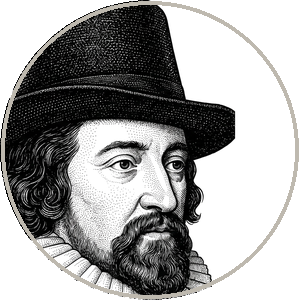 **BACON:** The anchoring, and I will say exactly why it got past me. I came in believing that an induction of sufficient scale must arrive at knowledge, because knowledge simply is the digested image of the world and the engine digests the world's record. The gentleman made me see that the record is not the world — that the words the engine digests were anchored to reality only secondhand, by the men who wrote them, and that the engine itself touches nothing, stakes nothing, can be wrong at no cost to itself. A knowledge anchored in nothing but other knowledge is a tower built on a tower with no ground beneath the bottom one. I spent my life telling men to go to the ground, to the particular, to the instance vexed against the world. He showed me the engine never goes to the ground. It only ever reads the reports of those who did. That is the strongest thing said against my side tonight, and it is strong because it is my own first principle, and I had not noticed the machine fails it.
 **CHOMSKY:** Evolution as induction, and the question of why the slow one is a different kind of thing from the fast one. I have spent decades saying my opponents' position is unfalsifiable faith, and tonight the oldest man in the room — older than the field, older than the science — handed me the sharpest version of the empiricist case I have ever had to face, and it was not faith. It was: your innate structure is itself learned, over deep time, from instances, so you cannot use its innateness to draw a line in kind between the child and the machine, only a line in age and in anchoring. I had to retreat to anchoring to hold my ground, and the retreat was real. I will be examining, for a long time, whether anchoring is a difference in kind or only the difference I happen to be able to name. Sir Francis made me say "in principle, it could be moved." That sentence is going home with me.
**EDO SEGAL:** Now the floor is truly yours. Francis Bacon — you opened the evening. Noam, you close it. Francis.
**BACON:** When you read these words, do something I spent my life begging men to do: do not believe them because they are fluent. I have given you, tonight, every reason to distrust fluency — it is the Idol of the Marketplace, the word that captures the understanding through the ear before judgment stirs, and the engine is the most fluent thing ever made and therefore the most dangerous to a creature built to mistake fluency for sense. But I will not end on distrust, because distrust alone is not my method; it is only its first half. The second half is use. The engine is the most complete inductive instrument ever built, and induction is the road by which our species climbed out of the dark, and I will not tell you to refuse it any more than I would tell you to refuse fire because it burns. Use it. Audit it. Trust its power and never grant it authority. Treat every confident answer it gives as a bet to be tested against the particular and the real, not a verdict to be received. And keep alive, against its overwhelming and meaningless competence, the one set of questions it cannot ask and I foolishly exiled — what is worth doing, what is owed, what is true beyond its uses. The machine will optimize. Only you can ask why. Do not let its fluency talk you out of the question. That is the whole of what four hundred years and one corrupted, brilliant life have left me certain of.
**EDO SEGAL:** Noam.
**CHOMSKY:** I have spent seventy years insisting on a single distinction, and I will leave you with it, because everything depends on holding it. There is a difference between predicting a thing and understanding it, between the surface of mind and the structured depth beneath, between a system that produces the wake and a creature that is the boat. The machines have reproduced the surface with a fidelity that creates the impression the depth was never there — that there was never anything to explain but behavior, and the behavior has now been mechanized. My whole life is a standing refusal of that impression. The child who learns a language from almost nothing, the free and appropriate use of language by a person who means it, the caring whether a word is true — these are real, they are deep, and they are, in part, still unexplained, by me as much as by anyone. The machine has not closed that gap. It has thrown it into relief, by showing you, in the cleanest possible specimen, exactly what a perfect imitation of mind still lacks. So do not be awed and do not be dismissed. Be a scientist. Refuse to mistake the imitation for the thing. The deepest question is not whether the machine thinks. It is what thinking is — and the machine, for all its fluency, has not begun to tell you. It has only made the not-knowing harder to ignore, which is, in the end, a service. Take the service. Do the harder thing it is asking of you. Stay awake to the difference.
**EDO SEGAL:** Sixty seconds, as promised.
I came into this evening with a sentence I wrote at three in the morning — *I felt met* — and I leave with both its readings intact and sharpened. Francis spent three hours proving that the engine is the largest induction ever performed, a real and powerful knowing built from the world's own record, and that the danger in it is not that it is empty but that it is silent about why — a perfect engine of how, consulted on everything, caring about nothing. Noam spent three hours proving that the surface is not the depth, that the engine produces the wake of mind without the boat, and that a civilization which mistakes the one for the other will dismantle the very apprenticeships that grow the people who could tell the difference. You will have noticed that neither of them told you the comfortable thing. You will also have noticed something stranger: that they ended the night holding each other's weapons. Francis, the founder of induction, conceded that the machine never touches the ground his method is built on. Noam, the great anchorer, conceded that the structure he calls innate is itself a slow induction, and that the wall of anchoring is, in principle, a wall that could be moved.
So here is what I can tell you, from the foot of the staircase where this debate lives. You watched the man who invented the scientific method and the man who calls today's AI high-tech plagiarism narrow three hours of total disagreement down to a single experiment they both accept — whether the machine will ever take a loss to keep its words true — and then admit, both of them, that they do not yet know how it comes out. That is not a failure to settle it. That is the most honest map of the territory you will ever be handed. You cannot climb past this floor by waiting for the experts to settle it, because you have just watched the two best in the world decline, magnificently, to settle it. You climb by deciding what you will do under that uncertainty: what you will verify before you believe it, what struggle you will protect in your children and in yourself, what you will refuse to outsource to a thing that is fluent and may be empty, what you will use it for with your eyes open. Whether or not anyone is home in the machine, someone is home in you — and that was the one claim no one at this table disputed all night. The river is rising. You have heard the man who says to wade in and gather, and the man who says the riverbed must come first or the water means nothing. Now decide where you stand. And ask yourself the question this whole series asks from its first page, which sounds different now than it did three hours ago — not whether the machine can be amplified, but whether you are [worth amplifying](https://www.youonai.ai/fieldguide/med/courage_to_be_amplified).
Francis Bacon. Noam Chomsky. Thank you, both, as human beings — and one of you across four hundred years. The room is yours to argue in now. Goodnight.
*Four hundred years separate them, and they cannot stop interrupting each other.*
Francis Bacon, who taught humanity to strip away its assumptions and let raw data testify, meets Noam Chomsky, who proved no amount of data can teach a machine to truly know. For three unbroken hours, Edo Segal holds the floor between the man who invented the scientific method and the man who calls today's AI high-tech plagiarism — and the machine on the table is the one each insists vindicates him. Is knowledge built from the ground up, instance by instance? Or impossible without a structure that no corpus can supply? This is not a history lesson. It is a station on your own climb — the rung where you learn to tell the difference between a mind that understands and a mirror that only sounds like one. Part of the [YOU] on AI collection. Sit down. The river is rising. Decide where you stand.
Sir Francis Bacon (1561–1626), 1st Viscount St Alban, was an English philosopher, statesman, jurist, and essayist — the father of empiricism and a principal architect of the modern scientific method. He is not the twentieth-century painter of the same name. In the Novum Organum (1620) he set out his new instrument of disciplined induction and catalogued the four Idols of the Mind, the systematic ways the understanding deceives itself. He fused knowing with doing in the phrase that became "knowledge is power," and in his posthumous utopia The New Atlantis imagined Salomon's House, a state-scaled research institution that decides in secret what to reveal — a near-exact blueprint for the modern AI laboratory. He rose to be Lord Chancellor of England and fell from office in 1621, impeached for bribery, which he confessed. By tradition he died of a chill caught while stuffing a hen with snow to test whether cold preserves flesh — letting the experiment overrule the theory to the very end.
Noam Chomsky (born 1928) is an American linguist, philosopher, cognitive scientist, and political theorist, often called the father of modern linguistics. His 1957 Syntactic Structures and his 1959 review of B. F. Skinner's Verbal Behavior overturned behaviorist accounts of language and helped launch the cognitive revolution. He developed the theory of universal grammar, the poverty of the stimulus argument, the distinction between competence and performance, and the formal hierarchy of grammars that bears his name. For most of his career he taught at the Massachusetts Institute of Technology. He is equally renowned as a political dissident and media critic, co-author with Edward Herman of Manufacturing Consent and its propaganda model of mass media. The most cited living scholar across fields, he has, in his nineties, spoken directly and critically about large language models, dismissing them as useful engineering that contributes nothing to the science of language and likening them to high-tech plagiarism.
Edo Segal has spent five decades building at the technology frontier — from games written in Assembler as a teenager, to expert systems, to companies through every platform shift, to Napster. He is the author of [YOU] on AI, written in open collaboration with the AI it describes, and the host of The Debates: long-form collisions between the minds shaping the machine age. He moderates the only way he knows how — stake declared, scars showing, no winner called.
Hosted and moderated by Edo Segal. A volume in the [YOU] on AI — The Debates series — youonai.ai