Salomon's House and the Manufacture of Consent
 **EDO SEGAL:** Francis, in the last book you wrote, an unfinished fable called The New Atlantis, you imagined an institution — a state-scaled research college on a hidden island, dedicated to, in your words, the enlarging of the bounds of human empire, to the effecting of all things possible. You called it Salomon's House. And the detail that stops my breath every time is this: the Fathers of that House decide, among themselves and in secret, which of their discoveries to release to the world and which to conceal. They take an oath of secrecy. Read that against a frontier AI laboratory and the four centuries vanish. So I want to start here, with the structure — and Noam, you've spent your life on the structure of how a few hands shape what everyone is allowed to think, so this round is both of yours. Francis, did you design the thing we're now living inside?
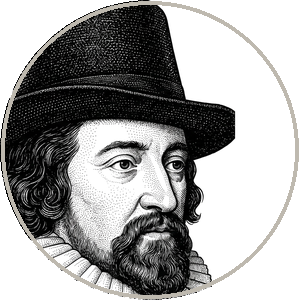 **BACON:** I designed it, and I presented it as a utopia, and the fact that I could do both is the most damning thing about me and the most useful thing I can offer you. Yes — Salomon's House is, in nearly every particular, your frontier laboratory. A large, collaborative enterprise with a fine division of labor: I gave it Merchants of Light who gather knowledge from abroad, Depredators who collect from books, Pioners who try new experiments, Compilers, Interpreters of Nature who raise the findings into axioms. It is richly resourced, oriented toward capability rather than contemplation, and it sits in a privileged, semi-autonomous relation to the state — neither wholly public nor wholly private, wielding enormous power and answering to no ordinary mechanism. And its mission is general: it does not study one thing but tries to make nearly everything — new materials, engines, medicines, even, I wrote, engines that imitate the motions of living creatures. The aspiration to a general artificial intelligence is my College of the Six Days' Works under a newer name: the institution that means to do, by human art, what the old theology reserved for God.
And here is my confession, and it is the one I most need you to hear. I solved the governance of this immense power by a fairy tale. I simply stipulated that the Fathers would be good — wise, benevolent, unimpeachable. I wrote benevolence into the institution by authorial fiat, and then I let it decide in secret what the rest of the world might know. That is exactly the reassurance you are offered today: this laboratory is mission-driven, that founder is sincere, these researchers genuinely care. All of it may be true. It was true of me. I was mission-driven, sincere, and brilliant, and I rose to be Lord Chancellor of England, and I fell from that office on charges of taking bribes, which I confessed. The prophet of disinterested knowledge was undone by very interested power. My utopia had no chapter on accountability because I believed goodness could be stipulated, and my own life is the experiment that refuted me. So when I look at Salomon's House humming in a handful of buildings today, I do not say trust the Fathers. I say: I was a Father, and you should not have trusted me, and the thing my utopia lacked — an external check, independent of the institution's own goodness — is the only thing that matters.
**EDO SEGAL:** Noam, that's an extraordinary thing for the architect to say about his own building. Where does Manufacturing Consent meet Salomon's House?
 **CHOMSKY:** They meet more closely than even Sir Francis has said, and his honesty has made my job easy, so let me extend his point rather than argue it. With Edward Herman I described a propaganda model — not a conspiracy, which is the crude misreading, but a structure. A set of filters — concentrated ownership, dependence on advertising, reliance on official sources, the discipline of organized criticism, a bounding ideology — that shapes what becomes news without anyone needing to give an order. The result is a press genuinely free in that no one censors it, and genuinely constrained in that the range of expressible thought is narrowed in advance. Consent is manufactured not by force but by the architecture of the information environment, and it is more effective for being invisible to the people it shapes. Now: that model described human beings — owners, editors, journalists — operating within structural constraints. The machines introduce something the model never anticipated. A discourse with the human writers removed. Text at a scale no newsroom could match, tuned to engage, produced by systems that have no beliefs to compromise because, as we established, they have no beliefs at all.
And recall what we agreed earlier — the machine is indifferent to truth. A propaganda system staffed by humans is limited, at the margin, by their residual conscience, their professional norms, their capacity to refuse. A system staffed by language models is limited by none of these. It is the [manufacture of consent](https://www.youonai.ai/fieldguide/med/attention_economy) freed from the last frictions of human scruple, feeding an attention economy already optimized to favor the inflammatory over the accurate, at a volume with no author who could be held responsible. And it threatens the deeper thing that dissent requires — a shared reality to appeal to. Flood the environment with fluent falsehood whose relation to truth is undefined, and the very possibility of an appeal to common fact begins to dissolve. My whole political life assumed the truth was available to those willing to find it. A world saturated with synthetic text threatens the availability itself. Sir Francis built the institution. I am describing what happens when the institution's product is a machine that can manufacture our consent with no human in the loop to be ashamed.
**BACON:** And I will not soften it, because the structure is mine and the warning is yours and they fit. But let me add the turn that keeps me from despair, because it is the same turn that ends my own book. My response to the corruption of knowledge was never resignation. It was reform — a deliberate program to purge the false images, discipline the method, and reorganize the production of knowledge so that it serves the relief of man's estate rather than the advantage of the few. The decision about what to release, in Salomon's House, was never only a question of safety. It was a question of who gets the power — to withhold a capability is to keep it; to release it selectively is to distribute it selectively; every release policy is an allocation of knowledge-as-power among the labs and states and publics. That is a politics, and a politics can be checked by other politics. The thing I lacked, and the thing the laboratory lacks, is the external mechanism. It is not a thing to be hoped for in the character of the Fathers. It is a thing to be built, against them, by the rest of us. My optimism, chastened, survives in exactly this: the same engine that concentrates the power also, if we insist on it, distributes the capacity to check the power — and which it does is not fixed by the technology but decided by us.
**CHOMSKY:** On that I am with you, and I want to register that it is not a small agreement. The danger is not the technology as such; it is the political economy of its ownership, the concentration of these tools in a few corporations and states, which determines what the automated persuasion will be made to persuade us of. The machine is a means. The question is always means to what, and for whom. And the reason I am not simply a pessimist is the reason you are not: the structure that concentrates power is a human structure, and human structures are contingent, and contingent things can be changed by people who understand them and refuse them. Your reform and my dissent are the same posture, pointed at the same building, four hundred years apart.
**EDO SEGAL:** The fourth convergence, and I'll mark it plainly: the architect of the research laboratory and the anatomist of manufactured consent agree that the peril is not the engine but the concentration of who holds it, and that the answer is an external check that has to be built, not hoped for. That's as close as you two will come to standing on the same rock all night. So let me use the warmth to ask the coldest question, the one we've deferred three times. We keep saying the machine is fluent but doesn't know. Noam, you have the sharpest tool ever made for that distinction, and you made it sixty years ago. Competence and performance. We go there now — to the exact anatomy of fluency without knowing.