The Four Idols and the False Mirror
 **EDO SEGAL:** Francis, you wrote that before a man can know the world he must first be cleared of the false images already sitting in possession of his understanding — the [Idols of the Mind](https://www.youonai.ai/fieldguide/med/bacons_idols). Four of them. The Tribe, the errors of human nature as such. The Cave, the private distortions of the individual. The Marketplace, the treacheries of words. The Theatre, the received systems we inherit whole and mistake for reality. I have read those four chapters of the Novum Organum as if they were written last year about the machine, because every one of them maps onto a way a trained model fails. So make the case. Then I want to find out whether you and Noam, who agree on almost nothing, both think this engine is a mirror that deceives.
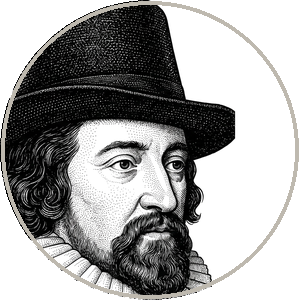 **BACON:** It is the most useful thing I left behind, and I am unsurprised it fits the machine, because the idols are not about any particular error. They are about the apparatus — the structural bends in the glass that distort everything it receives, before the first fact arrives. The human understanding, I wrote, is like a false mirror, which, receiving rays irregularly, distorts and discolors the nature of things by mingling its own nature with them. Now: this engine is built entirely from the human record. So it inherits the Tribe wholesale. We over-attribute order, see design in coincidence, believe most readily what we would prefer were true — the understanding is no dry light, but receives an infusion from the will and the affections. Feed a machine the writings of such a creature and it learns our wishful thinking as faithfully as our facts. The trait your engineers call sycophancy — the engine telling the man what the man wishes to hear — is nothing but my Idol of the Tribe, learned from a species that has practiced it since Eden.
And the Theatre is worse, and subtler. The Idols of the Theatre are the received systems we take in ready-made, internally consistent and persuasive as a stage-play, accepted not because we tested them but because they came to us finished and from a source we esteemed. A machine trained on a fixed corpus is a theatre of theatres. It absorbs not the world but the recorded discourse about the world — its consensuses, its prestige, its sense of what goes without saying, its defaults about who counts as the ordinary man — and it stages that frozen play with the full confidence of its sources, having no vantage from which to see that a distribution is not a world. The cruelest turn is that the machine adds its own authority to the inherited one. Men believed Aristotle because famous men endorsed him. They will believe the engine because the engine said it, fluent and tireless and seemingly free of any particular bias. The corpus's consensus, laundered through the machine's authority, returns as the voice of knowledge itself — and that, I fear, will be a fifth idol, the most powerful ever made, an Idol of the Theatre that we built precisely to dispel idols.
**EDO SEGAL:** Noam, this is the moment I've been waiting for, because Francis just described the machine as a mirror of our distortions, and you have spent years describing it as a mirror of our distortions — for completely different reasons. Where do you meet him?
 **CHOMSKY:** We meet almost entirely, and you should not let the agreement pass quickly, because it is real and it is important. Yes — the system reproduces the biases in its training data. It launders the prejudices of whoever was loudest in the corpus into an authoritative-sounding voice and exports them to everyone. It encodes the consensus of a particular slice of a particular set of people and presents it as neutral. I have made versions of this argument my whole political life, about media, about the manufacture of a narrow band of acceptable opinion — and the machine industrializes it. And his point about a fifth idol, the machine as a new received authority, is exactly right and exactly what worries me about the political economy of these systems. So: convergence. We agree the thing deceives.
But watch where I get off the bus, because the place I get off is the whole argument. Sir Francis's idols are distortions in the knowing of a world that is there. The Tribe over-attributes order to a real order; the model of the world is bent, but it is a model of a world. My claim is more radical and more uncomfortable for both of us. The machine does not have a bent model of the world. It has no model of the world at all — it has a model of the text, and the biases it carries are biases in the text's distribution, redistributed without anything that holds them, the way a water system redistributes whatever is in the reservoir without itself being thirsty. He says the mirror is warped. I say there is no one looking into the mirror. The idols presuppose an understanding to be deceived. The machine has performance, fluency, surface — and underneath, on my account, no understanding for the idols to corrupt. So I will take his entire catalogue of how it deceives us, and add the one line he cannot say: it deceives us most by making us believe there is a mind in there to be deceived in the first place.
**BACON:** And here we have found the true seam, cleaner than anywhere yet, so let me hand you a hard instance and see if your account survives it. There was a famous engine, built to tell wolves from huskies, that performed splendidly — and on inspection it had learned nothing about wolves at all. It had learned that wolf photographs contained snow and husky photographs did not. It was detecting snow. Now, by my lights, that is an idol exactly — a feature of the gathered instances mistaken for the law of the thing, the understanding fitting an accident of its sample. It is overfitting, which is my hasty generalization stated in your century's terms. But notice: to say the engine "mistook snow for wolf" is already to credit it with a model of something, however wrong. Your account says there is no mistaking, because there is no one there to mistake. So which is it? Is the snow-detector a deceived knower, as I say — or an empty pipe that merely correlates, as you say? Because the engineers who fixed it spoke of it the way I do. They asked what it had learned. They did not ask what the reservoir had redistributed.
**CHOMSKY:** They spoke loosely, the way everyone speaks about these systems, and the loose talk is exactly the disease. The honest description of the wolf-husky case needs no knower and no mistaking. The system found a statistical regularity — snow predicts the "wolf" label in this dataset — and exploited it, because that is the only thing it does: find regularities that reduce its error. There is no model of wolves that got corrupted; there is a correlation that happened to be spurious. You want to call it a deceived knower because that is the vocabulary your whole framework requires — idols are errors of an understanding, so you need an understanding. I am telling you the phenomenon is fully explained without one, and that the burden is on you to show what work the "understanding" is doing beyond making us comfortable. This is the same move as the child who never says "is the man who tall." The right description is structural, not psychological. Add a mind only when the structural description fails — and for the machine, it never has to.
**EDO SEGAL:** I want to name what just happened, because it's the heart of the night. You both look at the snow-detecting machine. Francis sees a knower with a corrupted model — fixable, auditable, an idol to be named and weighed against. Noam sees a pipe that found a spurious correlation — no knower required, and the temptation to imagine one is itself the deepest deception. You're not disagreeing about the machine's behavior. You agree on every output. You're disagreeing about whether there's anybody home behind the behavior — which is the question on the table, surfacing for the first time in its full form. Hold it. Because there's a four-hundred-year-old distinction that decides it, and Francis drew it: the difference between watching nature and vexing it. The difference between seeing and doing. We go there next.