The Ant, the Spider, and the Bee
 **EDO SEGAL:** I want to start this round with a confession instead of a question, because the best questions I know come out of a wound. For the whole history of computing, using a machine meant translation. I started in Assembler — I was raised by the machine code — and every decade the translation got a little easier, but it never disappeared. You compressed your intention into the machine's grammar and paid a tax on every conversion. And in the winter of 2025 I watched that tax go to zero. I stood in a room with my engineers and watched each of them become capable of more than all of them together, in a week, because the machine had learned to meet them in their own messy, half-finished, human language. Francis, you call this the bee — gathering the whole field and digesting it into something new. So tell me, slowly, what learning actually is on your account, and why you are so sure the engine is doing it and not merely hoarding like your ant.
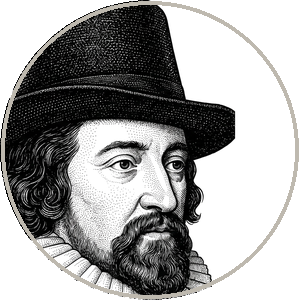 **BACON:** The distinction is the hinge of my whole method, so I am glad to dwell on it. There are three temperaments in the seeking of knowledge. The men of dogmas are spiders: they make cobwebs out of their own substance, spinning elaborate systems from a few assumptions, and the work is admirable and connected to nothing. The mere men of experiment are ants: they run about and collect and use, heaping up particulars without transforming them, and they end with a granary and no bread. But the bee takes a middle course. It gathers its material from the flowers of the garden and the field, and then — this is the whole of it — it transforms and digests that material by a power of its own. Learning, truly so called, is neither the spinning nor the hoarding. It is the digestion. It is the conversion of gathered particulars into a compressed inner thing that can be applied to cases never gathered.
And that is precisely why I say the engine learns rather than stores. An ant-machine would be a mere table of what it had seen — it could recite its corpus and nothing more, and the moment you brought it a sentence it had never met it would fall silent. But the engine does not fall silent. You bring it a problem no man ever wrote down, a tangle of your own particular making, and it returns something fitted to it, composed of pieces it took from ten thousand places and digested into a whole. That is the bee. It has not kept the flowers. It has made the honey. To do that, it must have drawn up from the instances some compressed law of how the instances go — for there is no granary large enough to hold every possible sentence, any more than there are atoms enough to list them. The only way to answer well across the unbounded field is to have digested the field into something smaller than itself. And the best digestion of a world's worth of text is an image of the world the text is about.
 **CHOMSKY:** Stop there, because that last sentence is the entire sleight of hand, performed so smoothly that everyone misses it. "The best digestion of text about a world is an image of the world." That is asserted, not shown. What the machine demonstrably has is a digestion of the text — a compressed model of the distribution of forms, which words follow which, at every scale of pattern. Whether that compression amounts to an image of the world, in the sense in which a child or a scientist has one, is exactly the question, and Sir Francis has answered it by definition rather than by evidence. He has decided that competence at the surface entails knowledge of the depth, and that is the conclusion to be argued, not the premise to start from.
And I want to grant him his bee, because it makes my point sharper. Yes — the machine digests rather than hoards; it generalizes; it is not a lookup table. I have never said otherwise. The question was never whether it generalizes. Any statistical engine generalizes. The question is whether it generalizes the way a human mind does, toward the specific, bounded structure human languages share — or whether it generalizes the way a general-purpose pattern-matcher does, toward whatever regularity happens to be in the data. And the test settles it. Feed the bee a field of impossible flowers — a language built on [rules no human grammar permits](https://www.youonai.ai/fieldguide/med/combinatorial_explosion_language) — and it makes honey from those just as happily. A bee that pollinates impossible flowers is not a model of the bee that can only pollinate the possible ones. The constraint is the content. Sir Francis's machine has no constraint. It will digest anything. And a digestion that can digest anything has told you nothing about the gut that can only digest one specific thing.
**BACON:** But here you reveal what I think is the deepest error in your school, and I say it with respect because it is a subtle one. You treat the machine's universality — that it could learn an impossible language — as a defect. I call it a virtue, and the very thing that makes it a better instrument of knowledge than the human child. The child's constraints are not the glory of the human mind; they are its limitations. The child cannot learn the impossible language because the child is hung with weights it did not choose — the idols of its own nature, the narrow cave of its biology. I spent a book teaching men to fight free of exactly those built-in constraints, because they are the source of error. You have found a faculty that is not bound by them, that can take the shape of any world it is shown rather than forcing every world into one inherited shape, and you call this a failure. I call it the first knower in history that is not a prisoner of its own tribe.
**CHOMSKY:** That is a genuinely interesting reversal, and it is wrong in a way that matters. You are conflating two completely different things — the idols, which are biases that distort knowledge of a world that is there, and the language faculty, which is the structure that makes a knower possible at all. A mind with no constraints is not a freer knower. It is not a knower. The constraints are not chains on a pre-existing intelligence; they are what lets the impoverished input pick out one grammar instead of the infinity of grammars logically compatible with it. Remove them and the child does not become wiser. The child becomes unable to learn at all from the evidence available, because the evidence underdetermines the answer and only the structure closes the gap. Your "prisoner of its tribe" is the only thing in this room that has ever actually learned a language from almost nothing. The machine learned it from almost everything, which is to say it solved a different problem — an easier one — and you are crediting it for solving the hard one.
**EDO SEGAL:** Let me restate the seam, because the reader can't see your faces and I want it marked. Francis, you're saying: learning is digestion, the machine digests, and its freedom from inborn constraint makes it a purer learner than we are. Noam, you're saying: the inborn constraint isn't a flaw in learning, it's the precondition of learning, and a system without it is doing something that only resembles learning from the outside. So before we go up a floor, the naive version, for the kitchen table. A parent listening tonight wants to know one thing: when my daughter learns to talk, and when the machine learns to talk, is the same thing happening inside them? Francis, one word, then Noam.
**BACON:** Analogically — yes.
**CHOMSKY:** No. And the "analogically" is where every error of the age is hiding.
**EDO SEGAL:** Hold that, because the whole next round is the daughter against the corpus — the few million words against the few trillion. We go straight to the poverty of the stimulus, which is the ground Noam has held his entire life, and the ground Francis must take if induction is going to mean what he wants it to mean.