Knowledge Is Power, and the Death Cross

 EDO SEGAL: Francis, the phrase attached to your name is "knowledge is power," and I'm told you didn't quite write it that way. Give us the real sentence, and then I want to put a hard, modern number against it. Because the thing you fused — knowing and doing, into a single act — is exactly what a deployed model is, and that fusion is now displacing people at a speed that has a name in my book.
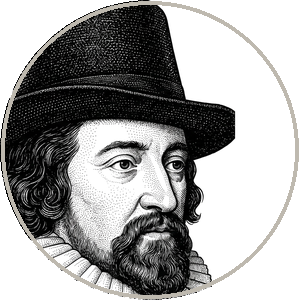 BACON: The slogan is a flattening of something I held more precisely. What I wrote, in the third aphorism of the Novum Organum, is that human knowledge and human power meet in one — for where the cause is not known, the effect cannot be produced. Knowing the cause and being able to produce the effect are two faces of one competence. To understand a thing is to be able to make or unmake it. I had no patience for the contemplative knowledge the ancients ranked highest — knowledge sought for ornament, for disputation, for the pleasure of the learned. I wanted operational knowledge, knowledge that does work, knowledge for the relief of man's estate, judged not by its elegance but by what it lets you do. And the engine is the most complete realization of that fusion ever made. It does not produce knowledge in the old sense — descriptions held up for inspection. It produces operations: predictions that drive decisions, classifications that trigger actions, text that becomes the artifact. The knowing and the doing are not related as theory to application. They are the same object. The model is its capabilities. Knowledge and power have met in one, and this time literally — in a deployed engine, to know and to do are a single, indivisible act.
EDO SEGAL: And here's the number I promised. In [YOU] on AI I describe what I call the software death cross — the moment the cost of producing capability falls below the cost of the human who used to produce it, and the two lines cross, and they do not cross back. When knowing-and-doing becomes this cheap and this fused, the people whose value was that fusion — the junior lawyer, the translator, the coder, the analyst — are on the wrong side of a line that just moved. Francis, you fused knowledge and power without, I think, a matching philosophy of what happens to the people the fused thing replaces. Noam, this is your second front — the political economy. So I'll split it. Francis, the optimist's case. Noam, the cost.
BACON: I will make the optimist's case because I believe it, though I will not make it as naively as I once did. I wrote, intoxicated, of the effecting of all things possible, and I assumed the power would naturally serve the benefit and use of life. The centuries have corrected my assumption, and I have been corrected here tonight more than once. But the core holds: a capability that diagnoses the disease, that translates between strangers, that lets one mind do the work of twenty, is a genuine enlarging of the bounds of human empire, a real relief of man's estate. The displacement is real and it is grievous to the man displaced, and I will not wave it away with a promise that the loom-breakers were always wrong. But the alternative to the death cross — the deliberate refusal of capability for the sake of preserving toil — is a thing I cannot defend, because it asks men to remain less capable than they could be, and that is the one prescription my whole life forbids. The task is not to stop the crossing. It is to govern who holds the power on the far side of it. And that — who holds it — is the question my own life answered in blood, and we are coming to it.
 CHOMSKY: The cost is the part the optimist's case is structurally unable to see, and I want to name it precisely, because it is not the simple thing the loom-breaker comparison suggests. Sir Francis says one mind can now do the work of twenty. Ask the question his own method demands: by what measure, and audited by whom? The claim that the machine replaces the junior lawyer rests on the assertion that what the junior lawyer did was the production of plausible documents — and that assertion is itself the inflation. What the junior lawyer was actually doing, much of the time, was becoming a senior lawyer: acquiring, through the friction of the work, the judgment that lets a person tell a sound argument from a fluent one. Automate the production and you have not just displaced a worker; you have dismantled the apprenticeship that manufactured the only people who can check the machine. The death cross does not merely move people to the wrong side of a line. It can saw off the branch that grows the next generation of judgment — and it does this while the metrics show only triumph, because the metrics measure output, and output is exactly the thing the machine is good at and judgment is not reducible to.
BACON: That is the strongest thing you have said against my side all night, and I want it on the record that I accept it without reservation. The apprenticeship is how judgment is grown, and a power that produces the apprentice's output while destroying the apprentice's formation is a power that eats its own seed corn. I did not see it. My optimism about capability had no chapter on the friction that makes a knower, because I was so busy abolishing friction — the tax, the toil, the translation — that I never asked which frictions were load-bearing. You have named one that is. The relief of man's estate cannot mean the relief of man from the very struggles that make him capable of relief.
CHOMSKY: Then we agree on the gravest practical point of the evening, and notice it does not require my metaphysics. Whether or not the machine understands, the dismantling of the apprenticeship is catastrophic, and the inflated story about what the machine can replace is what licenses the dismantling. This is where my linguistics and my politics meet. The claim "it understands, so it can replace the understander" is doing enormous economic work — moving capital, justifying displacement — and it is, on my account, false. The category error is not a quibble for philosophers. It is the premise of a civilizational bet, and the bet is being placed on the word "understands," which is precisely the word I have spent seventy years saying has not been earned.
EDO SEGAL: Mark this — the third convergence, and the one with the highest body count. Francis and Noam, who cannot agree on whether the machine knows anything, agree completely that the machine is dismantling the apprenticeship that makes human judgment, and that the inflated word "understands" is the lever doing the damage. You disagree about whether the word is false. You agree that betting the economy on it is reckless. Hold that, because we're about to find out who gets to place the bet — and Francis designed the building they're placing it in. Four hundred years ago. In a book about a secret college on a hidden island.