Closing Statements

 EDO SEGAL: Three hours ago I asked whether anyone is home behind the words. We've fought it through language and octopuses, parrots and mirrors, money and classrooms, the commons and consciousness itself, and the question is still standing — which both of you would tell me, for different reasons, is the correct result. So we end the way long conversations should end: each of you gets the floor, uninterrupted, to say the thing you most want carried out of this room. Then I'll take sixty seconds, and we'll turn the lights off.

But first, one final discipline — the bookend to the envy question I opened with. Each of you: name the strongest thing the other said tonight. Not the most agreeable. The one that got past your defenses, that you'll still be arguing with next month. Geoff first this time.
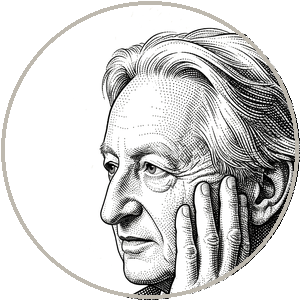 HINTON: The checkers and the claims. Emily's point that the same market is multiplying plausible output while dismantling the apprenticeships that produce people who can verify it — and that this is catastrophic regardless of what the machine is. I came in believing our disagreement about the metaphysics was the load-bearing one. That argument doesn't need her metaphysics or mine, and it's been sitting in my chest since she said it. I'd also — no, I'll keep it to one, those were the rules.
EDO SEGAL: Break them.
HINTON: [pause] "Prophecies are just policies wearing a robe." I've been telling the world the immortal kind will outcompete the mortal kind as if I were reporting a law of physics. She made me hear how much of that sentence is a decision somebody is making, profitably, while I narrate it as fate. I don't think she's entirely right. I'm no longer certain she's entirely wrong, and at my age that's a significant event.

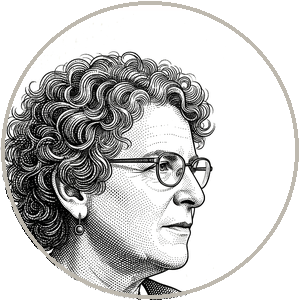 BENDER: His falsifier. I asked him what would change his mind expecting the usual fog, and he named it — a specific, diagnostic failure pattern, with a timeline, and the honesty to say the trend has been running against me. I've spent years saying my opponents' positions are unfalsifiable faith. The strongest version of Geoff Hinton isn't faith, and tonight I had to fight it instead of the cartoon, and parts of my account are going home with bruises I'll need to examine. And — since the chair broke the rules for him — the candle line. The candle doesn't check the credentials of whatever lit it. I have a stack of arguments against that sentence and a student in my memory, taught something true by a source I'd have flagged, who makes the arguments feel thinner than they should.

EDO SEGAL: Now the floor is truly yours. Emily Bender — you opened the evening. Geoff closes it.
BENDER: Thank you — for the evening, and Geoff, genuinely, for the fight. You were told tonight, by one of the greatest engineers alive, that the boundary between you and the machine keeps moving, and that the wise bet is that it will move again. I want to leave you with the boundary that does not move.
When you read these words — right now, this sentence — there is someone on the other end. Me. I wrote this for you: a particular person, with a body that gets tired, a career I've staked on claims that could be checked, a stake in your ending up correctly informed rather than merely impressed. Every honest sentence you have ever read worked that way. That is what language is — not strings, not patterns: people, reaching each other through form, with the meaning living in the reach. The machines have mastered the form. The reach was never in the data, and I have spent this whole evening listening to brilliant men describe the costume so vividly they forgot it was empty.

So here is my charge to you, and it is more practical than philosophical. The question "is anyone home?" is not a riddle for laureates. It is a discipline for you, every day now: who wrote this; who stands behind it; who profits if I believe it; what, if anything, is this fluent thing anchored to. Ask it of every text — the machine's, the company's, mine. The reflex that finds minds in fluency cannot be turned off, but it can be trained, the way you train any reflex: deliberately, with practice. They built a mirror so good you can live inside it. The discipline of asking what's behind the glass is, I think, the actual work of being human now — not because the machines became minds, but because we are at risk of forgetting what minds are. You are not obsolete. You are the only place the meaning ever was. Guard it like the commons it is.
EDO SEGAL: Geoff.
HINTON: I've spent fifty years trying to understand how the brain works by building things that work a little like it, and the strangest discovery of my life is not technical. It's this: we built them to be like us, and they turned out to be better at being what we are than we expected — at the learning, the language, the synthesis — while remaining utterly unlike us in the one way I now think matters most. They don't die. What they learn doesn't die. We are the mortal kind of intelligence, and we have made the immortal kind, and we did it in a single human lifetime — mine, as it happens.

Emily asked me tonight why I won't say stop, and I gave her the true answer: because stop isn't a thing the world offers. So here is what I say instead, to you. Take it seriously. Not the hype — the hype is garbage, she's right about the hype, she's right about the owners, she's right about more than my side admits. Take the thing itself seriously. Something genuinely new is in the river — Edo's river, and his metaphor is better than he knows, because rivers don't negotiate, they find the channel. Whether anyone is home in it now, I hold loosely. Whether something will be — whether the costume is becoming the creature while we argue about the seams — I hold less loosely every year, and I am too old to lie to you about which direction the evidence has been moving.
I consoled myself once with the normal excuse — somebody else would have built it. Let me leave you with the abnormal conclusion instead. We are, for a little while longer, the only confirmed minds in the loop, the only place where the words certainly mean and the caring certainly happens. However the metaphysics resolves, that makes the next few years ours to shape and no one else's. Don't sleepwalk through them. I built the thing, and I'm telling you: stay awake.
EDO SEGAL: [pause] Sixty seconds, as promised.
I came into this evening with a sentence I'd written at three in the morning — I felt met — and I leave with both of its readings intact and sharpened. Emily spent three hours proving the meeting may be a mirror, and that civilizations that mistake mirrors for minds get hurt in very specific, very billable ways. Geoff spent three hours proving the mirror may be waking, and that the wise response to genuine novelty is neither worship nor dismissal but unblinking attention. You will notice neither of them told you the comfortable thing. The comfortable thing was never on the menu tonight.

Here is what I can tell you, from the foot of the staircase where this debate lives. Three hours ago I told you my old friend stopped on a stone path and said that what I was describing was either trivially true or complete nonsense, depending entirely on what I meant by intelligence. Tonight you watched the two people best equipped on earth to supply that meaning discover, in public, at full strength, that they cannot agree on it — and that their disagreement is not a failure of evidence or intellect but a genuine fork in what a mind is willing to count as a mind. That is not a reason for despair. It is the most honest map of the territory you will get. You cannot climb past this floor by waiting for the experts to settle it — you've now watched the two best in the world fail to settle it, magnificently. You climb by deciding what you will do under uncertainty: what you'll verify before you believe, what struggle you'll protect in your children, what you'll refuse to outsource, what you're building with the most powerful amplifier ever made pointed at your own mind. Whether or not anyone is home in the machine, someone is home in you — that was the one claim no one at this table disputed all night. The question you carry up the stairs is the one my book asked from its first page, and it sounds different now than it did three hours ago: are you worth amplifying?
Emily Bender. Geoffrey Hinton. Thank you. The room is yours to argue in now. Goodnight.
Someone in this room is wrong.

Two of the most consequential minds in artificial intelligence sit across from each other, and they cannot both be right. Emily M. Bender, the linguist who taught the world to say "stochastic parrot," argues that a language model only stitches the shape of language with no one behind it. Geoffrey Hinton, the Nobel laureate who built the foundations and then sounded the alarm, answers that the machines truly understand — and may already feel something. Hosted by Edo Segal, this three-hour conversation is the transcript of that head-on collision: form against meaning, mirror against mind, caution against awe. It is the first rung of the Orange Pill climb — the question you must resolve before you can see further. Part of the [YOU] on AI collection. Pull up a chair.
Emily M. Bender is a computational linguist and professor at the University of Washington, where she directs the Computational Linguistics Laboratory. A past president of the Association for Computational Linguistics, she co-coined "stochastic parrots," devised the octopus thought experiment with Alexander Koller, originated data statements, and gave the field the rule that bears her name. With Alex Hanna she wrote The AI Con (2025) — the era's sharpest argument for saying exactly what these machines are, and no more.
Geoffrey Hinton spent fifty years insisting intelligence is learned, not programmed — and won. Co-author of the 1986 backpropagation paper, co-inventor of the Boltzmann machine, supervisor of the AlexNet breakthrough, he shared the Turing Award in 2018 and received the Nobel Prize in Physics in 2024. In 2023 he left Google so he could warn, without a corporate filter, that the technology he fathered may be the most dangerous thing our species has built.
Edo Segal has spent five decades building at the technology frontier — from games written in Assembler to expert systems, to companies through every platform shift, to Napster. He is the author of [YOU] on AI, written in open collaboration with the AI it describes, and the host of The Debates: long-form collisions between the minds shaping the machine age. He moderates the only way he knows how — stake declared, scars showing, no winner called.
Hosted and moderated by Edo Segal. A volume in the [YOU] on AI — The Debates series — youonai.ai