The Flooded Commons

 EDO SEGAL: I want to read you both a sentence from my own book and let you fight over it. Writing about the pattern of technological panic and adaptation, I argued that every transition floods us with abundance — Gutenberg's flood, the internet's flood — and that the resolution was never less abundance but better judgment: curation, criticism, taste, dams in the river. Emily, you've argued this flood is different in kind — that synthetic text is not abundance but pollution, and that the pattern I'm leaning on breaks. Geoff, you've warned about the same flood for different reasons. This is the round where you two agree the most, so I'll referee for daylight between you. Emily, why does my Gutenberg consolation fail?

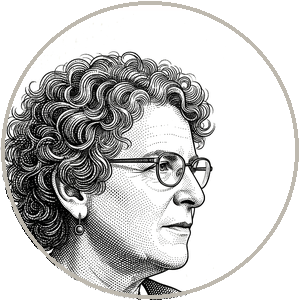 BENDER: Because every previous flood was a flood of utterances — more people saying more things, cheaply. Annoying, destabilizing, frequently wrong, but every drop of it had an author: a someone whose intent you could interrogate, whose track record could be built, whose lies were their lies, attachable to a name and a stake. Judgment, curation, criticism — your dams, Edo — all of them work by tracing text back to accountable sources. That's the load-bearing assumption underneath the whole epistemic infrastructure: libel law, peer review, bylines, reputation, the gut feeling that somebody stands behind this.

Synthetic text removes the somebody. That's the difference in kind. The flood is no longer utterances; it's the appearance of utterances — form with no one behind it, generated faster than humans can produce the real thing by orders of magnitude, indistinguishable on its surface, costless to the polluter. And it doesn't just add lies; it does something subtler and worse — it raises the price of trust itself. When any review, any photo of a bombing, any product manual, any grieving widow's post might be synthetic, the rational reader discounts everything, including the true things. The commons doesn't fill with falsehood; it drains of the assumption that words connect to anyone. And the recursive twist: the next generation of models trains on a web increasingly made of the last generation's output. The parrots are already eating parrot. The signal from grounded human life gets fainter in the mix with every training run. Gutenberg never did that. The press multiplied human voices. This multiplies the absence of them.

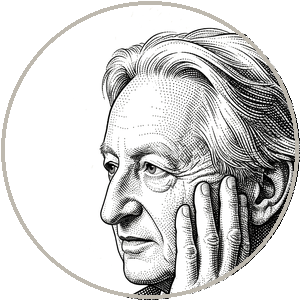 HINTON: I'll say something that may surprise the audience: that was, almost word for word, the warning I gave when I left Google — that the near-term catastrophe isn't robots, it's that ordinary people will no longer be able to tell what is true. Emily and I diverge on what the machine is, and converge completely on what it does to the commons. Fabrication used to be expensive — that expense was a load-bearing feature of civilization that nobody noticed until it was gone. A photograph meant a camera was somewhere. A fluent essay meant a human spent hours. Those costs were the friction that kept the ratio of true-ish to fabricated tolerable. We removed the friction without building anything to replace it, and the people who removed it were paid magnificently. So: agreement. The flood is real, the recursive contamination is real — my technical colleagues call it model collapse and it is not hypothetical — and democratic deliberation is the first casualty, because democracy is the one system of government that runs entirely on a shared sense of what happened.

Where I'll add what Emily won't: the same property that poisons the commons is what makes these systems potentially the antidote at scale. Provenance infrastructure, cryptographic watermarking, systems that read the whole flood and trace claims — nobody human can drink from the firehose anymore, and the only readers fast enough to patrol a machine-speed commons are machines. Emily hears that and hears the arsonist selling extinguishers —
BENDER: I do, because he is. Watermarking that the open-weight models strip in an afternoon. Detection arms races the detectors structurally lose. And the quiet endgame your antidote implies, Geoff — every claim adjudicated by a model owned by the same five companies that flooded the commons in the first place. The cure for synthetic text is not a bigger synthesizer deciding what's real. It's the boring, human, institutional stuff your industry finds beneath it: provenance by law, liability for deployers, data documentation with teeth, funding the actual producers of grounded knowledge — reporters, librarians, scientists, the people whose work this entire technology is a lossy compression of. The commons was never maintained by clever filtering. It was maintained by paying the people who stand behind their words.
HINTON: And when the flood runs at ten million words a second, your librarians do what, exactly? I'm not against a single thing you named — legislate all of it, I've testified for most of it. But the physics of the problem doesn't care about our institutional nostalgia. Machine-speed pollution gets machine-speed filtration or the commons drowns while the liability suits are in discovery. We need your accountability and my instruments, and the tragedy of this debate — the real one, the one beyond this table — is that each camp blocks the other's half because accepting it feels like conceding the metaphysics.

EDO SEGAL: Stay one more beat, because there's an economic engine under this flood that neither of you has named yet, and it's the part that keeps me up. The synthetic text isn't just polluting the commons — it's defunding the wells. Every generated answer is built from the compressed labor of reporters, encyclopedists, scientists, forum elders — and every generated answer is consumed instead of visiting them. The traffic that paid for the grounded knowledge is being intercepted by the compression of it. I watched this movie once before, from the inside — I was at Napster the first time, when we discovered what happens to an industry when distribution decouples from compensation. It took music twenty years to crawl back. Emily — is journalism next, and is there a licensing answer, or is this Napster without the eventual Spotify?
BENDER: It's worse than Napster, and the difference is the one I keep making you both look at. Napster redistributed the actual songs — the artifact survived, attributable, intact; the fight was over payment. This intercepts the function while dissolving the artifact: the reporting gets blended into an unattributed paste and served without the byline, the context, the corrections, or the revenue. So the well isn't just unpaid — it's invisible, which means when it runs dry, nobody can even see what stopped flowing. And the licensing deals being signed — publishers selling their archives to the model companies — those are the well-owners selling the aquifer to survive the quarter. One-time payments for a permanent capability that replaces them. I don't have a clean answer, Edo; anyone who does is selling one. But the direction is obvious: the money has to follow the grounding. Provenance by law, compensation that scales with use not with a one-time scrape, and — the unfashionable part — public funding for the knowledge commons, the way we fund the other infrastructure everyone free-rides on. Because that's what grounded knowledge is now: infrastructure. It just doesn't look like a bridge until it collapses.

HINTON: Complete agreement, and one darker addendum the engineers in the audience already know. The aquifer isn't just journalism's problem — it's ours, the model-builders'. These systems are distillations of human text; their quality ceiling is the quality of the human knowledge they compress. Defund the wells and the next generation of models trains on a commons that is poorer, staler, and increasingly made of earlier models' output — the collapse loop from the inside. The industry is strip-mining the resource its own future depends on, which is either the strongest argument for Emily's compensation regime or the most darkly funny self-own in the history of capitalism. Probably both.
EDO SEGAL: Mark this moment, because it's the closest the evening will come to a joint communiqué — and notice that it took the flood to produce it. The two people in this conversation least likely to agree about what these systems are agree completely about what they're doing to the water we all drink. Attention is a commons. Truth is a commons. And a commons doesn't care whether the thing draining it has anyone home. [long pause] We have two rounds left, and I've saved the deepest water. Up next: the question under every question tonight — not what the machine knows, but whether there is something it is like to be it. Consciousness. And then the crossing, where I hand them to each other. After this.