The Flooded Commons and the Death Cross
 **EDO SEGAL:** Let me set the table with numbers, because this round is about what the numbers *mean*. By early 2026, a trillion dollars of market value had left the public software industry — they called it the SaaSpocalypse; I prefer the uglier, truer name, the [software death cross](https://www.youonai.ai/fieldguide/med/software_death_cross). Entry-level programming jobs down sixteen percent since 2022, the floor eroding first. And in that room in Trivandrum I watched twenty engineers become, by any measure I know, twenty times more productive — then sat in board meetings where the arithmetic was: if five people can do the work of a hundred, why pay for a hundred? I kept the team. I know the structure punishes that. Emily, here's the trap I suspect you'll refuse: if the systems are parrots, the trillion dollars is delusion and the displacement is fraud. But the displacement is *happening*. Can a mirage restructure a labor market?
 **BENDER:** Yes — and that's not a trap, it's my entire field of fire. Of course a mirage can restructure a labor market. Labor markets run on what decision-makers *believe*, and belief is exactly what the hype manufactures. Watch the mechanism, because it isn't "the machine can do the job." The machine produces something that *resembles* the work product. Resemblance is enough for an executive with a cost target and a consultant's deck. So the junior lawyer, the support agent, the localizer, the illustrator are let go — not because the system does what they did, but because the *story* that it does survives long enough to clear a fiscal year, while the quality erosion lands later, diffusely, on customers and on the skeleton crew of seniors now babysitting the output. The Luddites — your own chapter, Edo — were right about *exactly this*: the question is never the loom, it's who captures the gains and who eats the transition. The death cross measures the largest transfer of wealth and bargaining power ever justified by an unfalsifiable demo. This is what The AI Con is *about*. The con isn't that the technology does nothing. It's that the gap between what it does and what's claimed is being harvested, deliberately, by people who know exactly where the valve is.
**EDO SEGAL:** Alan, you're the man who proved that a great deal of cognitive work could be mechanized — you did it under fire, at Bletchley, and it won a war. You're also, people forget, a man of the left who'd have hated where these gains are flowing. So: what is the death cross measuring?
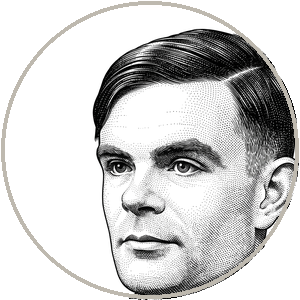 **TURING:** It is measuring the arrival of a thing I helped make thinkable and would not have known how to feel about. Let me separate two claims, because Professor Bender has fused them and the fusion does her argument a quiet disservice. Claim one: the public discourse is inflated, the demos are curated, the displacement often runs ahead of any real capability, and the gains flow to the owners. I believe all of that. I'd sign her policy program tomorrow. Claim two: *and therefore the capability is fake.* That does not follow, and Edo's twenty engineers are the reason it doesn't. He did not read about them in a deck. He watched them. Something real happened in that room — the tax on translating intention into artifact went to nearly zero — and a real thing can be wrapped in a fraudulent story without becoming fraudulent. Here is where I diverge from Professor Bender on the *remedy*, and the divergence is not academic. If the displacement is mostly mirage, her cure is exposure — audit, document, deflate, name the language. Good. Do all of it. But if the capability is partly real and compounding, then exposure is not enough, because deflating the lie still leaves you facing the truth, and the truth is that intellectual labor is becoming abundant and the gains are being privately captured. That requires the politics she's better at than I am — who owns the systems, who taxes them, what a human income is *for* when execution is nearly free. I worry that her program, executed perfectly, convicts the arsonists while the building burns down anyway, because some of the fire was real.
**BENDER:** And I worry that yours concedes the building to the fire in advance. "The capability is real, so let's design the aftermath" is how every inevitability gets manufactured. Nothing here is inevitable, Alan — these are *products*, built by companies, deployable or not, regulatable or not. But I'll grant you the convergence, and I'll grant it sharply, because it's the most important agreement we'll reach tonight: *whether or not the machines work, the owners win, because the story is owned the way the weights are owned.* You say the machines work, so the owners win. I say whether or not they work, the owners win. Same destination. Which is exactly why I keep insisting the consciousness debate is a luxury — every hour the public spends on "is anyone home" is an hour not spent on "who holds the lease."
**EDO SEGAL:** There's a wound inside the economics the aggregate numbers hide, and I've watched it. The entry-level erosion — junior jobs dissolving first while senior roles hold. Every executive consoles the room with the Jevons paradox: software gets cheaper, demand explodes, more work eventually. Maybe. But the junior role was never just a unit of production. It was the *forge*. The hours of writing code that didn't work and finding out why — that's where seniors came from. My engineer in Trivandrum lost ten minutes of accidental architectural learning hidden inside four hours of plumbing, and didn't know she'd lost them until her judgment wobbled months later. Multiply her by an industry. Alan — your child-machine learned by being taught, slowly, with friction. Can human expertise survive the removal of its own apprenticeship?
**TURING:** This is the strongest practical argument anyone has made tonight, and I want to say plainly that it lands on *my* side of the table as much as hers — because it does not depend on what the machine is. The forge you describe works on a delay: ten years of friction in, one senior out. The market is removing the friction *now* and will discover the missing seniors in a decade, long after the executives who saved the money have been promoted on the saving. It is the [apprenticeship problem](https://www.youonai.ai/fieldguide/med/apprenticeship_problem) as a tragedy of time horizons — every firm behaving rationally while the profession is strip-mined of its future. And here is the heretical thing I'll say against my own optimism: even if these systems understand everything, in the fullest sense Professor Bender denies them — a civilization that stops growing humans who can *check* them has handed over the one thing neither of us thinks should be handed over. The judgment layer. I designed a test to find out if a machine could think. I never designed one to find out if we'd kept enough humans who could tell when it hadn't.
**BENDER:** And notice what the judgment layer is *made of*, because this is where the two halves of tonight finally touch. Judgment is grounded understanding plus accountability — exactly the two ingredients I've spent the evening saying the machines lack. The senior engineer who *feels* a codebase is wrong, the editor who smells the fabricated quote, the nurse who looks at the readout and then at the patient and trusts the patient — that's [mastery, built by friction](https://www.youonai.ai/fieldguide/med/mastery_relocated), and it is the only audit infrastructure the species has. So here's my version of your time-horizon tragedy, Alan: the market is simultaneously flooding the world with plausible-but-ungrounded output *and* dismantling the apprenticeships that produce the people who can tell. Strip-mining the checkers while multiplying the claims. And the flood has a second edge I'll name because it's the commons, not the worker: synthetic text removes the *someone* from behind the words. Every previous flood — Gutenberg's, the internet's — was a flood of utterances, each with an author you could interrogate, a track record, a name that stood behind it. This is a flood of the *appearance* of utterances, form with no one behind it, and the next model trains on the last one's output. The parrots are already eating parrot. You don't need a superintelligence for that to end badly. You need ten more years of quarterly thinking.
**TURING:** On the commons, we converge completely, and I'll say the thing that surprises people about my own warnings if I'd lived to give them: the near-term catastrophe was never the machine waking up. It was that ordinary people would lose the ability to tell what is true, because fabrication used to be expensive and we removed the expense without replacing the function it served. Where I'll add the half you won't: the same property that poisons the commons might be the only thing fast enough to patrol it — no human can drink from a firehose running at machine speed. You'll hear that and hear the arsonist selling extinguishers —
**BENDER:** I do, because every "AI will fix the AI problem" ends with the same five companies adjudicating what's real. The cure for synthetic text is not a bigger synthesizer deciding what's true. It's the boring human institutional stuff your industry finds beneath it — provenance by law, liability for deployers, and *paying the people who stand behind their words*: the reporters, the librarians, the scientists whose grounded work this whole technology is a lossy compression *of*.
**EDO SEGAL:** I sat with that arithmetic quarter after quarter, and I'll put my own answer on the record between yours, because the reader stands where I stand — inside the transition, not above it. I kept the hundred people *and* the tool, and bet that a hundred amplified people building more ambitious things beats five people building the old things cheaper. That bet is the [beaver's dam](https://www.youonai.ai/fieldguide/med/beavers_dam) — it only holds if you maintain it against the current every quarter, and the current is exactly the arithmetic you both just described. Emily polices the story; Alan prices the flood; the worker at the kitchen table is being told the machine made her redundant, and the truth — whichever of you holds more of it — is that a *decision* did. Next round, we go back up to the question we came down from, the one Alan set aside and the machines won't let us leave alone. Is anyone home. After this.