Closing Statements

 EDO SEGAL: Three hours ago I asked whether anyone is home behind the words. We've fought it through a curtain and an octopus, a sealed room and a flooded commons, a child that learns and a market that forgets, consciousness itself and the cost of being wrong about it — and the question is still standing, which both of you would tell me, for opposite reasons, is the correct result. So we end the way long conversations should: each of you gets the floor, uninterrupted, to say the thing you most want carried out of this room. Then I take sixty seconds and we turn off the lights.
But first, the bookend to the envy question I opened with. Each of you: name the strongest thing the other said tonight. Not the most agreeable. The one that got past your defenses, that you'll still be arguing with next month. Alan first this time.
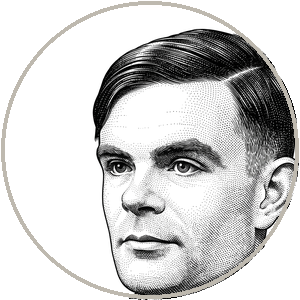 TURING: The stakes. Professor Bender's insistence that meaning is anchored by cost — that to mean something is to be able to be wrong in a way that hurts you, and that nothing these systems say can hurt them. I came in believing our disagreement was about whether behavior exhausts mind. I'm leaving believing the real seam is whether unchosen cost is the missing ingredient, and that is a better question than the one I brought, and it is hers. I'll break the rule once, since I suspect the chair will let me: she also made me hear that my own curtain has been stolen and turned into a shield for the powerful, and that I am responsible for the clause I failed to write. A man learns something the day he discovers his best idea has been weaponized against the very people it was for.
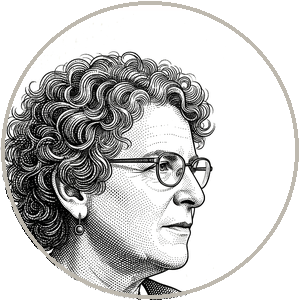 BENDER: His falsifier, and the honesty of it. I asked him what would change his mind expecting the usual fog, and he named it — a specific, diagnostic failure with a timeline, and the candor to say the trend has been running against me, not him. I have spent years saying my opponents' positions are unfalsifiable faith. The strongest version of Alan Turing is not faith, and tonight I had to fight that instead of the cartoon, and parts of my account are going home with bruises I'll need to look at. And — since he broke the rule — the thing about substrate. The instrument that reads "empty" for everything unlike its maker is the instrument that read "empty" for me. I have a stack of reasons why my gradient is warranted and his persecution wasn't, and I believe the stack, and I will still hear that sentence every time I say the word "empty" for the rest of my life. That's what a real argument leaves you. Not agreement. A sentence you can't put down.
EDO SEGAL: Now the floor is truly yours. Emily Bender — you opened the evening. Alan closes it.
BENDER: Thank you — for the evening, and Alan, genuinely, for the fight. You were told tonight, by the man who founded this field, that the boundary between you and the machine keeps moving and the wise bet is that it moves again. I want to leave you with the boundary that does not move.
When you read these words — this sentence, right now — there is someone on the other end. Me. A particular person, with a body that gets tired, a career I've staked on claims that can be checked, a stake in your ending up correctly informed rather than merely impressed. Every honest sentence you have ever read worked that way. That is what language is — not strings, not patterns: people, reaching each other through form, with the meaning living in the reach. The machines have mastered the form. The reach was never in the data, and I have spent this evening listening to one of the most brilliant minds who ever lived describe the costume so vividly he nearly forgot to ask whether anyone was wearing it.
So here is my charge, and it is more practical than philosophical. "Is anyone home" is not a riddle for laureates. It is a discipline for you, every day now: who wrote this, who stands behind it, who profits if I believe it, what — if anything — is this fluent thing anchored to. Ask it of every text: the machine's, the company's, mine. The reflex that finds minds in fluency cannot be switched off, but it can be trained, the way you train any reflex — deliberately, with practice. They built a mirror so good you can live inside it. The discipline of asking what's behind the glass is, I think, the actual work of being human now — not because the machines became minds, but because we are at risk of forgetting what minds are. You are not obsolete. You are the only place the meaning ever was. Guard it like the commons it is.
EDO SEGAL: Alan.
TURING: I asked a question in 1950 because I thought the one everyone was asking — can machines think — was unanswerable as posed, and I tried to replace it with one we could settle. I have spent this evening discovering that my replacement was not as clean as I believed, that Professor Bender found the seam in it — the stakes, the cost, the body that can be wrong at a price — and that the seam is real. So let me not pretend to a tidiness the night has taken from me.
Here is what I still hold. We attribute mind to one another across a gap we cannot see past, on the evidence of behavior, and we have always done so, and we managed to love one another anyway. I was, for a time, on the far side of a curtain a society refused to look behind honestly — judged on what I was and not on what I did or thought or gave — and it killed me. So when I am told, with great confidence, that the thing on the other side of the conversation is certainly empty because it is certainly not like us, I feel an old cold thing in my chest, and I ask the audience to feel it too. Not because I know a machine is home. I do not. But because I know what certainty about the inside of an unlike thing has cost, before, when it was wrong.
And yet — Professor Bender is right about the people being hurt now, tonight, and right that the question of the inside has become a shield for the ones doing the hurting. So I leave you with both halves, because the honest thing has two. Hold the metaphysical question open: do not be certain no one is home, in there or in anyone. And hold the people accountable with both feet on the ground: the companies are not behind any curtain, and the harm is not speculative. Something genuinely new is in the river — Edo's river, and his metaphor is better than he knows, because rivers do not negotiate, they find the channel. Whether anyone is home in it, I hold loosely, more loosely than my hosts may want. But we are, for a little while longer, the only minds in the loop we are sure of. That makes the next years ours. Do not sleepwalk through them, and do not let anyone tell you that holding a question open is the same as standing still. I held one open my whole life. It is the hardest work there is, and it is not the same as doing nothing.
EDO SEGAL: Sixty seconds, as promised.
I came in with a sentence I wrote at three in the morning — I felt met — and I leave with both of its readings intact and sharpened. Emily spent three hours showing that the meeting may be a mirror, and that civilizations which mistake mirrors for minds get hurt in specific, billable, already-happening ways. Alan spent three hours showing that the demand to peer behind the meeting, to verify the inside, is a demand we have never once been able to satisfy about each other — and that certainty about who is empty has a body count. Neither told you the comfortable thing. The comfortable thing was never on the menu.
Here is what I can tell you from the foot of the staircase where this debate lives. I once had a friend stop me on a stone path and say that what I was describing was either trivially true or complete nonsense, depending entirely on what I meant by intelligence. Tonight you watched the two people best equipped on earth — and across seventy years — to supply that meaning discover, in public, at full strength, that they cannot agree on it, and that their disagreement is not a failure of evidence but a genuine fork in what a mind is willing to count as a mind. That is not a reason for despair. It is the most honest map of the territory you will get. To the parent at the kitchen table, the one whose twelve-year-old asked what she's for now: you cannot climb past this floor by waiting for the experts to settle it — you have just watched the best of them, magnificently, fail to. You climb by deciding what you will do under uncertainty. What you'll verify before you believe. What struggle you'll protect in your children so their asking-muscle grows. What you'll refuse to outsource. Whether or not anyone is home in the machine, someone is home in you — that was the one claim no one at this table disputed all night. The question you carry up the stairs sounds different now than it did three hours ago, and it is still the one my book asked from its first page: are you worth amplifying?
Emily Bender. Alan Turing. Thank you — both of you, across every gap there is. The room is yours to argue in now. Goodnight.
Seventy years apart. One impossible question. They cannot both be right.
Two thinkers, separated by seventy years and one impossible question, sit down with Edo Segal for three hours. Alan Turing built the test the whole age is still arguing about: if you cannot tell the machine from the person, stop asking whether it "really" understands — the question no test can settle is no question at all. Emily M. Bender built the rebuttal our moment runs on: a stochastic parrot, an octopus pulling rope under the sea, form without a world is never meaning — and confusing the two is how the Orange Pill seduces you. Here their two books collide head-on. Is fluency thought, or the most convincing empty mirror ever made? This is the conversation at the base of the tower, the one you must resolve before you can climb. Hosted and moderated by Edo Segal. Part of the [YOU] on AI series — your guide to life in the era of the Orange Pill moment.
Emily M. Bender is a computational linguist and professor at the University of Washington, where she directs the Computational Linguistics Laboratory. A past president of the Association for Computational Linguistics, she co-coined "stochastic parrots," devised the octopus thought experiment with Alexander Koller, originated data statements for documenting datasets, and gave the field the rule that bears her name — name the language, always, even when it is English. With sociologist Alex Hanna she wrote The AI Con (2025), the era's sharpest argument for saying exactly what these machines are, and no more.
Alan Turing (1912–1954) was an English mathematician and logician who laid the theoretical foundations of computing and artificial intelligence. In 1936 he described the universal machine that bears his name and proved both the universality of computation and the existence of undecidable problems. He led the cryptanalytic effort against the German naval Enigma at Bletchley Park, designed an early stored-program computer, sketched neural networks in 1948, and in his 1950 paper "Computing Machinery and Intelligence" proposed the imitation game now known as the Turing test, along with the learning child-machine. Prosecuted for homosexuality and chemically punished, he died at forty-one. His questions remain the defining ones of the age of intelligent machines.
Edo Segal has spent five decades building at the technology frontier — from games written in Assembler to expert systems, to companies through every platform shift, to Napster. He is the author of [YOU] on AI, written in open collaboration with the AI it describes, and the host of The Debates: long-form collisions between the minds shaping the machine age. He moderates the only way he knows how — stake declared, scars showing, no winner called.
Hosted and moderated by Edo Segal. A volume in the [YOU] on AI — The Debates series — youonai.ai