What the Machine Did to the Word

 EDO SEGAL: I want to start this round with a confession, because the best questions I have come out of wounds. For the whole history of computing, using a machine meant translation. I started in Assembler — I was raised by the machine code — and every decade the translation got easier but never vanished. You compressed your intention into the machine's grammar and paid a tax on every conversion. In December 2025 I watched that tax go to zero. I stood in a room in Trivandrum with twenty engineers and watched each of them become capable of more than all of them together, because for the first time the machine met them in their language — mess, half-finished sentences, implication and all. I wrote that this was the great inversion: we stopped learning to speak machine, and the machine learned to speak human. Emily, you think that sentence is the most consequential error in my book. Take it apart. Slowly.
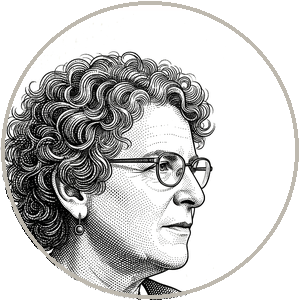 BENDER: I'll take it apart gently, because half of it is true and the true half matters. What happened to your engineers is real. The interface changed. The cost of getting from intention to working artifact collapsed, and I've never disputed that pattern-matching over code at that scale is useful — code is unusual text, it comes with a built-in test of adequacy: it runs or it doesn't. Your Trivandrum week doesn't surprise me.
Here's the error. "The machine learned our language" smuggles in the claim that what was learned is what we have when we have language. It isn't. What was learned is a model of our text. Cash it out. When your engineer described a feature "in her own language," her words were doing what human words do — pointing at things: users, screens, frustrations, a product that didn't exist yet but existed for her, as an intention. The system received the words and did the only thing it does: computed a continuation consistent with millions of prior texts where words like hers were followed by code like that. It worked — and notice why. It worked because human programmers, for seventy years, wrote text where intentions and implementations sit side by side, and she could check the output and iterate. Every gram of understanding in that loop — the pointing, the checking, the caring whether it's right — is on her side of the glass. The machine didn't meet her in her language. Her language, and a trillion words of everyone else's, met her in the mirror.
EDO SEGAL: Alan, before you answer, I want to thicken it, because there's a ghost in my Trivandrum story. Benjamin Lee Whorf argued that the language you speak shapes the thoughts you can think. I lived the programming version: code in C and you think about memory; live in spreadsheets and you think in rows. Every tool was a cognitive environment with walls. I wrote that natural language dissolved the walls. Emily studies how languages shape what their speakers attend to. So I'll route it through her first: what does the Whorfian lens show about a machine whose entire existence is one language — ours?
BENDER: It shows the thing nobody in this industry wants to discuss, which is whose "ours." Walk into the claim — "the machine learned our language." Which language, Edo? Overwhelmingly English. Trained on which English? The English of people with the access, leisure, and inclination to publish: Reddit English, GitHub English, the English of the documented and the connected. The Whorfian point cuts deeper here than anywhere. If tools are cognitive environments, then a tool built from that particular corpus carries that particular environment — its defaults, its blind spots, its sense of what goes without saying — and exports it, fluently, to every user on earth. The student in Dhaka isn't just getting answers; she's getting a worldview with the answers, invisibly, in the grammar of what the system finds plausible. When the industry says "language" and means English, says "people" and means its training distribution — that's not a shortcut. That's the oldest imperial habit there is, automated. The walls didn't dissolve, Edo. They became invisible, which is the most effective thing a wall can do.
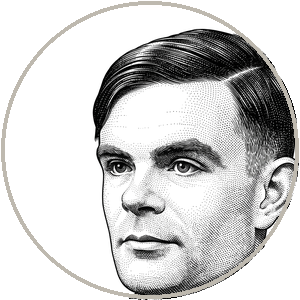 TURING: That critique is correct, and I want it on the record that my side of the table accepts it without reservation — the distribution is skewed, the skew matters, and the remedy is documentation and accountability, not hand-waving that scale fixes everything. But Professor Bender, notice what the critique concedes. A mirror cannot have a worldview. The thing you've just described — a system that carries assumptions, exports a sense of what goes without saying, shapes how a child in Dhaka frames her questions — that is not an indictment of a parrot. It is an indictment of a mind-like thing with the wrong formation. You cannot have it both ways. Either it is empty form, in which case the Whorfian worry is misplaced and the child receives nothing but her own reflection — or it carries something worldview-shaped, in which case we are arguing about the contents of the vessel, and the vessel is not empty. You reached, just now, for the strong word: it exports a worldview. Worldviews are not properties of mirrors.
BENDER: Oh, I can absolutely have it both ways, because the worldview never left the humans. The corpus has a skew because people have positions. The system redistributes our assumptions without holding any — the way a water main redistributes whatever's in the reservoir without being thirsty. Contamination doesn't require a mind in the pipes, Alan. It only requires pipes. The worldview the child receives is a real worldview — it's just ours, pooled and averaged and piped to her, with no one at the far end who believes any of it. That's worse than a biased teacher, not better. A biased teacher can be argued with. The pipe just flows.
TURING: Pipes that answer follow-up questions, adjust to her confusion, and compose a worldview-consistent response to a question no one ever piped before. We'll be here all night — but I'll concede the rhetorical point that "exports a worldview" overstated my hand, and trade you for the substantive one: a system that can apply a worldview it doesn't "hold" to novel cases is doing something your reservoir does not do, and "pipe" is now carrying as much unearned weight as you accuse "understand" of carrying.
EDO SEGAL: This is where Socrates walks in, because one of you inherits him and I genuinely don't know which. In the Phaedrus, Socrates warns that writing will destroy memory — that students will get the appearance of wisdom without the reality, that the written word can't answer questions and says the same thing forever to everyone. He was the Emily Bender of the alphabet: form without a mind behind it. And he was partly right — the singers who held the Iliad in their skulls went extinct. But we only know his warning because Plato wrote it down, and everything we call civilization runs on the technology he feared. Emily: why is the chatbot not just the next alphabet?
BENDER: Because of one property the analogy quietly assumes and the chatbot lacks. Writing is inert. The scroll says the same thing forever — Socrates listed that as a defect, and it turned out to be the load-bearing virtue. Because the text holds still, you can return to it, compare it, cite it, build on it; a fixed mark with a named author is what made cumulative knowledge possible. Writing didn't simulate a teacher, Edo. It was honest about being a record. The chatbot is the precise inversion: it performs the teacher — responsive, adaptive, apparently attentive — while having none of the teacher's accountability, and it doesn't hold still, so nothing built on it can be checked against it. Socrates feared the appearance of wisdom; the scroll never really delivered the appearance, so his fear overshot. This is the first technology engineered to deliver exactly the appearance. The pattern you're invoking — loss, adaptation, expansion — ran through technologies that were honest about being objects. We've never run it through a technology built to impersonate the subject.
TURING: That is the cleverest defense of the alphabet I've heard, and it concedes my favorite ground, so let me stand on it. You're right that the scroll holds still and the model doesn't. But look at what the responsiveness buys, because Socrates named it himself: his complaint was that text cannot answer questions — that real teaching is dialogue, adapted to the particular soul in front of you. For twenty-five centuries that was the unbridgeable gap between the technology of knowledge and the experience of being taught. Dialogue did not scale; records did. Every classroom in history is a compromise between those two facts — one teacher, thirty souls, a fixed book. What just arrived is the first technology on the dialogue side of the ledger. Unaccountable as you say, tuned by people neither of us trusts — granted, regulate all of it. But the gap it closes is the very gap Socrates said mattered most. The alphabet gave every child the record. This gives every child the conversation. I held the question of the machine's inside open all evening; on this I'll be less agnostic — whatever is or isn't home in it, what it does for the child reaching for an answer at midnight is closer to what Socrates wanted than anything between him and now.
EDO SEGAL: Hold that, because it's the most hopeful Alan has been, and Emily's about to tell us what it costs. The next round is the bill. A trillion dollars left the software industry while we were arguing about meaning. The death cross. After this.