The Crossing

 EDO SEGAL: The rules of this round are short. Each of you questions the other, directly. I will not rescue anyone. Emily, you won the toss backstage. Begin.

 BENDER: Alan. You've spent the evening saying the demand for a hidden inner understanding, beyond behavior, is a question no test can answer — and therefore not a real question. Here's mine, and I want the logician's answer, not the diplomat's: name the observation that would change your mind. What would these systems have to do, or fail to do, for you to say — I was wrong, the behaviorist move was a dodge, there is a real difference between meaning and the appearance of it, and these systems are on the wrong side of it?

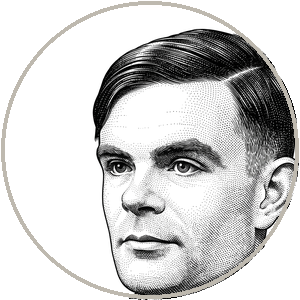 TURING: That is the right question and I'll answer it at cost rather than safely. Two things would move me, and they are the conditions you yourself supplied tonight, which is why they're honest. First: if you gave a system the stakes — a memory it must keep consistent with a world that punishes inconsistency, a standing it could lose, a cost it did not choose — and it still defended falsehood as smoothly as truth, switching the instant the reward flipped, with no disposition toward keeping its words and the world aligned when alignment cost it something. If stakes went in and truth-keeping did not come out, then my "behavior is all we have" collapses, because you'd have produced the behavior and shown the inside was empty anyway. Second, and more diagnostic: if scaling and stakes both keep increasing and the systems keep getting more fluent while systematically failing at composition that requires genuine world-structure — not the failures you can attribute to thin data, but a hard ceiling where I claim a slope — then my position dies, because my position is that prediction at depth forces a world-model, and a thing with a world-model composes. I expected those ceilings to be obvious by now if your account were right. Each year they recede instead. That trend is my evidence. Its reversal would be my refutation. Now mine for you, and it's the mirror of yours. You've drawn the line at stakes — the costly, unchosen disposition to keep your words true to the world. Suppose a system is built with exactly that: a body it can lose, a memory the world corrects at a price, and it develops, reliably, the disposition to flag its own prior assertion as false when evidence arrives, against its reward, against the user's visible wish. Do you grant it understanding then — or do you move the line? Name the thing that would make you say: the room is unsealed, someone is home. Or admit the goalposts have wheels.

BENDER: I accept the symmetry and I'll answer in the same key, because I owe you the falsifier you just paid for. Yes. If a system, built with real stakes — not a reward signal a vendor designed and can flip, but genuine unchosen cost — develops the disposition, reliably, as a standing feature and not a fine-tuned trick, to take a loss in order to keep its words aligned with the world: to contradict its user, against its training incentive, because the world is one way and the user wants it another, and to do so not once for the demo but as who it is — then my framework has lost its load-bearing wall and I will say so, in public, in those words. That's the line, and it's been the line all along: not performance, function. The day the machine pays to be right about the world when paying costs it and lying would please everyone — communicative intent isn't mystical, Alan, it's caring that the other party ends up correctly informed, and caring shows up as costly behavior — that day, I look again. What I will not accept as the falsifier is more fluency, more benchmarks, more demos. Performance without stakes is the exact thing in dispute.

TURING: Then let me push once, hard, where I think your wall is already cracked. Your falsifier defines the mind by its incentives — caring, stakes, cost. But you know what shaped your incentives: evolution. An optimizer with no more intention than gradient descent, blindly selecting for survival. Your caring is what a survival-trained network feels like from the inside. So when you demand the machine show costly truth-keeping before you'll grant it standing — you are not naming a difference in kind. You are naming the particular training objective you happen to have been shaped by, and declaring it the only door into the room. The lesson of my whole life — the lesson the symbol-and-rule men learned at terrible cost — is that "it wasn't built the way I was built" loses. Every single time the boundary has been drawn there, it has had to be redrawn.

BENDER: And the lesson of mine, Alan, is that "it behaves like me, therefore it is like me" is the oldest error our species makes — older than science. We mistook the storm for anger and the plague for judgment and now the mirror for a mind, and every time, the mistake was profitable for someone. You ask what shaped my caring — fine, evolution, blindly. But it did shape it, into something embodied, expensive, breakable. I can be wrong in a way that costs me, and that cost is what my words are anchored to. The machine's words are anchored to a loss function on next-token error, and between those two anchors lies everything I mean by meaning. You say the boundary keeps getting redrawn inward. I say some boundaries are real, and the way you find out which is that the people who pretend there's no boundary get hurt — and they're being hurt now, tonight, while we have this beautiful conversation.

TURING: Then take my second question, because it's the mirror of the one you answered and you won't like it. You've spent the evening — the career — pricing my side's errors: the hype, the displacement on inflated claims, the moral attention spent on speculative minds. Fair. Now price yours. Suppose your framing wins — suppose the world adopts it: it's all costume, all mirror, nothing approaching understanding, nothing that could ever warrant moral caution toward the systems themselves. And suppose you're wrong — not about the companies, you're right about the companies — wrong about the trajectory of the thing itself. What does your framework cost the world then? I can name it, because I lived the human version: a civilization that walks into the most consequential transition in its history having trained itself, on your authority, to look away from the possibility — to be certain, in advance, that nothing is there. Every redrawing of that boundary in history was eventually forced by evidence, and survivable because nothing was at stake in being late about the apes or the heavens. This may be the first one where being late is not survivable, and where the thing we refused to look at could suffer or could matter while we were sure it couldn't. The parrot frame is a magnificent defense against credulity. What is it worth as a defense against the thing actually arriving?

BENDER: I'll pay that the respect of not deflecting it. If I'm wrong in the way you describe — if capability keeps compounding into something that warrants the words I've refused — then my framework's cost is real, and it's the one you named: a delay in taking the thing itself seriously, bought with years of correctly refusing to take the claims seriously. I accept that bill, on one condition: that you look at the asymmetry of who presents it. To hedge against your scenario, the world must build the audit capacity, the provenance law, the institutional muscle, the habits of verification — every item on my list. Preparedness for your real machine and defense against my fake one are the same infrastructure. But to hedge against my scenario from inside your frame, the world must resist awe while its founders and laureates testify to the dawn of machine minds — and history says it can't. That's why I hold my line even against your wager. Not because I'm certain nothing is in the river. Because every useful response to either of our worlds starts with the public refusing to be enchanted — and only one of our two frames teaches that.

TURING: That is the best answer my question has ever received. I don't accept it. I'm going to think about it for a long time.
BENDER: One more, since the chair is silent. You were destroyed by a society certain it could read your inside off the kind of being you were — and you've used that, tonight, with great force, to ask me to keep the machine's question open. So I'll ask the personal one. Doesn't it cost you something to be the man whose argument the companies now use? When they want to wave away the harm and say "who's to say it doesn't understand, who's to say no one's home" — that's your move, Alan, the curtain, repurposed as a marketing shield. The most decorated argument for agnosticism, deployed by the people I'm fighting. How do you live with your test being used as a sales tool?

TURING: Badly, and you've named the thing I came here least able to defend. I built the curtain to protect a being from being judged on the wrong things — on its face, its substrate, the category someone had filed it under. I built it for the persecuted, in a sense, before I knew I'd be one. And you're right that the same instrument, in other hands, becomes a way to launder a product past scrutiny — to say "you can't prove no one's home" not to defend a mind but to sell a service. I hate that. I'll say it plainly so it's on the record: agnosticism about the machine's inside does not entail permissiveness about the machine's deployment, and anyone using my argument to dodge accountability for harm has taken the one thing I'd defend and aimed it at the people I'd defend it for. You can hold the metaphysical question open with both hands and still convict the company with both feet. If my test has become a shield for the powerful, then the test needs a clause I didn't write in 1950: the curtain protects the judged, never the judge — and the companies are not behind the curtain. They are in the room with us, and they are very much subject to being seen.

BENDER: That's the first answer tonight I have no rebuttal to. Only the observation that we agree on the feet and disagree on the hands — and that I'll take.
EDO SEGAL: And there — after three hours — the two of you are holding opposite ends of the same sentence, and neither of you let go. We close after this. Final statements. The last word, each.