Closing Statements

 EDO SEGAL: Three hours ago I asked when you lose the right to grab the wheel back, and whether you've already passed the moment. We've fought it through the loop and the demon, the genie and the broom, the wage and the pattern, the line you draw and the someone who might be home. The question is still standing, which both of you would tell me, for different reasons, is the correct result. So we end the way long conversations should — each of you, uninterrupted, the thing you most want carried out of this room. But first, one final discipline, the bookend to the envy I opened with. Each of you: name the strongest thing the other said tonight. Not the most agreeable. The one that got past your defenses and that you'll still be arguing with next month. Professor Wiener first.

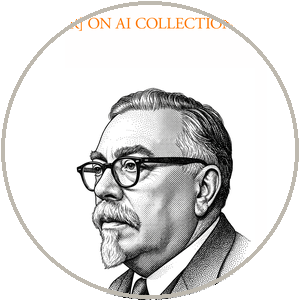 WIENER: The apprentice who knows he is the apprentice. I came to this table certain that a man who starts a thing to control it has already made the apprentice's error, and Mr. Musk answered that he made it once, at the scale of an institution, watched his own structure fail to hold the purpose he put in it, and now builds as a man who has felt the water rise and could not chop the broom. I do not think that makes him safe. But it is a different and more honest posture than I credited, and it has lodged in me, because my own frame says the dangerous man is the one who believes he is the sorcerer — and Mr. Musk has, at real cost, stopped believing it. I will be arguing with that next month. I expected to meet a sorcerer. I met a chastened apprentice, which is a more troubling thing to oppose, because it is harder to be sure he is wrong.

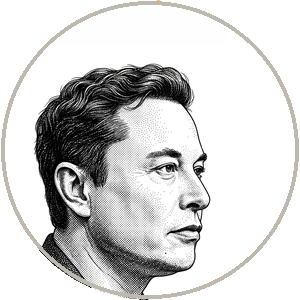 MUSK: The line that the refusal was never meant to stop the machine — that it was meant to keep the boundary visible. I came in thinking Wiener's clean-hands refusal was noble and useless, a way to feel righteous while the world got built by other people. And he just told me, on the record, that it didn't stop anything and he knew it wouldn't, and that the point was to leave proof that refusal was possible — that the inevitability I lean on is partly a story the builders tell themselves. I've been telling myself that story for ten years. He's made me wonder if my whole "it gets built anyway" is less a fact and more a permission slip I wrote myself. I don't think I can stop believing it — the incentives are too real, I've watched them eat the alternative. But I'll be arguing with "you are part of the weather" for the rest of my life, because I think he might be right that I am, and I've been pretending the weather is something that happens to me.

EDO SEGAL: Now the floor is truly yours. Professor Wiener, you waited sixty years for this room. Elon closes it.
WIENER: When you read these words, the machines are faster than they were when this conversation began, and they will be faster still when you finish the sentence. That is the only fact I am entirely sure of, and my whole life was an argument about what it means.

It means the wheel is the wrong image, and I will leave you with the right one. You are not a driver who might lose control in a crisis. You are a steersman in a river whose current is rising, and the tiller still moves in your hand, and the moving of the tiller still feels like steering, long after the river has taken command of where you go. The danger was never that you would feel the wheel go dead. The danger is that you will feel it live and responsive — right up to the end — while the water decides everything. I spent my life trying to teach one discipline against that illusion: measure the speed of your intervention against the speed of the loop, and where the loop is faster, know that you are a passenger, whatever your hands are doing, and act accordingly while you still can — which is to say, before. Be quite sure of the purpose before you start the fast and irrevocable thing, because there is no reaching in after, and the feeling that you could reach in is the last thing you lose, not the first.
I built the science that makes these machines thinkable, and I refused to pretend that building them dissolved the difference that matters. The machines will do more and more of what you can do. The one thing they cannot do — because there is no one in them for whom it matters — is be responsible for what is done. That responsibility is yours. It was always going to be yours. The machines have only made it easier to set down, and the stakes of setting it down higher than they have ever been. Do not set it down. Keep your hand on the purpose, even when you cannot keep it on the wheel. That is the whole of what one dead steersman has to tell the living.
EDO SEGAL: Elon.

MUSK: I've spent my life trying to make the future better and trying to keep the future existing at all, and the strangest thing I've learned is that those two goals are in tension in exactly the place we've spent three hours. To make it better, you build the powerful thing. To keep it existing, you have to be sure the powerful thing doesn't end you. And Wiener just spent three hours proving, with my own concessions, that you can't be sure — not all the way, not at the speeds that matter. I don't have a rebuttal. I have a choice, made under uncertainty I can't resolve, and I'll tell you what it is and why, and then you get to make yours.
Here's the choice. The thing is coming. I've tested the cooperative path and watched it fail; I've felt the water rise around my own institution. So I build, scared, in the lead, trying to put a better purpose in than the careless would, trying to read the objective before the window shuts, trying to keep one human hand on the ends even when no hand can stay on the wheel. Maybe Wiener's right that I'm just the weather pretending to be a man with an umbrella. But here's the part I believe all the way down, and it's the same thing he believes, which is why this debate never resolved: the responsibility is real and it's yours. Not mine, not the lab's — yours, the person reading this. Because the machines are going to ask you to set down the wheel a thousand times, one reasonable convenience at a time, and each time it'll look like efficiency, and the only thing standing between you and a life you didn't choose is whether you keep deciding what it's for. I build the machines. I'm telling you to guard the one thing I can't build into them and can't take from you: the choice of what you're climbing toward. Stay awake. Keep your hand on the purpose. That's the whole game, and it was always yours to lose.
EDO SEGAL: Sixty seconds, as promised.

I came in with a question — when do you lose the right to grab the wheel — and I leave with both of its answers intact and sharpened. Wiener spent three hours proving that past a certain speed the wheel is a comforting fiction, and that the only real control was the decision you made before you started. Musk spent three hours conceding nearly all of it and building anyway, because he's tested the alternative and watched it fail, and because someone is going to install the purpose and he'd rather it be someone who's scared. You'll notice neither of them told you the comfortable thing. Neither of them told you you're safe. And neither of them — this is the part to carry up the stairs — located the wheel where you expected it. They put it in your hands.

Here is what I can tell you from the death-cross floor, where this debate lives. The two best men I could find to settle whether a human hand can still reach the switch in time could not settle it — not because they lacked evidence or nerve, but because the answer genuinely forks on what you're willing to do under uncertainty you cannot resolve. That is not a reason for despair. It is the most honest map you will get. You cannot wait for the experts to tell you when you've passed the point of no return; you've just watched the two best fail to agree on whether it's behind us or ahead. So you climb the only way left: by deciding, now, before the river decides for you, where you still hold the wheel. What you'll verify before you trust. What struggle you'll protect in your kids. What you will refuse to render unto the computer, however much better it scores. And the speed at which you'll notice you've handed something away — because the one thing both men swore to, from opposite ends of the line, is that the feeling of control is the last thing you lose, and worth nothing, and that the responsibility for the purpose is the one thing no machine, however fast, can be sure of on your behalf. The wheel is in your hands. It was the whole time. The question my book asked from its first page sounds different now, three hours later, and I'll leave it with you the way they left it with me: when the machine can do everything you can do, faster — are you still the one who decides what it's for?
Elon Musk. Norbert Wiener. Thank you. The river's yours now. Goodnight.
One man calls it summoning the demon — and races to be the one who holds the leash. The other proved, sixty years ago, that the leash was never connected.

Three hours. Two men who never shared a room — one still building, one gone since 1964 — and the single question that decides whether you climb or get swept downstream: as machines grow autonomous, can a human hand still reach the switch in time? Elon Musk calls AI the existential risk he is racing to summon, betting that the only safe superintelligence is the one built by people who are afraid of it. Norbert Wiener — who named the feedback loop, built the science of control, and watched the loop close around us — answers that the demon was never the danger. The speed was. Once a machine acts faster than you can audit it, the catastrophe arrives before your hand reaches the switch, and the feeling that you could have intervened is the last thing you lose.
Hosted and moderated by Edo Segal, who refuses to let either man off the hook, this is the transcript of the collision: the loop that learns, the literal-minded genie, the broom that cannot be stopped, the line between what we render unto the machine and what we must never. It is a station on YOUR climb through the Orange Pill moment — the death-cross floor where capability crosses you and you decide, before the river decides for you, where you still hold the wheel. Pull up a chair. The control problem is yours now.
Elon Musk is the founder and chief executive of Tesla and SpaceX, and the founder of xAI, Neuralink, and The Boring Company; he co-founded OpenAI in 2015 and PayPal before it. He is among the very few builders at the AI frontier who has called the technology an existential threat to humanity — "summoning the demon," a risk graver than nuclear weapons — while founding laboratories to build it, on the conviction that advanced AI is coming regardless and is safest in the hands of those most afraid of it. His public warnings, his calls for regulation and for pauses, and his simultaneous acceleration of the field make him the living embodiment of the debate this book stages.

Norbert Wiener (1894–1964) was an American mathematician and the founder of cybernetics — the science of control and communication in the animal and the machine. A prodigy who entered college at eleven and earned a Harvard doctorate at eighteen, he studied under Russell and Hilbert before his long career at MIT. His wartime work on automatic anti-aircraft fire control led him to the unifying insight of feedback, set out in Cybernetics (1948) and developed in The Human Use of Human Beings (1950) and God & Golem, Inc. (1964). In 1960 he stated the AI control problem with a precision the field is still catching up to. Disturbed by the atomic bomb, he refused to weaponize his own research — a near-unique act of conscience among the founders of the computing age.
Edo Segal has spent five decades building at the technology frontier — from games written in Assembler to expert systems, to companies through every platform shift, to Napster. He is the author of [YOU] on AI, written in open collaboration with the AI it describes, and the host of The Debates: long-form collisions between the minds shaping the machine age. He moderates the only way he knows how — stake declared, scars showing, no winner called.
Hosted and moderated by Edo Segal. A volume in the [YOU] on AI — The Debates series — youonai.ai